ไทย
ไทย
 English

Mai Châu Thai White
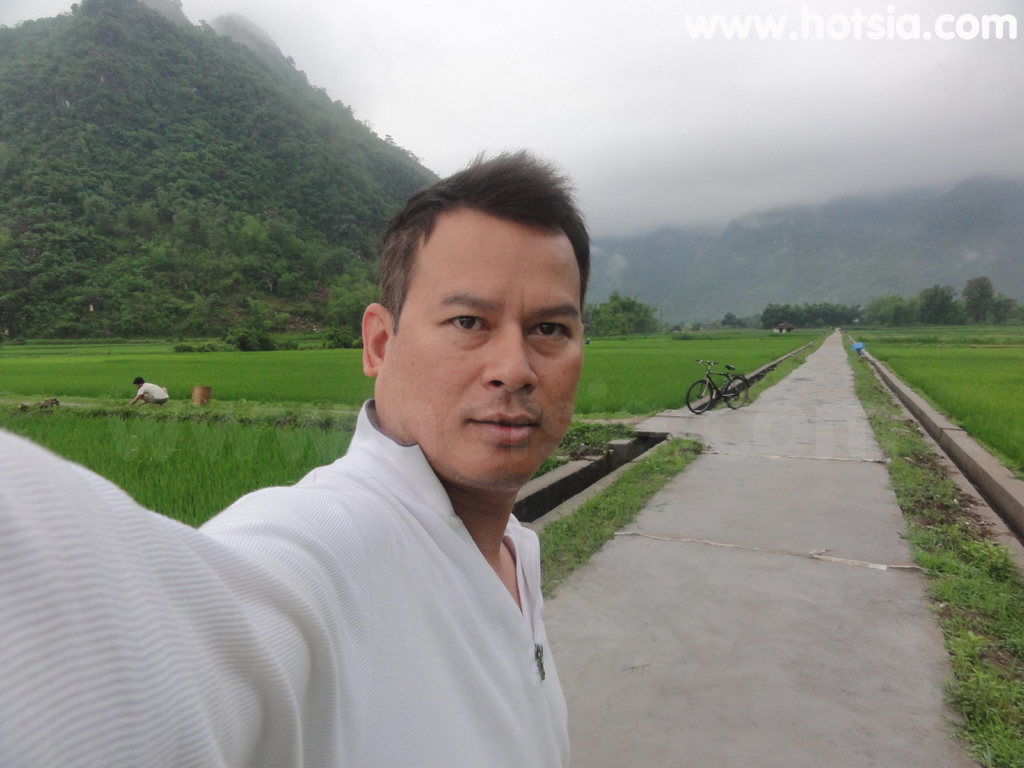
http://www.hotsia.com > Thai White, Mai Châu City, Exciting Vietnam Travel. Touring along the route known as the original Twelve Tai Territories (12 Chu Thai). Previously, we visited the Black Tai at Điện Biên Phủ, then met the Tai people at BAN HO village. Before this, I stayed at a homestay in Thai Lue village and visited Yong village in Lamphun. Today, let's get to know the Thai White in Mai Châu. As I write this, I am sitting at the Thai White homestay.
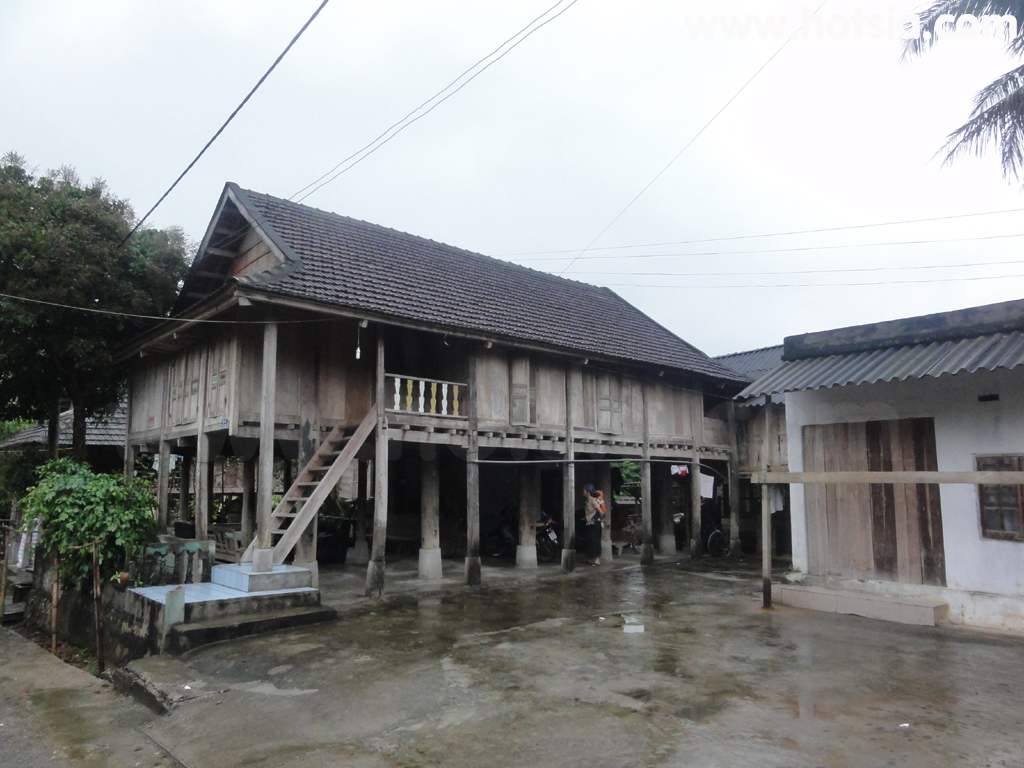
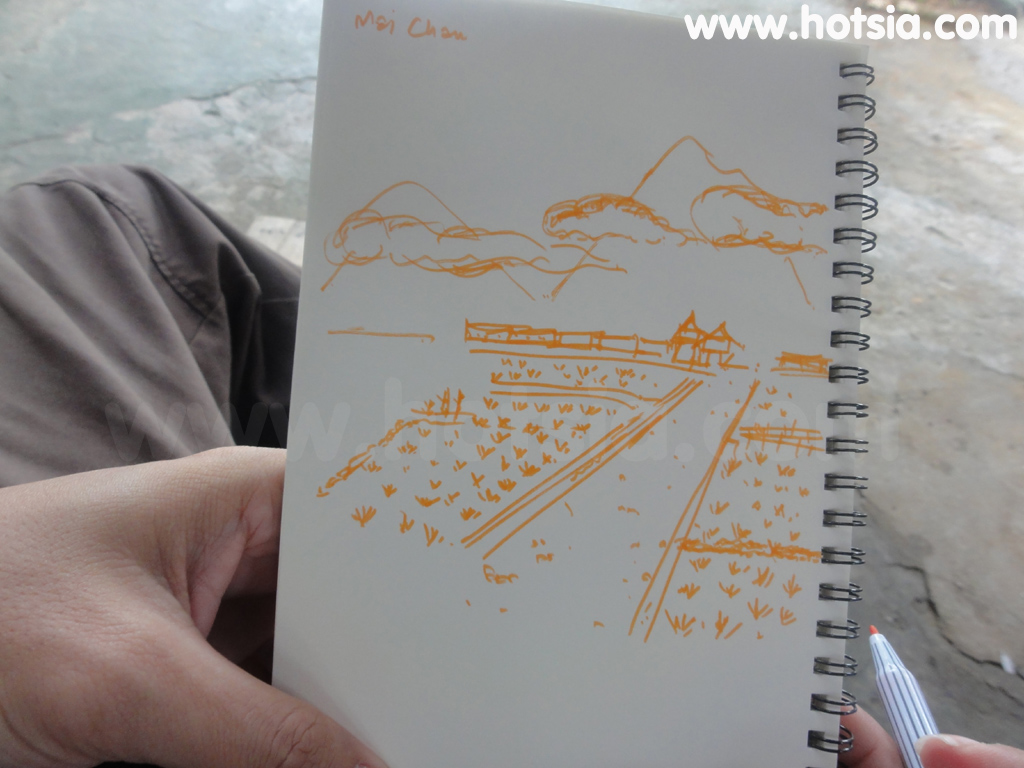
After breakfast, I took my notebook to write about this place so readers can feel like they are here with me at Thai White village. The Thai White here do not style their hair in buns like the Black Tai. Their accent is easier to understand than when speaking with Black Tai or Tai people in Sa Pa. Looking at the map, you can see that Thai White is not far from Sam Neua in Laos. I think this helps them understand each other better. The Thai White houses are raised on stilts. Even at my height of 186 cm, I don’t have to duck my head. Inside the house is a large hall with separate mosquito-netted sleeping areas.
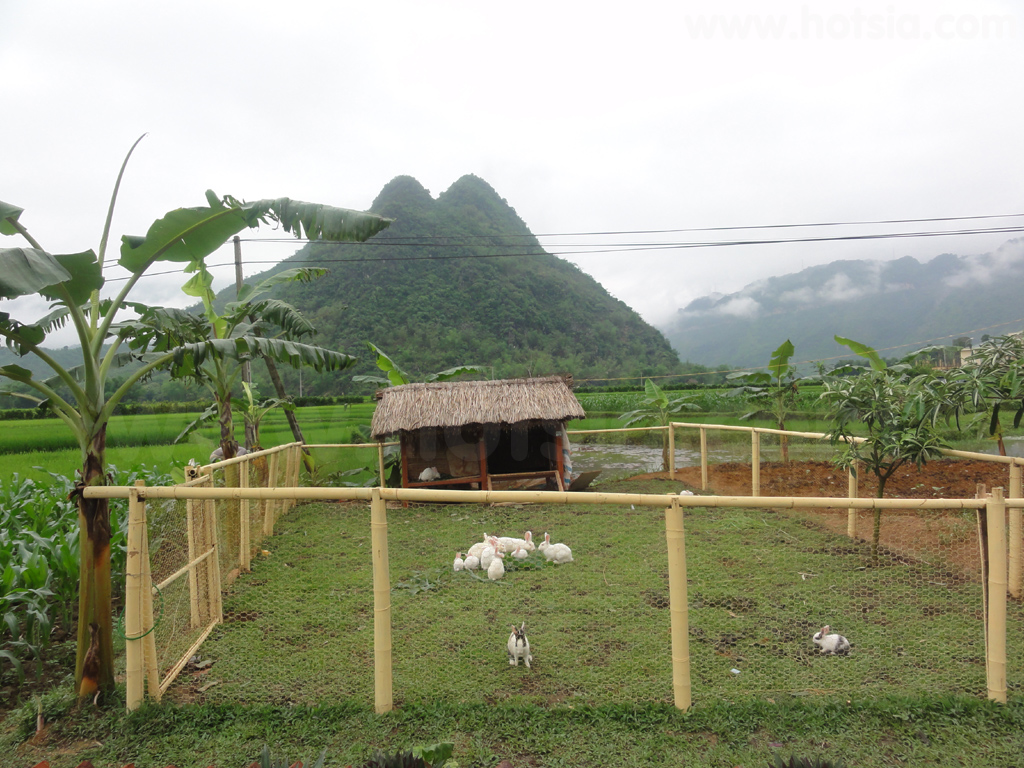
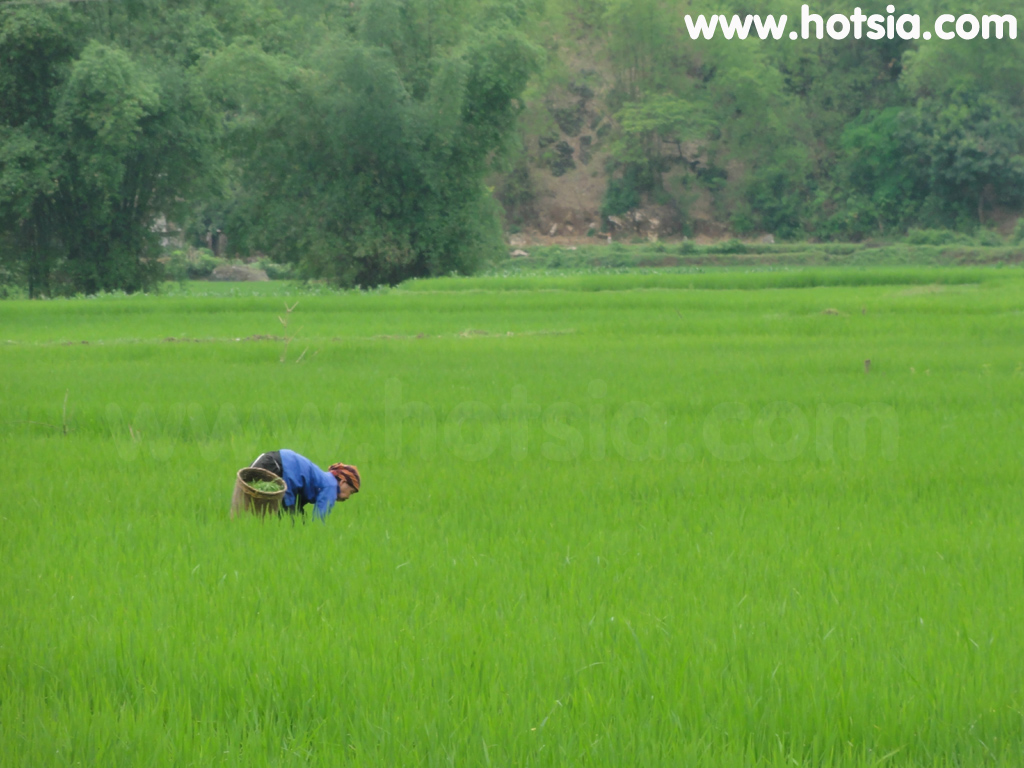
The Thai White family is an extended family typical of Tai people. The house where I stayed has a grandfather aged 50, three children, and grandchildren living together. The Thai White are rice farmers who wake up early to cut grass to feed the buffaloes they raise at home. They grow their own rice, which is fragrant and delicious, similar to jasmine rice eaten by Tai people at home. Their rice fields use piped water sourced from the mountains above. The location of the Thai White settlement is similar to that of the Tai people in Sa Pa.
They settle in a large valley with water available year-round from rivers or other sources. The house I stayed in has both piped water and well water. For this trip, I took a bus from Hanoi costing 100,000 VND per person, though normally it costs only 60,000 VND. The fare collector said the extra 40,000 VND (about 70 baht) was for luggage handling. Upon arriving in Mai Châu, a motorbike taxi driver, who was Thai White, approached me. Since then, I have been able to speak Thai continuously. I stayed in a Tai house.
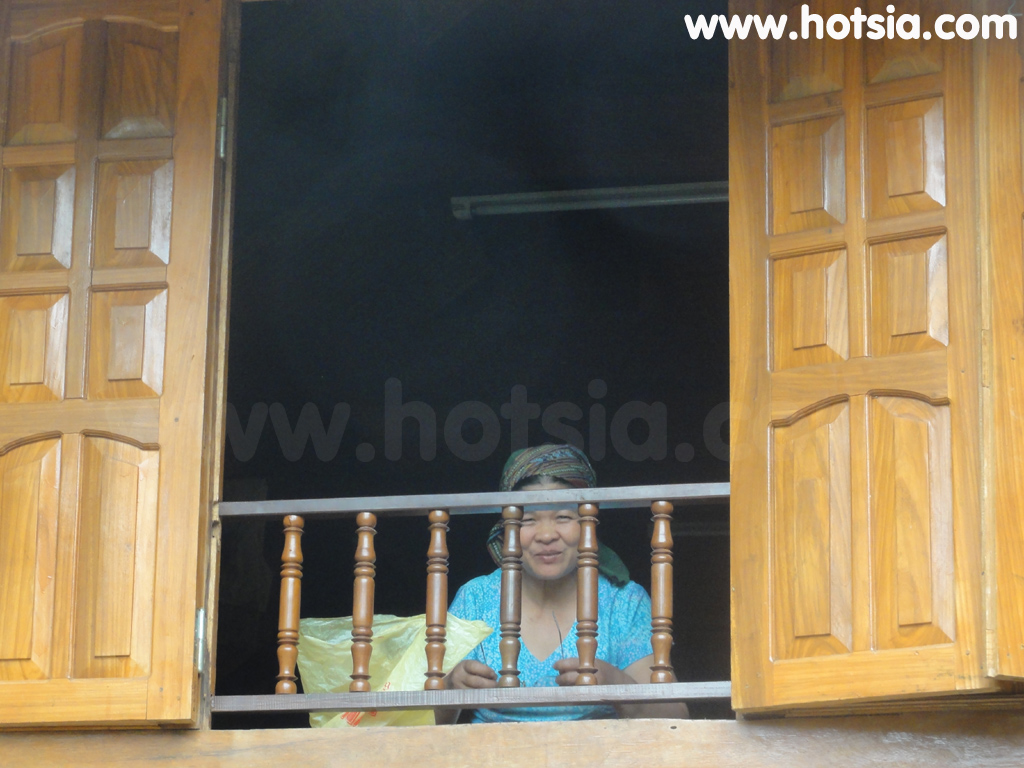
Here, the charge is per person, including accommodation and three meals, at 300,000 VND (about 500 baht). The food here is hearty and satisfying in a Thai style. Staying at the Thai White homestay means sleeping in a large hall with separate mosquito nets for each person. The host sits and eats with us. At night, we separate to our rooms. The house is spacious; it was just me and two grandchildren. The Thai White hospitality is warm, with both wine and spirits served generously. I ate well and slept soundly from early evening. 😊
Let's talk about the spirits. At the Thai White house, they have a white liquor made from corn that is very fragrant. Its strength is beyond measure. Besides white liquor, there is also 'Lao U' which I recommended when visiting Nakhon Phanom. Lao U from Udon Thani is from the Black Tai who originated in this area. Traveling along the Laos-Vietnam border, northern Vietnam near the Laos border or the original Twelve Tai Territories, you can always find Lao U. Drinking it is similar: you sip Lao U through a bamboo tube or something similar made as a straw.
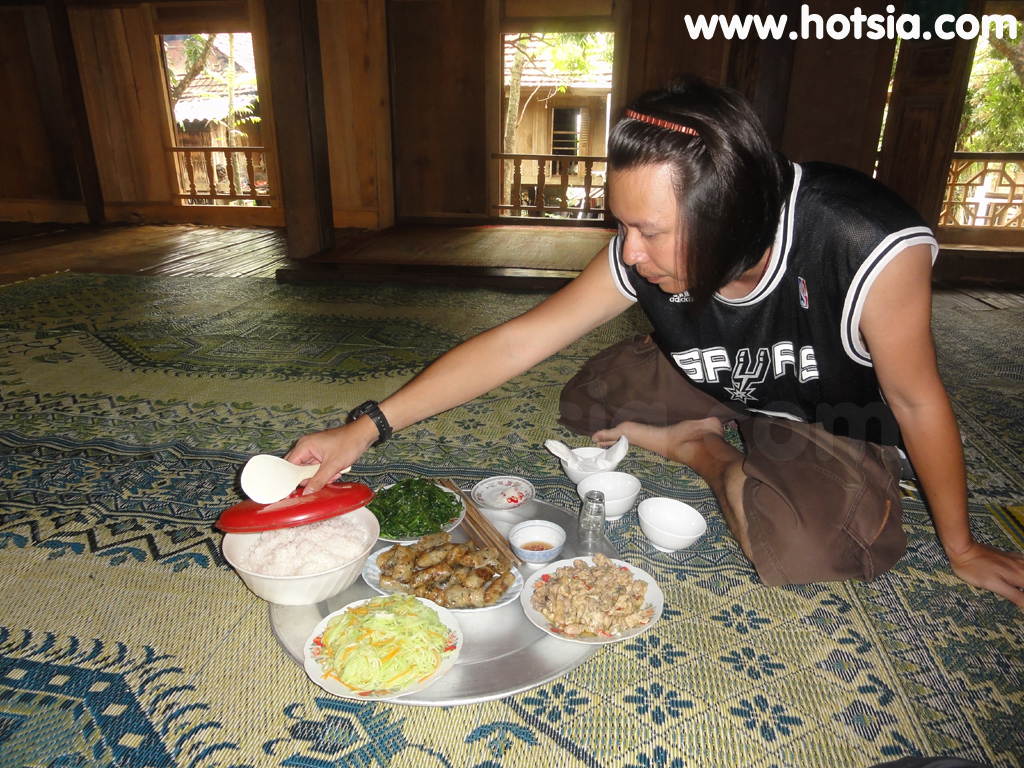
I counted that there are more than four Thai White homestay houses with signs indicating they accept guests. There are probably more without signs. Overall, there may be more than ten houses available for accommodation. About 10 minutes’ walk from the village where I stayed is another Thai White village, larger with more homestays. Regarding food, the homestay provides a Western-style breakfast. Lunch includes dishes like stir-fried chicken with lemongrass and fried spring rolls called 'Naem' here.
They also serve stir-fried shredded papaya with rice noodles, a strange but tasty dish. Dinner includes pickled bamboo shoot chili paste, stir-fried vegetables with garlic, omelet, and fragrant rice. If you stay at a homestay, don’t worry about food; it’s tastier than any restaurant I’ve tried on this trip. Visiting Thai White village and using ancient Thai words in conversation reveals what true ancient Thai words are. For example, 'Mueng' and 'Koo' are old words still used, but only among close friends.
Just like in Thai, 'Koo' and 'Mueng' are not used with elders or non-close friends. When the French colonized Vietnam, they called the Tai dressed in black 'Black Tai' and those with white headscarves 'White Tai.' This was told to me by a Thai White friend. The white headscarf is similar to the Thai Lue I stayed with in Sidonchai village, Chiang Rai. I don’t know if Thai Lue and Thai White come from the same origin. mr.Hotsia April 2011 20°39'16.614"N, 105°4'24.167"E GPS coordinates (POI)
Thanks for additional ethnic information: The majority population is ethnic Vietnamese about 85%, Chinese about 2%, and the rest are minorities about 14%, including Muong, Thai, Meo, Mon-Khmer, Cham. Vietnam was originally home to the Moi people, who have many tribes with customs similar to some Khmu tribes in Laos.
They belong to the Mon-Khmer and some tribes in the Chawa-Malay family. The Moi number over a million, mostly living in mountains north of Saigon up to the 17th parallel. They have no written language, strictly follow animism, worship spirits and deities, and dislike strangers. Besides the Moi, another minority group in Vietnam is the Thai. Their ancestors migrated from China around early Buddhist era, slowly settling along various river basins.
Eventually, they settled in the Tonkin region around the 14th Buddhist century. They are divided into several groups: those in the Twelve Tai Territories near the Song Ma River, Black River, Son La city, and Dien Bien Phu city; those near Lai Chau city, close to Black Tai, Thai Tho, Thai Nung; those in the Red River delta west and north of Hanoi; those along the Tonkin border and Guangxi province of China; those in Hai Yang city east of Pao Lac near the Claire and Lo river estuaries.
Another group lives in central Tonkin, a mixed ethnicity of Vietnamese, Chawa, and Thai, speaking a language similar to Vietnamese. They settle near the foothills close to Hanoi and southwest along the mountains bordering Laos near Vinh city. They are considered indigenous people of northern Vietnam. Also in northern Vietnam are two other groups: the Meo and the Hmong.
They are divided into four groups: White-Red Meo, Meo Sai, Black Meo, and White Meo, living in border cities adjoining China’s Yunnan province in Lao Cai, Cam Pa, Phong Tho, Lai Chau, Dien Bien Phu, and Son La. The Hmong are divided into five groups: Hmong Ta Pan, Hmong Lan Then, Hmong Guang Ge, Hmong The Lan, and Hmong Guang Tang, living in the mountains of Phong Tho, Lai Chau, Lao Cai, along the Red River banks in Cao Bang, Lao Cheng, Yen Bai, and Bong Kai.