ไทย
ไทย
 English

Laos, Phongsaly Province, Morning in Phongsaly (Morning Phongsaly)
Project gen by hotsia
Morning in Phongsaly (Morning Phongsaly) Before reaching Phongsaly (make sure to pronounce it correctly) Phu Fa Stupa .. Phongsaly Eating at a Phongsaly local's home From Muang Khwa to Dien Bien Phu Phongsaly Bus Station 2014 Guesthouses in Phongsaly Boat from Had Sa to Muang Khwa Phongsaly Morning Market 2014 I woke up early with excitement to see what Phongsaly looks like. After last night's rain, the morning promised clear weather. I got out of bed and peeked through the window to look outside my accommodation.
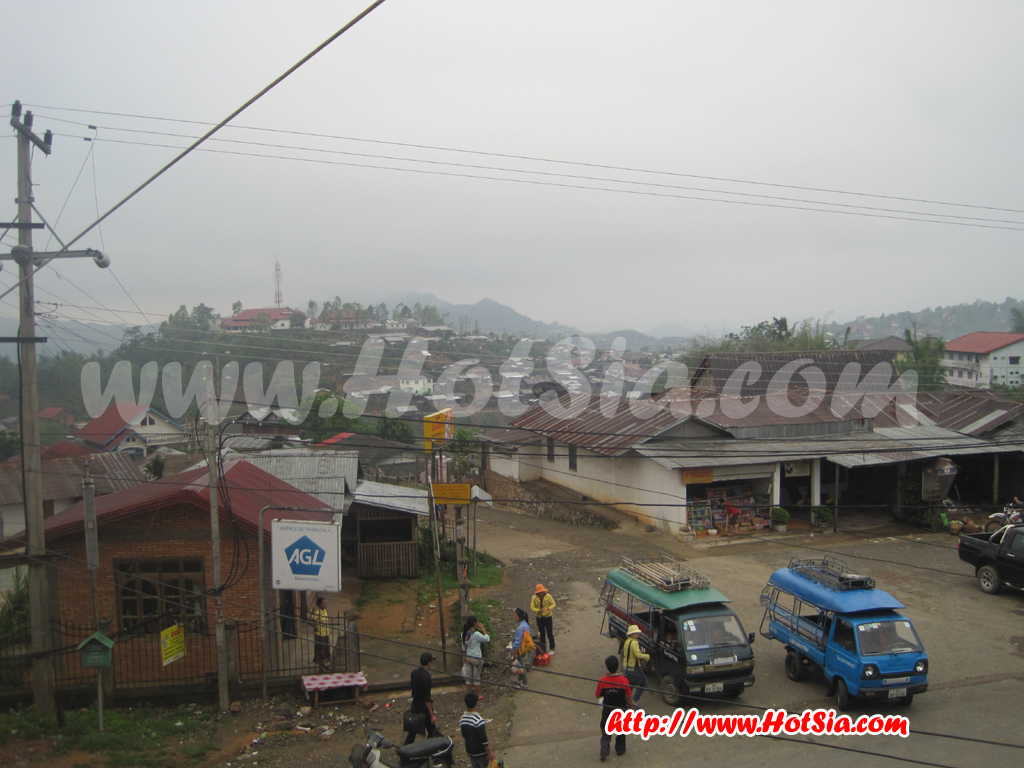
I just realized my accommodation is on a high hill overlooking the villagers' houses in the valley below. Phongsaly town is a small valley with only a few houses. The photo above was taken from the path up to Phu Fa Stupa. You can see the narrow valley surrounded by complex high mountain ranges. If you imagine a map, Phongsaly town is like a peninsula of Laos extending into China’s Yunnan province. I took care of my personal things, grabbed my trusty camera, and went for a walk down below immediately.
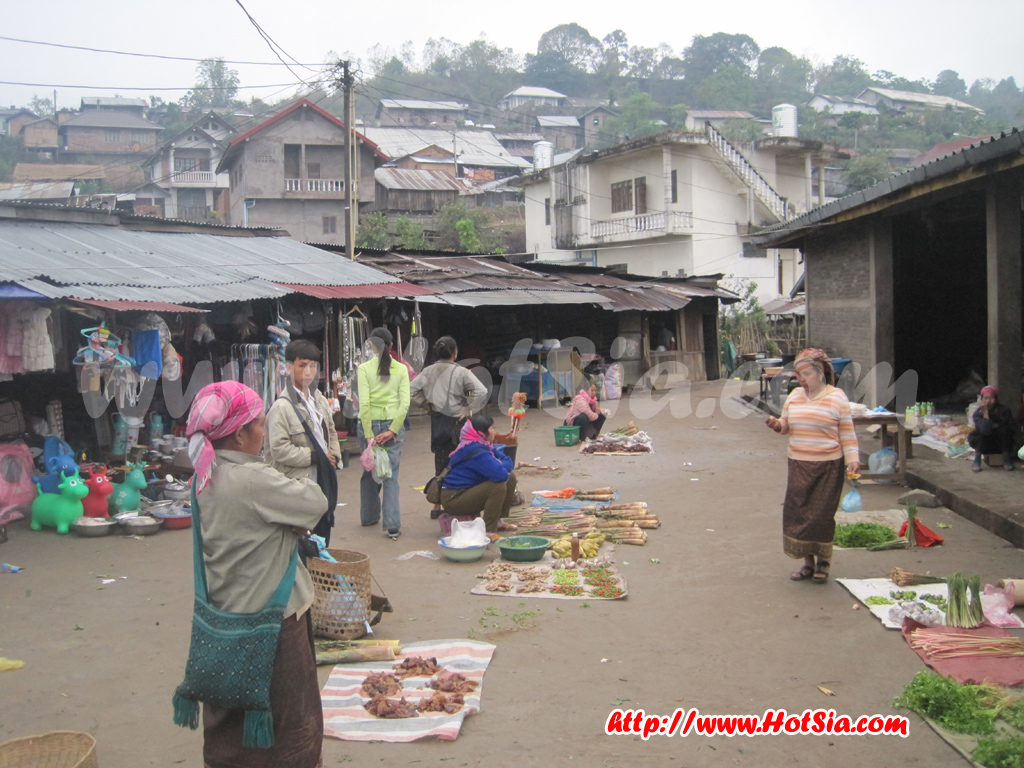
Phongsaly town is quieter than I expected. At first, I thought it might be similar to Pai or Mae Hong Son, but it’s much quieter. There are few cars, mostly hill tribe people walking to the market, but not many. Even at the small vehicle station near my accommodation, there were hardly any people. Since my lodging was on a hill, I walked down. Villagers were starting to go to their gardens, but overall it was peaceful. After some exploration, I gathered some information: Phongsaly has two coffee shops.
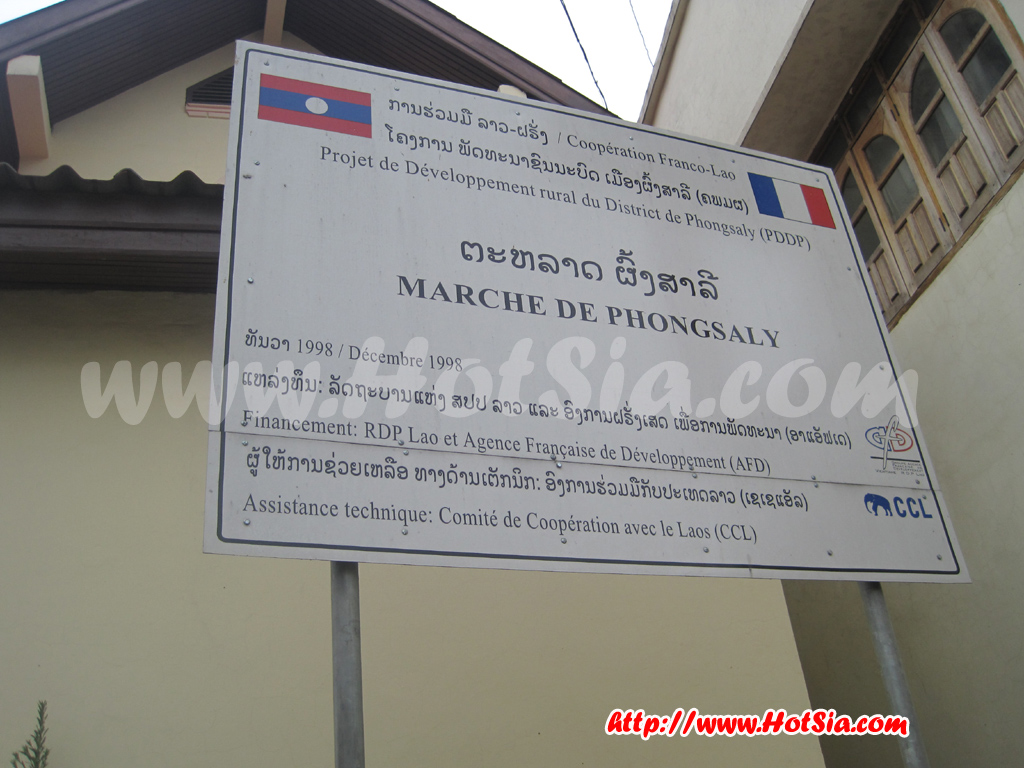
One shop is on the main road before my accommodation, selling pho and coffee. Another is near the old village area. Phongsaly doesn’t have typical made-to-order restaurants like back home. The places that serve rice are Chinese restaurants, two in total. Locals know exactly where they are. The Chinese restaurant owners can speak Lao. Food prices are cheaper than in Oudomxay and Luang Namtha, and definitely much cheaper than Luang Prabang. Phongsaly has a fresh market open from early morning.
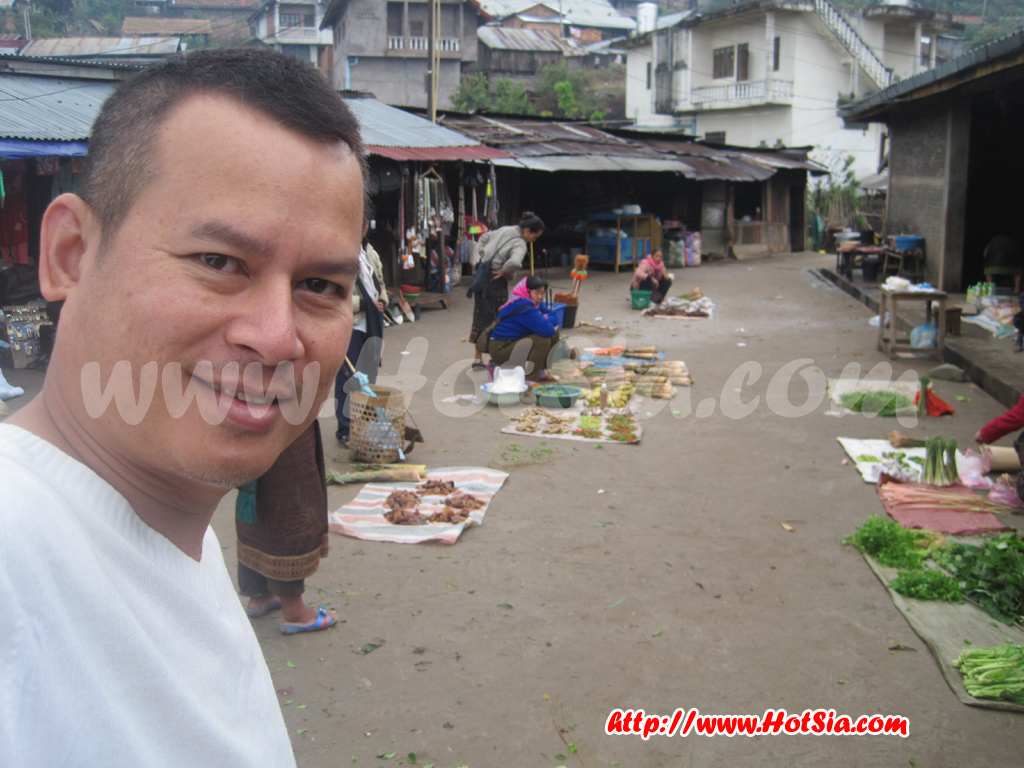
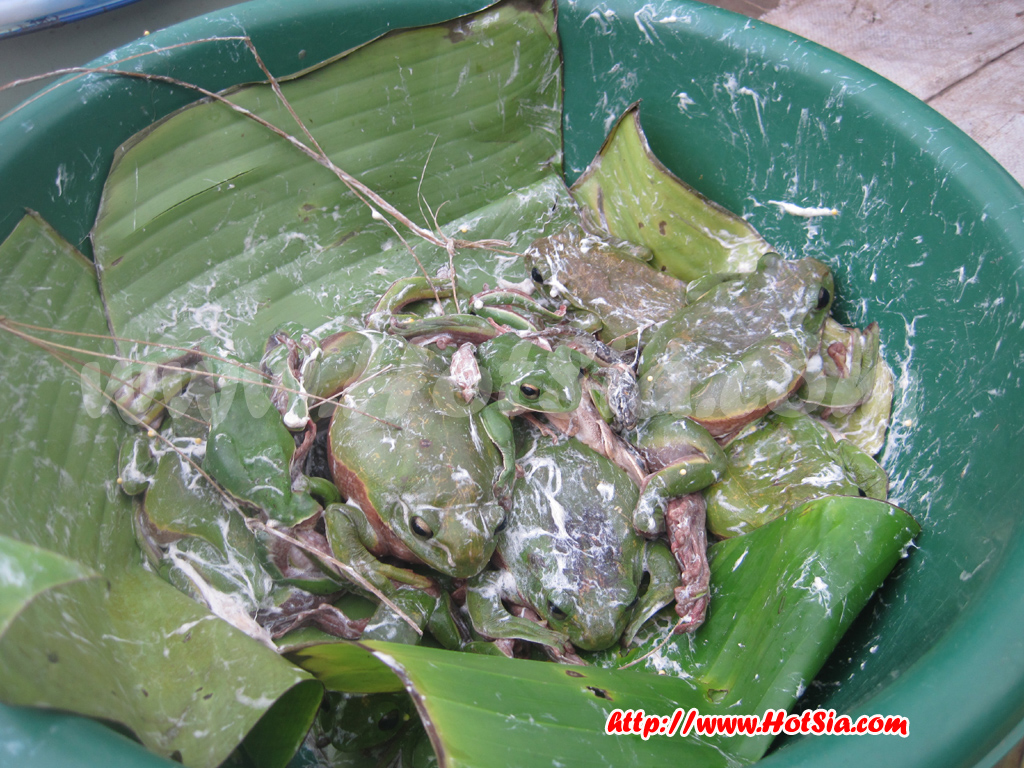
The market is not very lively because in Laos and Vietnam, mountain valley towns like this have scheduled market days once a month when hill tribes come to buy necessities. Coming down from high mountains takes days, so trips aren’t as convenient as on flat land. For example, Vietnam’s Bac Ha market only happens twice a month. The Phongsaly morning market features rare green frogs I don’t often see. I started my day with a cup of Lao coffee.
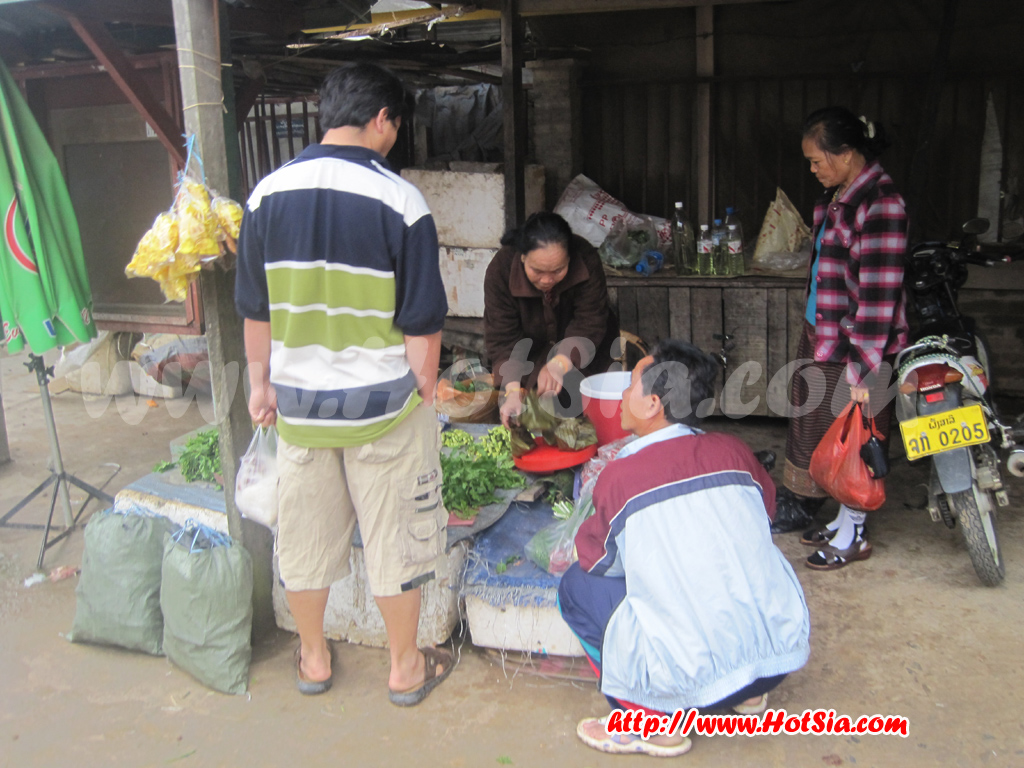
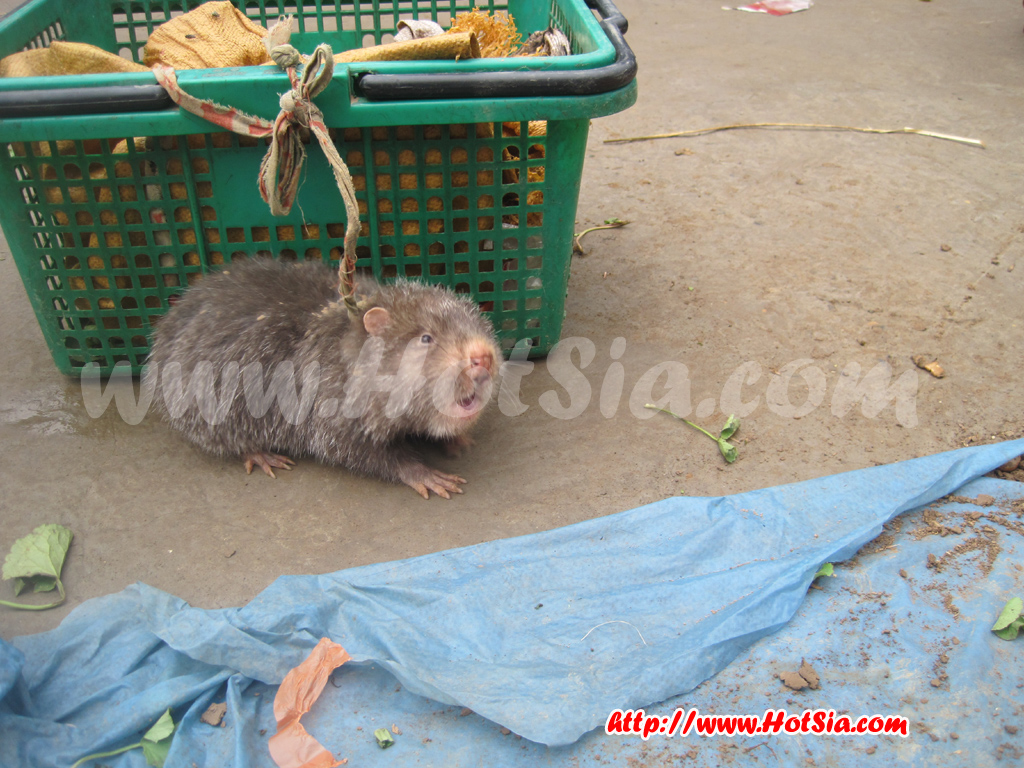
Then I strolled through the morning fresh market. The market sells vegetables, chicken, and pork. Outdoors, villagers sell goods including large bamboo rats tied up for sale and strange-looking green frogs. There are three pho stalls at the market. Pho comes in two types: fresh beef pho and boiled beef pho. The popular choice is fresh beef pho. The pho I ate at Mik Huay Sai was fresh beef pho. After finishing the market walk, I rested and ate pho, chatting with other Lao diners.
After that, I went to buy a new hat at the market above my accommodation, which sells clothes and daily items. I found a hat I liked — a Lao soldier’s hat priced at 80 kip, perfect for wearing to climb Phu Fa Stupa today. Phongsaly is home to many ethnic groups. In the town, several Chinese-Ho families live. Here, they still have the tradition of small feet, a custom from the past now nearly extinct worldwide.
To see this, you need to rent a vehicle and travel several dozen kilometers. I didn’t visit this time but plan to next trip. Eating pho at Phongsaly morning market, sitting and sharing a table with a Khmu woman in Phongsaly. Looking at the map, Phongsaly is located on the same latitude as Hong Kong, higher than many Chinese cities. Surrounded by mountains and still largely forested,
Phongsaly enjoys cool, comfortable weather year-round. I spoke with locals who said even during their New Year (Water Festival in mid-April), the weather remains cool enough to wear jackets. Traveling independently like me in Phongsaly doesn’t require advance booking of guesthouses or hotels. You can just arrive; accommodations are sufficient for tourists. When choosing lodging, compare more than one place for price.
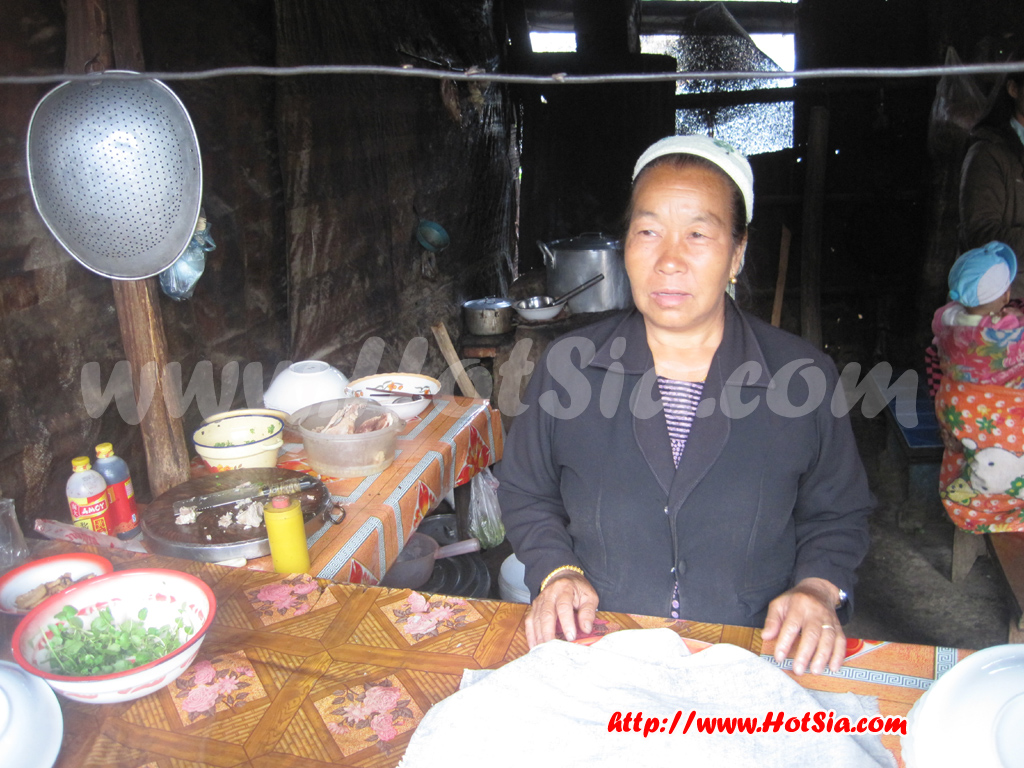
Phongsaly has dozens of accommodations, so don’t worry about availability. Unless you want a more comfortable, beautiful hotel like in Luang Prabang or Vientiane, you can book affordable hotels through my service at the top menu. Here, locals enjoy eating sausages. I had breakfast with an elder from Phu Fa :0 After coffee and the morning market, eating pho, I started walking around the town. I met a couple having breakfast,
who smiled and invited me to join them, a basic gesture of friendship common among Lao and Thai people. I sat and talked with them. The man is the elder of Phu Fa. He climbs up and down Phu Fa daily to take care of the stupa. He served me some Phongsaly food to try. I tasted it and found it delicious, so I arranged to have dinner with him tonight and bring food to share. What is Phu Fa? What is Phu Fa Stupa like?
Why do all tourists visiting Phongsaly climb Phu Fa? Even locals do. Next trip, I will take you to Phu Fa, which is 1,626 meters above sea level. There are definitely great things waiting. ...Mr.Hotsia May 2010 Specifics about Phongsaly: It borders China and northern Vietnam at the northernmost part of Laos. Phongsaly is a land bordering China and Vietnam, making it a strategic area historically contested by major cities.
Today, Phongsaly is the provincial capital with a population of 167,181. The town sits on a 1,400-meter-high mountain in the Phu Fa range, giving it cool weather year-round. Due to its strategic location between China and Vietnam, the French placed great importance on this area, establishing military camps. French architectural traces remain visible in various alleys.
Although mostly obscured by functional Chinese commercial buildings, the Phu Fa Stupa can be seen through the morning mist. Historically, Phongsaly was one of the Tai Lue cities in China’s Xishuangbanna region, but France took it from China in a treaty in 1895. Later, it became part of Laos, making it one of the most ethnically diverse provinces with Hmong, Akha, Yao, Tai, and other tribes.