ไทย
ไทย

Chiang Rai Kamphaeng Mueang Kamphaeng Saen
Kamphaeng Mueang Kamphaeng Saen http://www.hotsia.com > Chiang Rai > Kamphaeng Mueang Kamphaeng Saen Explore the ancient city wall of Chiang Saen before it became new. Chiang Saen is an ancient city with a very strategic location, situated opposite Laos, separated by the Mekong River. The other three sides of Chiang Saen are surrounded by ancient city walls, making it difficult to besiege the city from all four sides. Historically, this city was a stronghold against the Mongols and the Ming dynasty of China. So, its history dates back thousands of years.
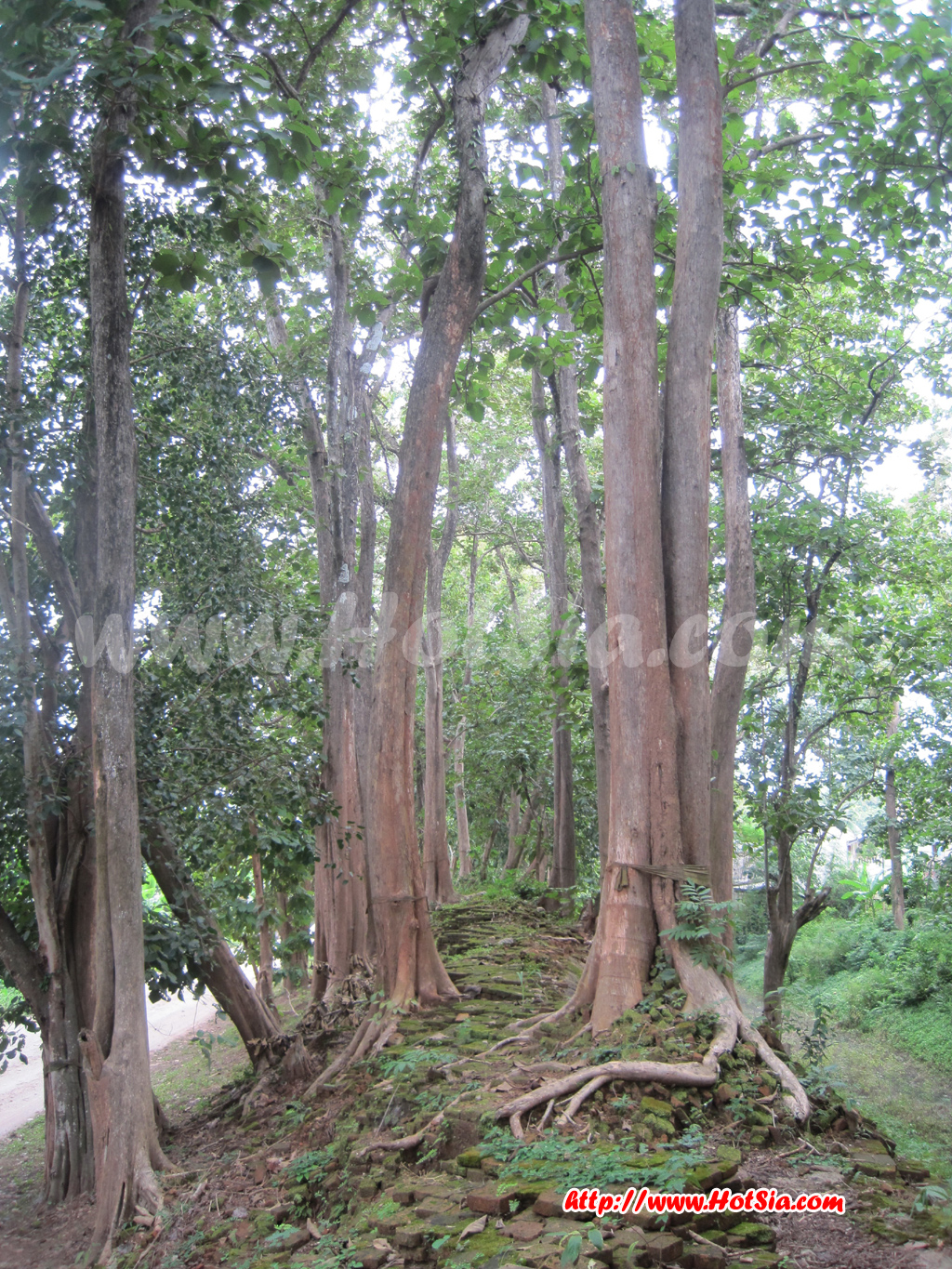
Most tourists visiting Chiang Saen usually go to the Golden Triangle and stop briefly for photos before heading to Chiang Khong. They cross back and forth without truly exploring. Today, I decided to stay overnight and explore Chiang Khong to find some interesting stories to share. The first recommendation is to visit the ancient city wall, which is thousands of years old. This wall once withstood battles against the Ming dynasty and the Mongols. Currently, the Fine Arts Department is undertaking major restoration work, which will take several more years to complete.
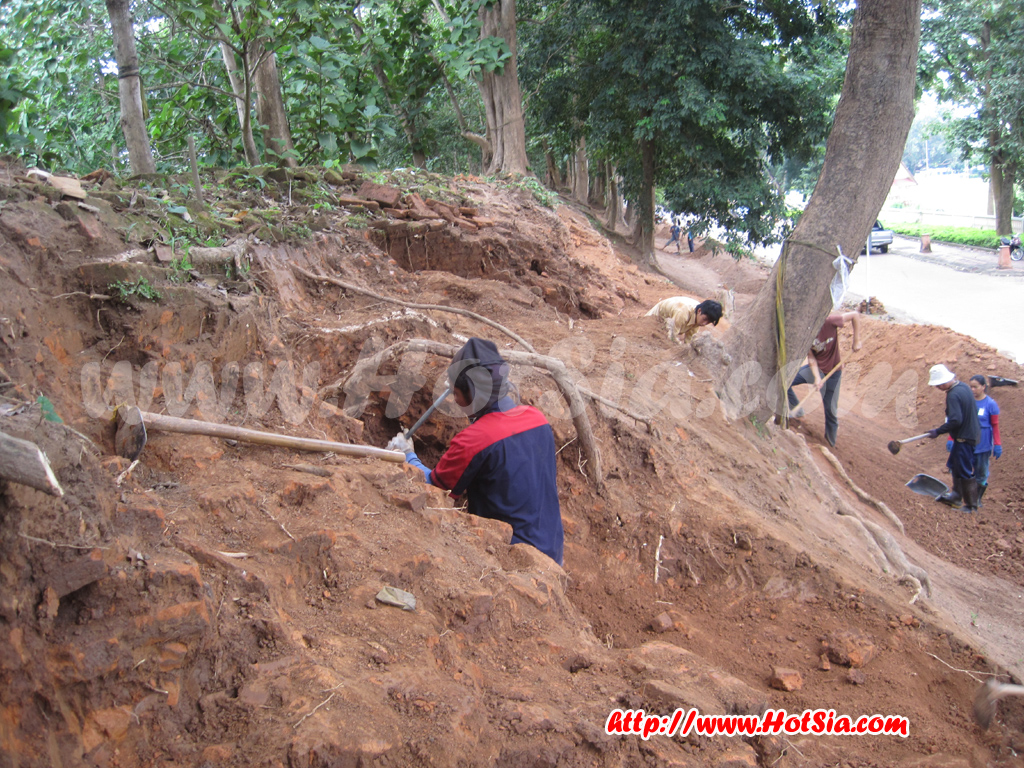
I had the chance to observe and even help with the excavation of this ancient wall. During the digging, we found old bullets and gun platforms, which vividly reveal the historical atmosphere. Once the restoration is complete, the old features will be fully covered, unlike the current state. Anyone interested in witnessing the excavation and restoration of Chiang Saen’s city wall should visit now. Alternatively, if you want to see the finished restoration, visit the eastern side of Chiang Saen’s city wall.
Let me share a bit about the old history of Chiang Saen (http://www.chiangsaenlife.com/forum/thread-469-1-1.html). Chiang Saen was the administrative and economic center of the Suwannakham, Yonok Nakpan, and Hiran Nakorn Ngyang regions, respectively. After the founding of Chiang Mai in 1839 BE by King Mangrai of Ngyang city, Ngyang city was abandoned.
Until King Saen Phu, the third ruler of the Mangrai dynasty and grandson of King Mangrai, restored Chiang Saen in 1871 BE by rebuilding on the abandoned old city. It is believed this was built over the former Ngyang city, which is why sometimes people refer to this city as Ngyang Chiang Saen or Hiran Nakorn Ngyang, both meaning Chiang Saen. After completion, King Saen Phu resided in Chiang Saen for the rest of his life.
The true purpose of building Chiang Saen was to establish a strategic center in the upper region and defend against northern enemies, especially the Mongols. At that time, Chiang Saen was elevated in importance above Chiang Mai. During the Mangrai dynasty, Chiang Saen was the battlefield for many significant wars in Lanna history, such as two battles against the Ming dynasty and the war with King Chaichetathirat of Lan Xang. In 2101 BE, Lanna fell under Burmese rule.
Chiang Saen became a key Burmese stronghold in upper Lanna until 2346 BE when Chiang Mai and its allies successfully expelled the Burmese from Chiang Saen. This caused Chiang Saen to become abandoned, as the population was relocated southward to places like Ban Chang Khong, Ban Loi Khro, Ban Chiang Saen in Chiang Mai, Ban Pong Sanuk in Lampang, Ban Khu Bua in Ratchaburi, and Ban Sao Hai in Saraburi.
In 2423 BE, King Intawichayanon of Chiang Mai ordered Prince Inta (son of Lord Boonma of Lamphun) to lead about 1,500 families, mostly of the Yong ethnic group, from Lamphun to settle in Chiang Saen, where they remain to this day, from Ban Mae Kham Sop Poen and Ban Huai Nam Rak to Wiang Chiang Saen. The city walls of Chiang Saen that we see today are believed to have been built during King Saen Phu’s reign.
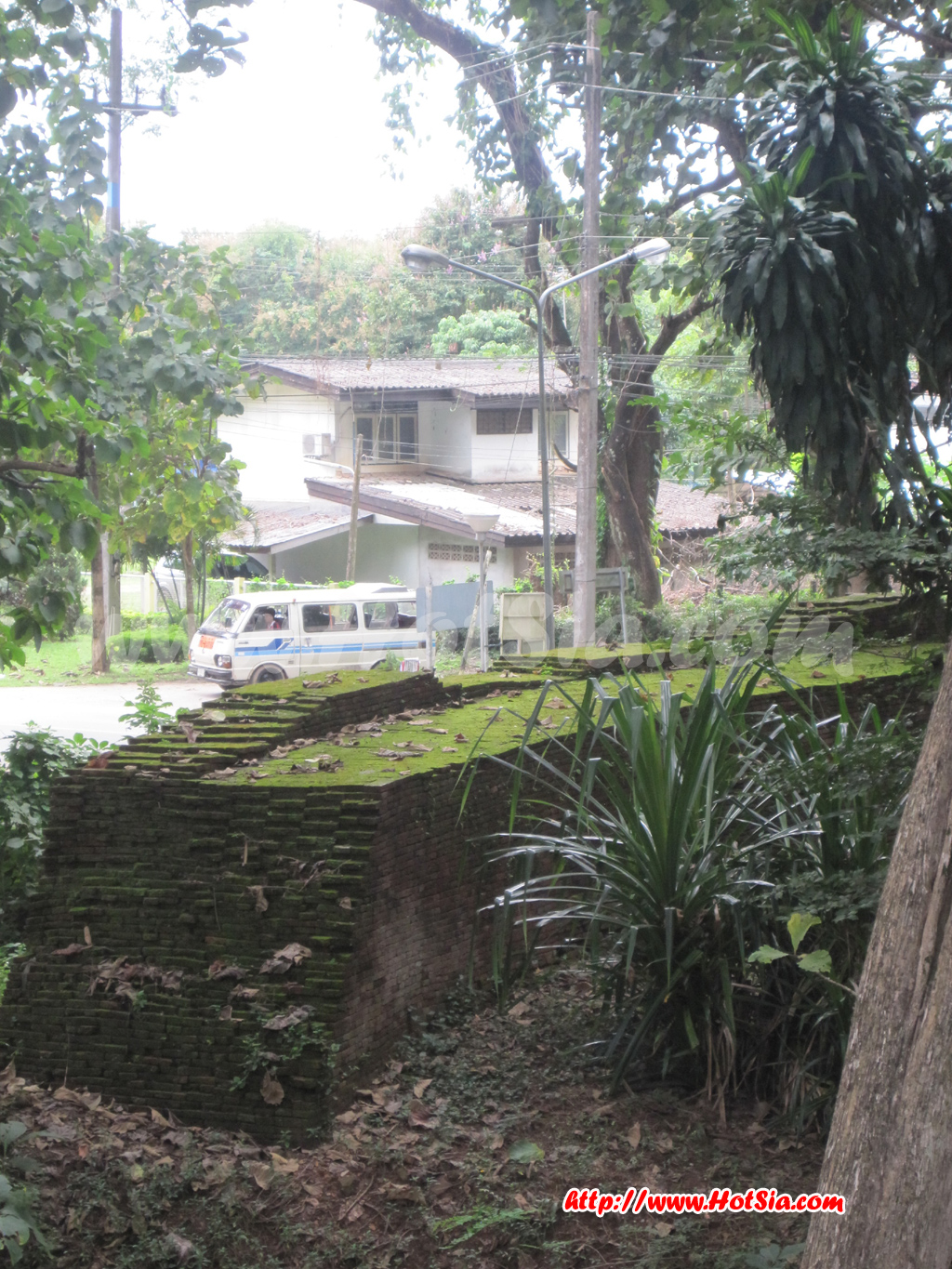
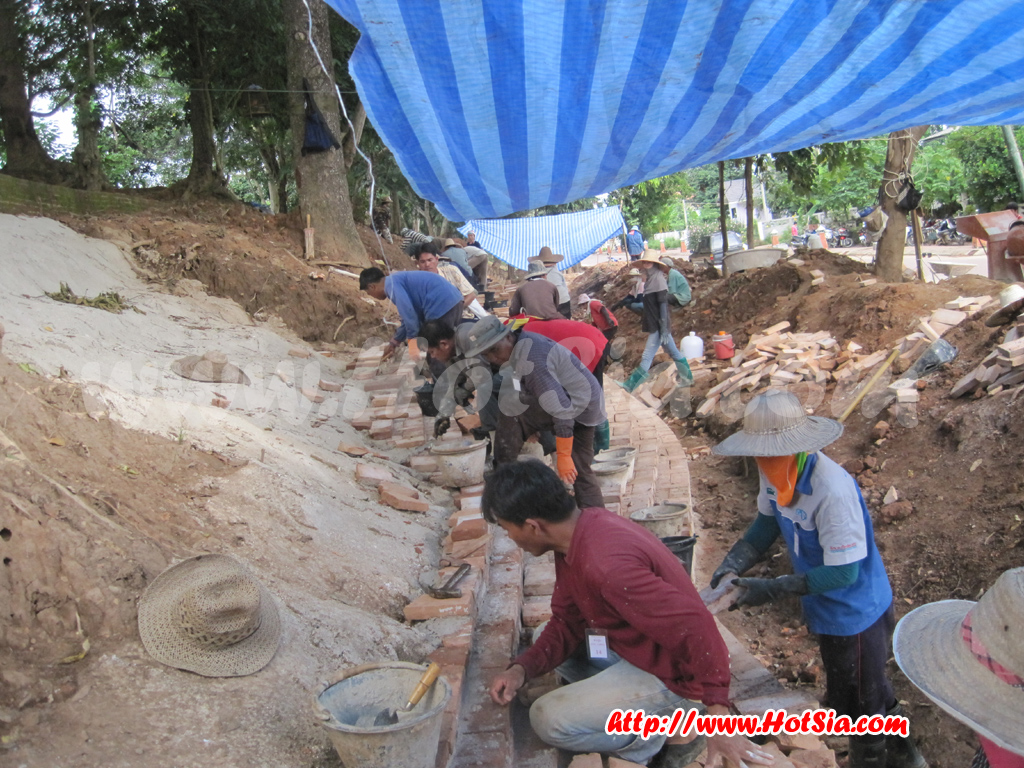
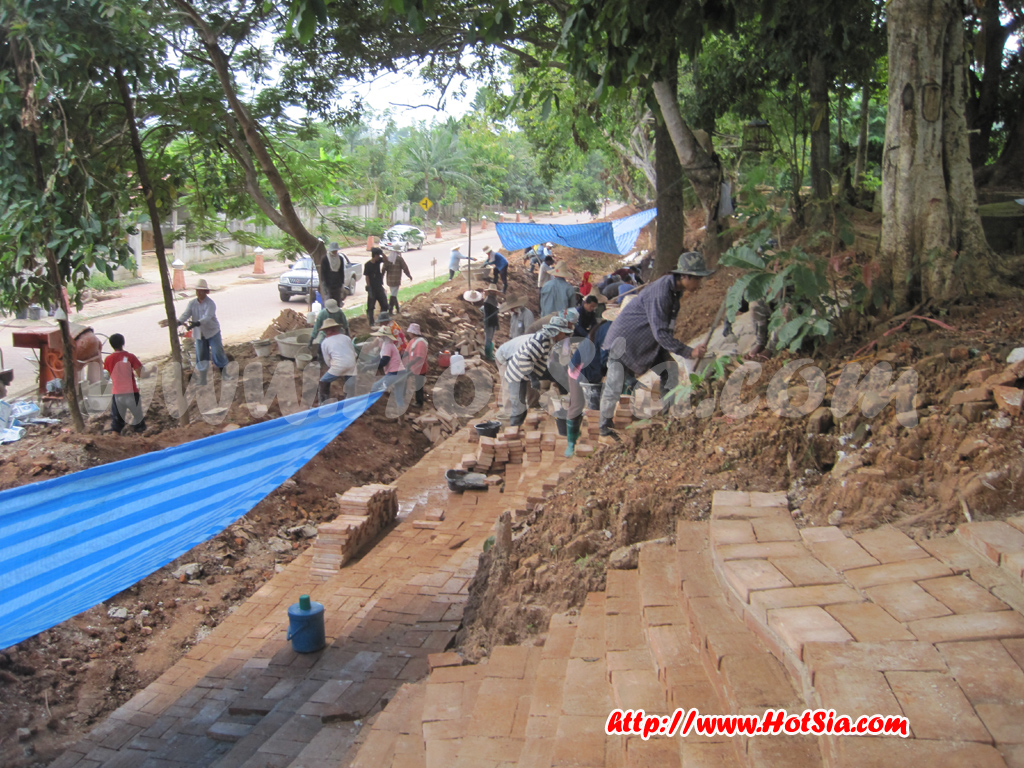
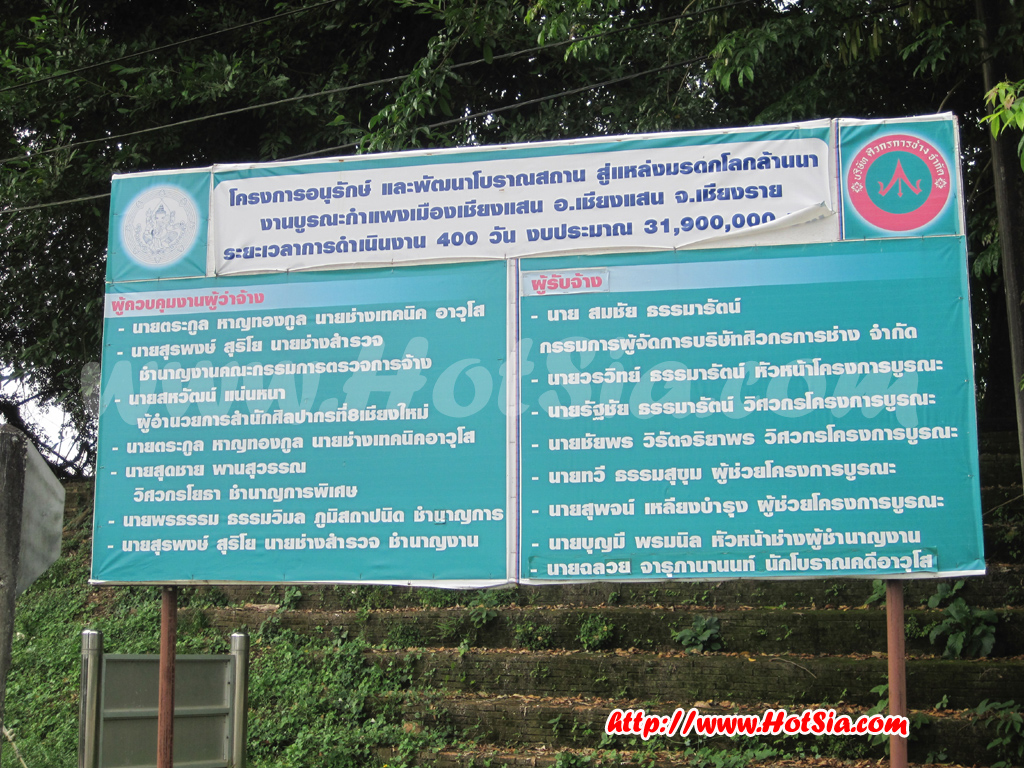
The layout of Chiang Saen resembles an irregular rectangle, approximately 700 wa wide and 1,500 wa long, covering about 1,240 rai. The city walls have two layers separated by a moat (some legends say three layers), surrounding the city. The eastern side uses the Mekong River as a natural barrier. The Chiang Saen city wall currently under restoration by the Fine Arts Department, the completed restored sections, the repaired walls, the top of Chiang Saen wall, and the restoration project sign are all visible.
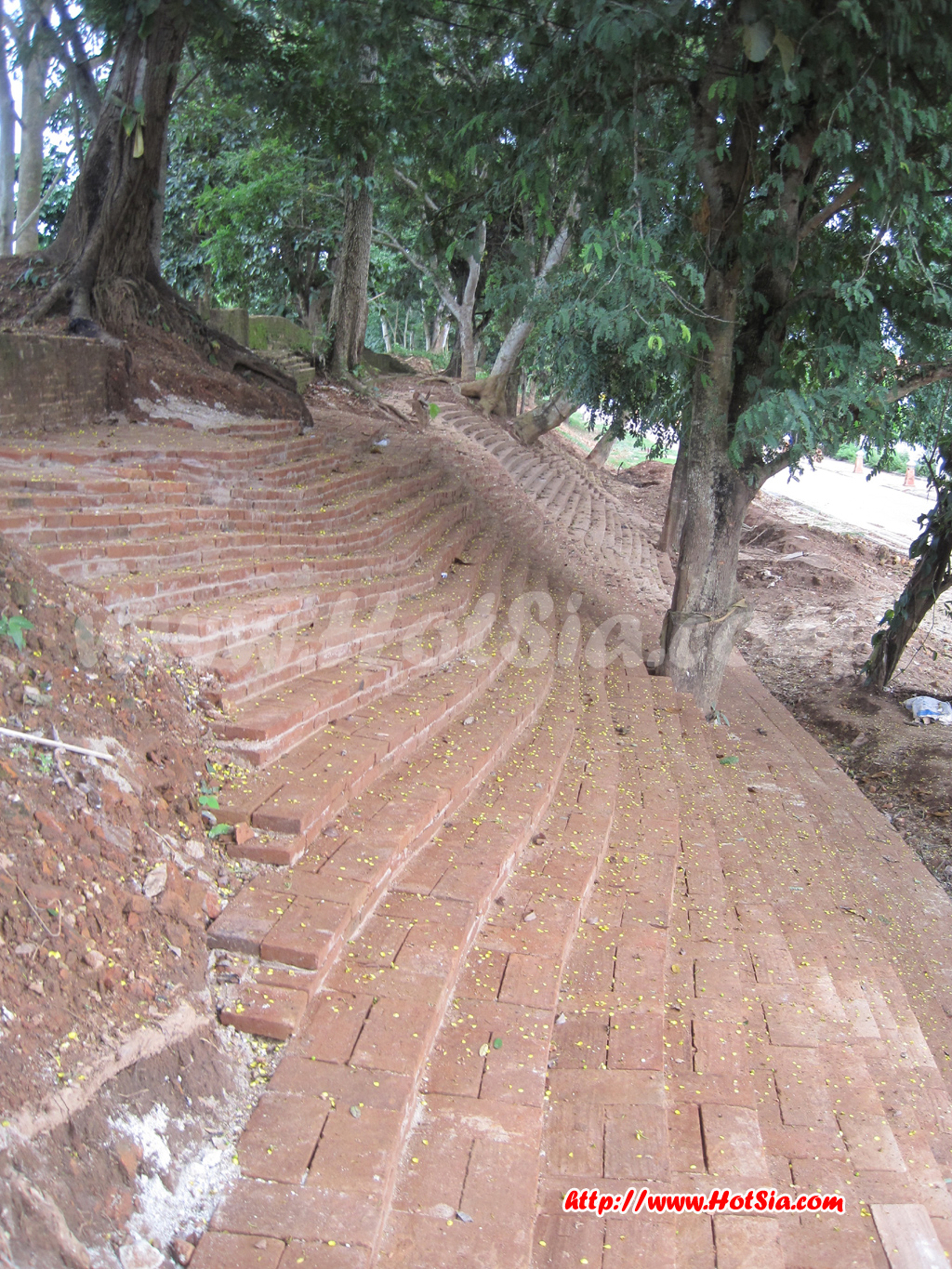
Excavations have uncovered gun platforms, which are then covered with bricks using plaster before rebuilding. Once restoration is complete, Chiang Saen’s walls will look like this. Mr.Hotsia’s trip included visits to Chiang Khong - Chiang Saen, Ban Nom Hin, Ban Don Mahawan, the 4th Mekong River Bridge, Art Children’s Monastery in Chiang Saen, Wat Phra That Chedi Luang, Chiang Saen night market, Chiang Saen riverside market, restoration of the ancient city gate, and the Golden Triangle at night.