ไทย
ไทย

Chiang Rai Doi Mae Salong Mae Salong Mountain Tea
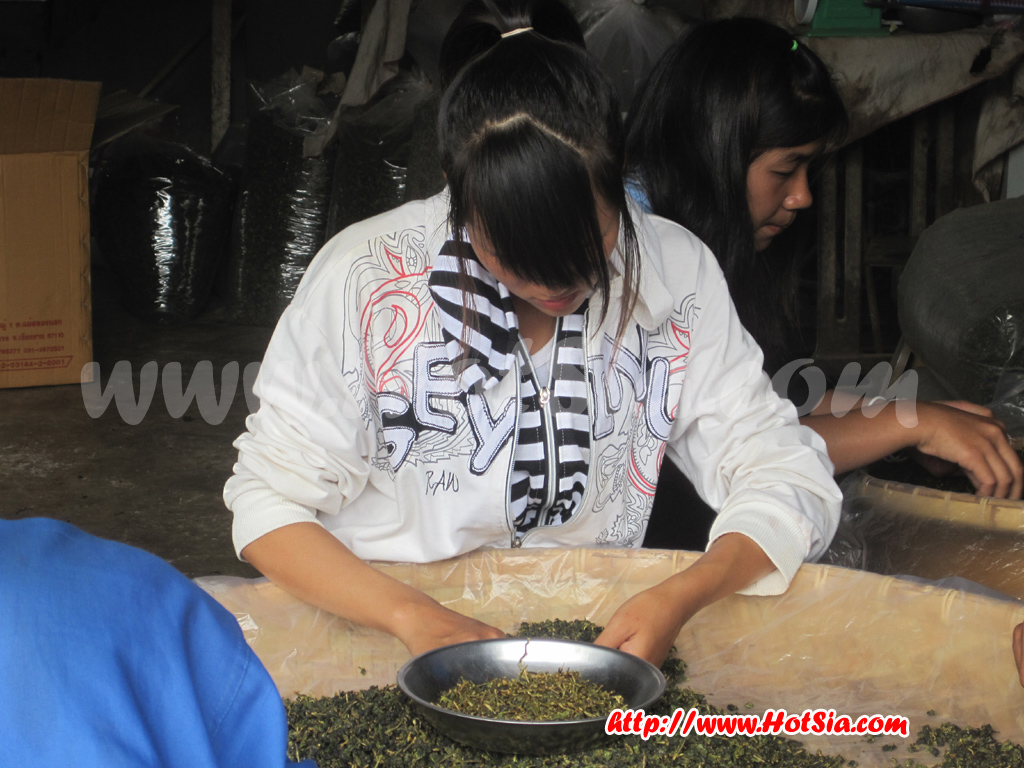
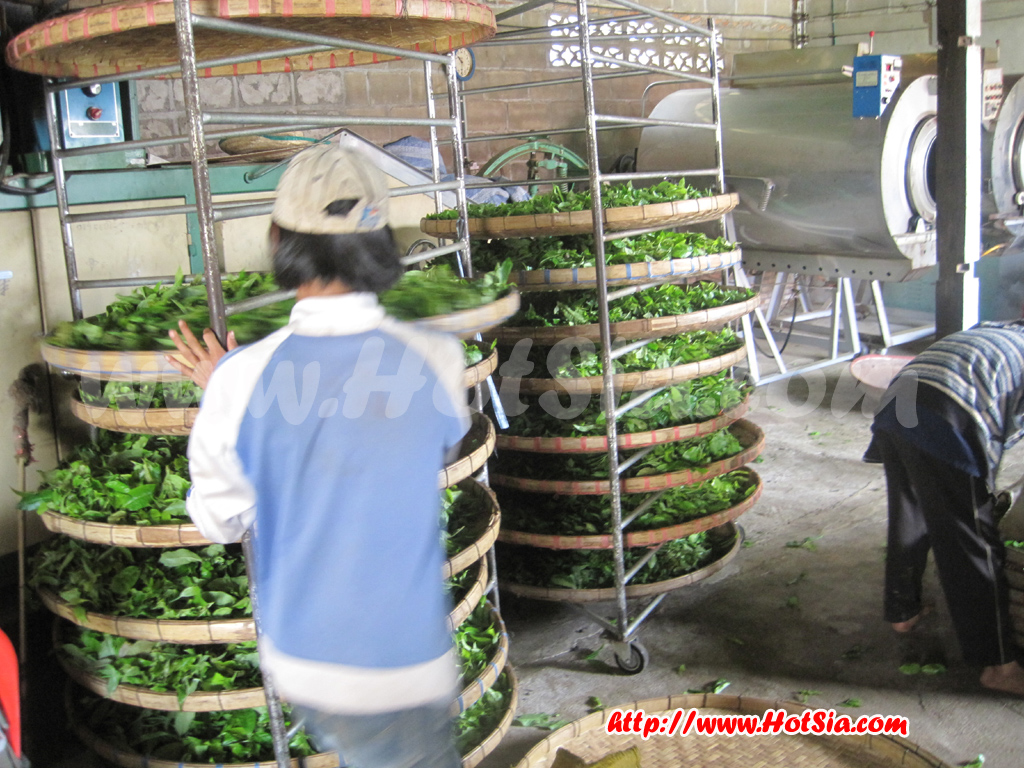
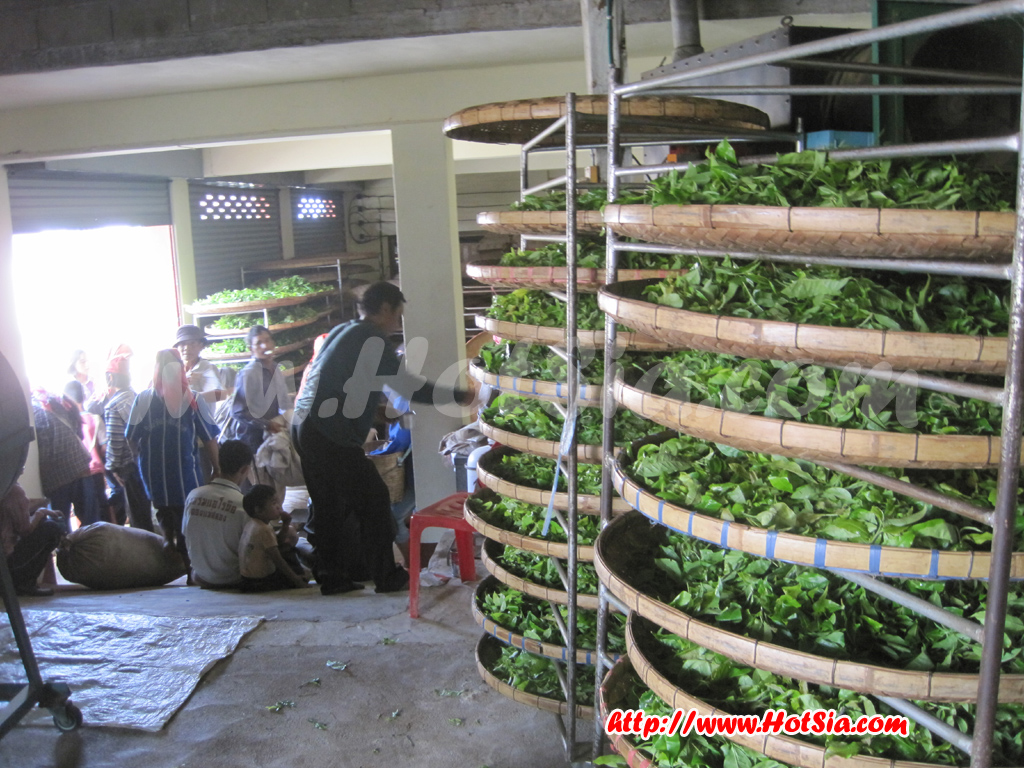
Mae Salong Mountain Tea Types of Tea Tea Varieties Oolong Tea What is Green Tea? http://www.hotsia.com > Doi Mae Salong > Mae Salong Mountain Tea Picking and tasting tea leaves at Doi Mae Salong involves many steps. It starts with harvesting tea tips from the tea plantation, then drying and roasting to remove moisture, followed by sorting the tea leaves. After that, the tea is roasted again before being compressed into pellets. All these steps are done right here at Doi Mae Salong, where there is a tea factory and drying facility.
When visiting Doi Mae Salong, it's good to learn about tea to enjoy both sightseeing and knowledge in one trip. Many have heard of oolong tea and green tea but can't quite picture what they really are. Some imagine different tea plants or different countries like Japanese green tea. Actually, tea naming is similar to coffee. Fresh coffee under pressure is espresso; add milk and it's cappuccino; add hot water to espresso and it's americano.
Tea is similar. Each tea name comes from the same tea plant but differs in harvesting and processing steps. Let's get to know tea. Tea can be simply divided into six types: white tea, yellow tea, green tea, oolong tea, black tea, and Pu-erh tea. Commonly seen are white, green, oolong, and black teas. All types can be made from the same tea plant but processed differently. However, high-quality white tea requires special cultivation.
Pu-erh tea, which is fermented, can also be used medicinally. After roasting, how do tea names correspond? Tea buds and young leaves that are withered but not fermented produce a light yellow beverage. Leaves that are not withered or fermented but turned yellow produce yellow tea. Leaves that are neither withered nor fermented produce a light green drink when brewed.
Green tea leaves that undergo oxidation or fermentation become dark leaves, yielding a reddish-brown drink. Leaves that are withered, lightly rolled, and slightly fermented produce a golden-green beverage. Leaves that are withered (sometimes heavily rolled) and fully fermented produce a dark red to black drink. Green tea fermented for years is also available. When we sip tea here, we can recognize, for example, this glass is oolong tea.
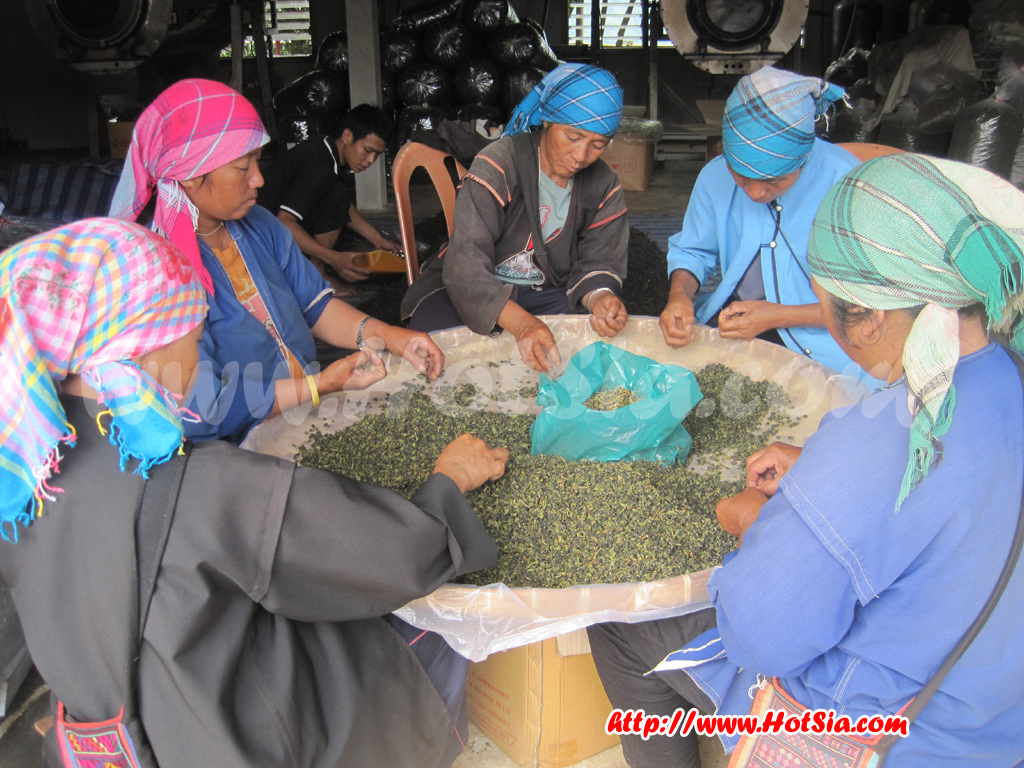
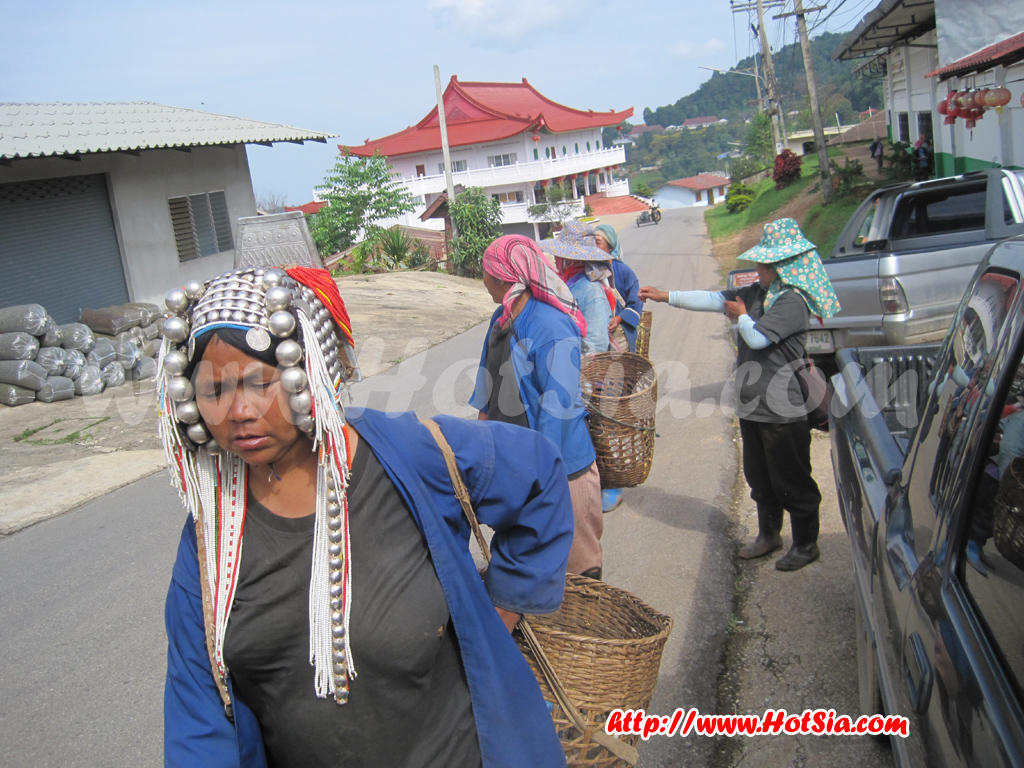
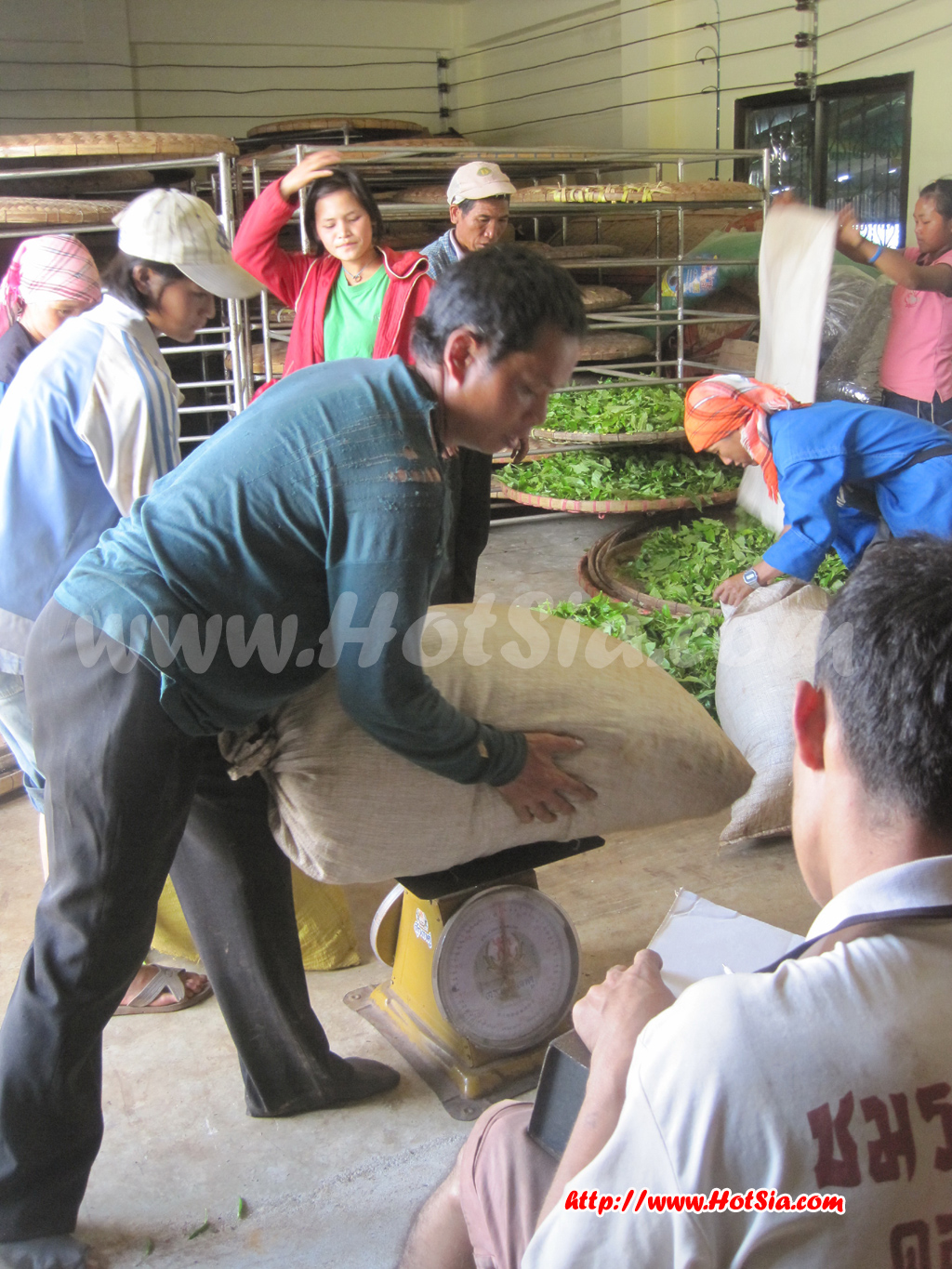
This means tea that is withered and rolled-fermented, while green tea is just withered without fermentation, resulting in a green color when brewed. Now you understand that Oishi is green tea, or tea that is withered but not fermented and made into green tea drink. Near Mae Salong Sweet, the tea fermentation factory receives freshly picked tea leaves from hill tribe people who wither them here. Visitors can follow the Akha hill tribe members to pick tea leaves and see how they select the leaves.
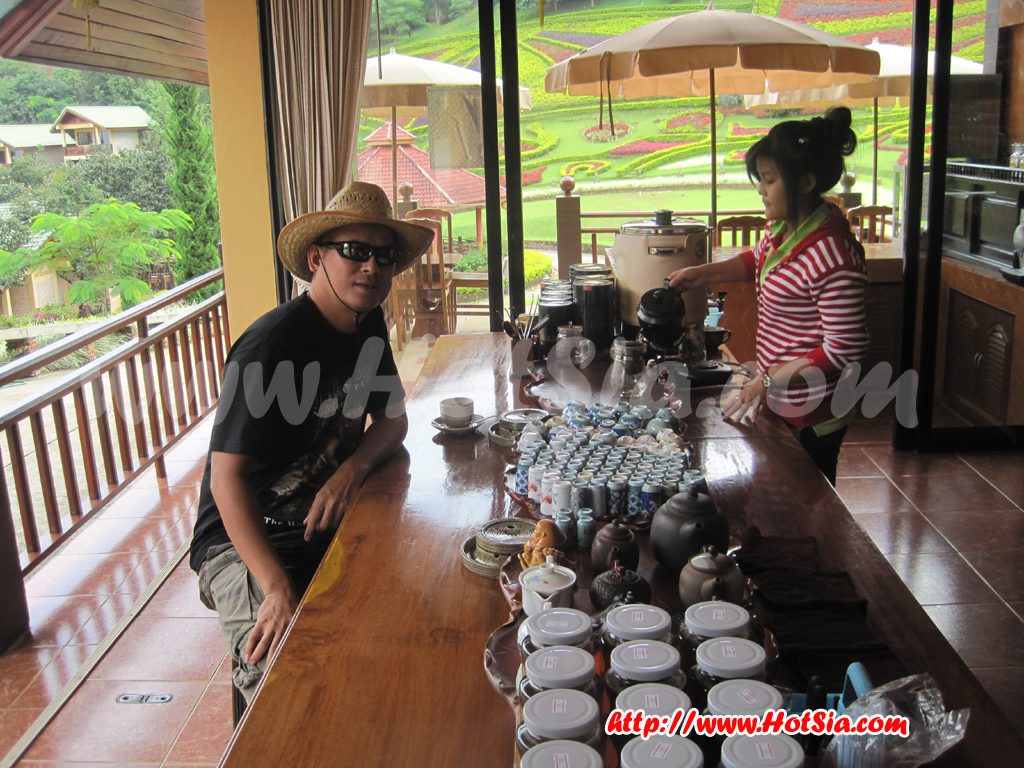
Now about tea tasting: at the Doi Mae Salong community market, almost every shop offers tea tasting. For a better atmosphere and beautiful views, try Doi Mok Dok Mai Resort. In the photo above, I tasted tea at Doi Mok Dok Mai Resort. The view was beautiful. I'm not a tea drinker, so I tried a couple of cups and then ordered coffee to enjoy in the garden. ..........MrHotsia Nov 2010. Then the leaves are withered. Today, many tea pickers have arrived. Additional tea information: The Chinese have known tea consumption for over a thousand years.
During the Han Dynasty, locals used tea as medicine (though when tea drinking for refreshment began is unclear). China is the first country known to drink tea, with evidence dating back to the 10th century BC. Tea leaves were dried by pressing out moisture to make them wilt and shrink over 16 hours. Then the dried leaves were rolled.
They were ground and torn, then fermented. After full fermentation, the leaves become completely dry. Half fermentation produces a taste and properties between black and green tea. Oolong tea production starts by wilting leaves for 6 hours, then rolling, tearing, and short fermentation. Green tea is made by steaming leaves, then rolling and quickly drying them.
This method keeps the leaves green. Because green tea processing is simple and minimal, it retains more beneficial plant compounds than other teas. Nowadays, many tea products exist, such as ready-to-drink iced tea and flavored blends like Nestea and Oishi tea, which do not use tea leaves at all.
Instead, aromatic plants are chopped and dried. This tea has a strong scent and is cheaper than real tea but lacks the flavor. Jasmine tea is made by adding jasmine flowers to green tea (or other teas) after rolling and moisture removal. Low-quality teas use only jasmine scenting, not real jasmine flowers. Genuine jasmine tea includes dried jasmine flowers, giving full jasmine flavor and aroma, making it more expensive.
Mulberry tea is gaining popularity, comparable to other teas. Mulberry leaves help prevent and treat diabetes, lower blood sugar, and reduce excess body fat. It is also relatively inexpensive compared to other teas. Mulberry (Morus spp.) is a local herb and food for silkworms, now a premium health drink for humans. The National Sericulture Institute in honor of Her Majesty Queen Sirikit pioneered research on mulberry tea and its properties since 1993.
They collaborated with the Food Institute, Mahidol University, Khon Kaen University, Rangsit University, Naresuan University, and the Department of Medical Sciences. Mulberry leaves contain all essential amino acids, high calcium, and important antioxidants like quercetin, kaempferol, and rutin.
Additionally, mulberry tea contains DNJ (1-deoxynojirimycin), which lowers blood sugar; GABA (gamma amino-butyric acid), which reduces blood pressure; and phytosterols, which lower blood lipids. No side effects have been found, making it safe for consumers. Jiaogulan, known in Thailand as "Panjakhan," is used to nourish the body, calm nerves, aid sleep, reduce excitement, lower blood pressure, and reduce cholesterol.