ไทย
ไทย

Khon Kaen, Phra Maha That Kaen Nakhon (9-tiered Stupa), Wat Nong Waeng, Bueng Kaen Nakhon
Phra Maha That Kaen Nakhon (9-tiered Stupa), Wat Nong Waeng, Bueng Kaen Nakhon http://www.hotsia.com > Khon Kaen > Phra Maha That Kaen Nakhon (9-tiered Stupa), Wat Nong Waeng, Bueng Kaen Nakhon, Krua Kraya Thip Khon Kaen, Noi Lab Ped Khon Kaen, Phra Maha That Kaen Nakhon, Tennis in Khon Kaen, Khon Kaen City Pillar Shrine, Ton Tan Market Khon Kaen, Recommended Hotels in Khon Kaen, Phra Maha That Kaen Nakhon (9-tiered Stupa, Nine-tiered Chedi), Wat Nong Waeng, Bueng Kaen Nakhon
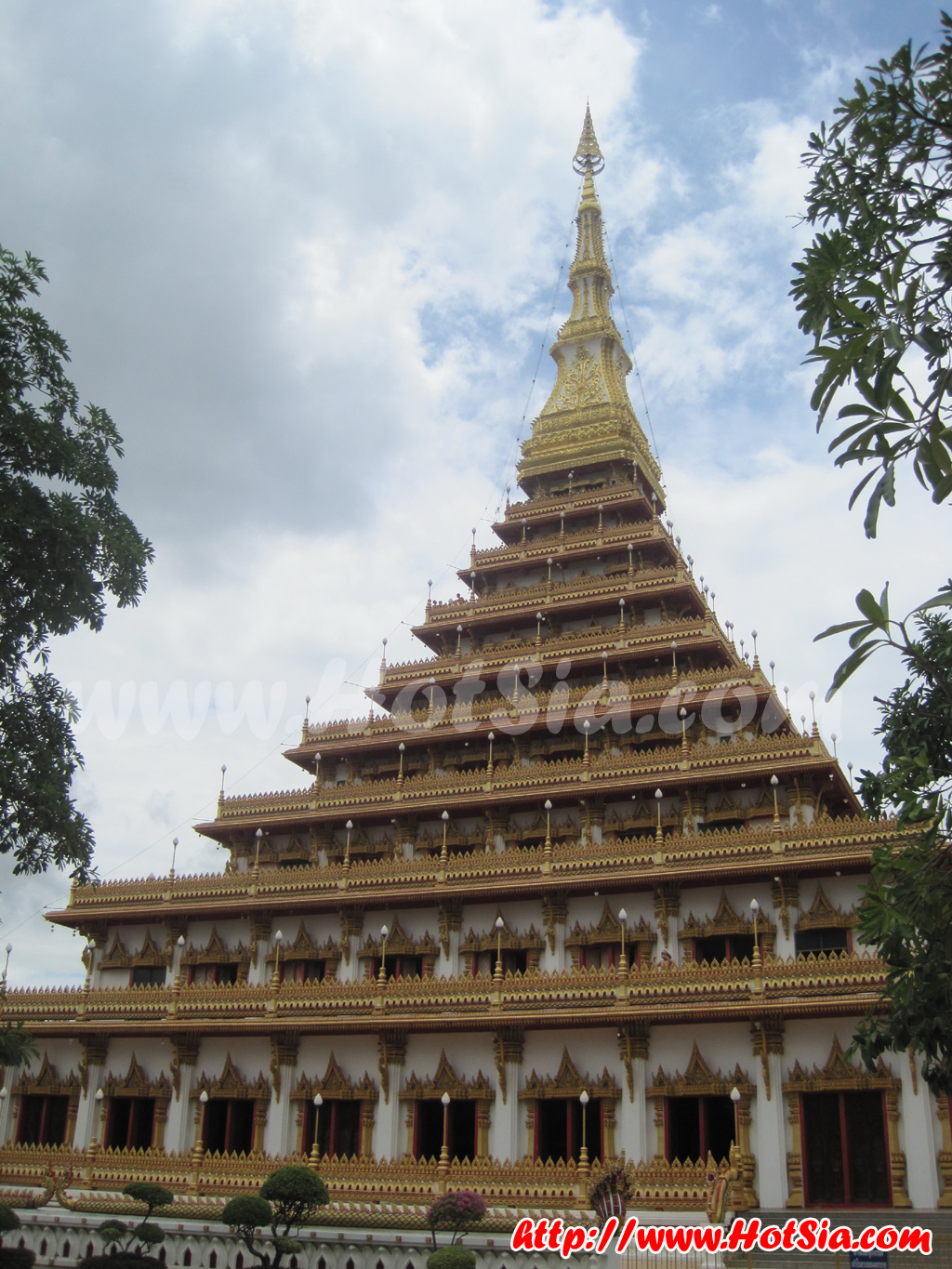
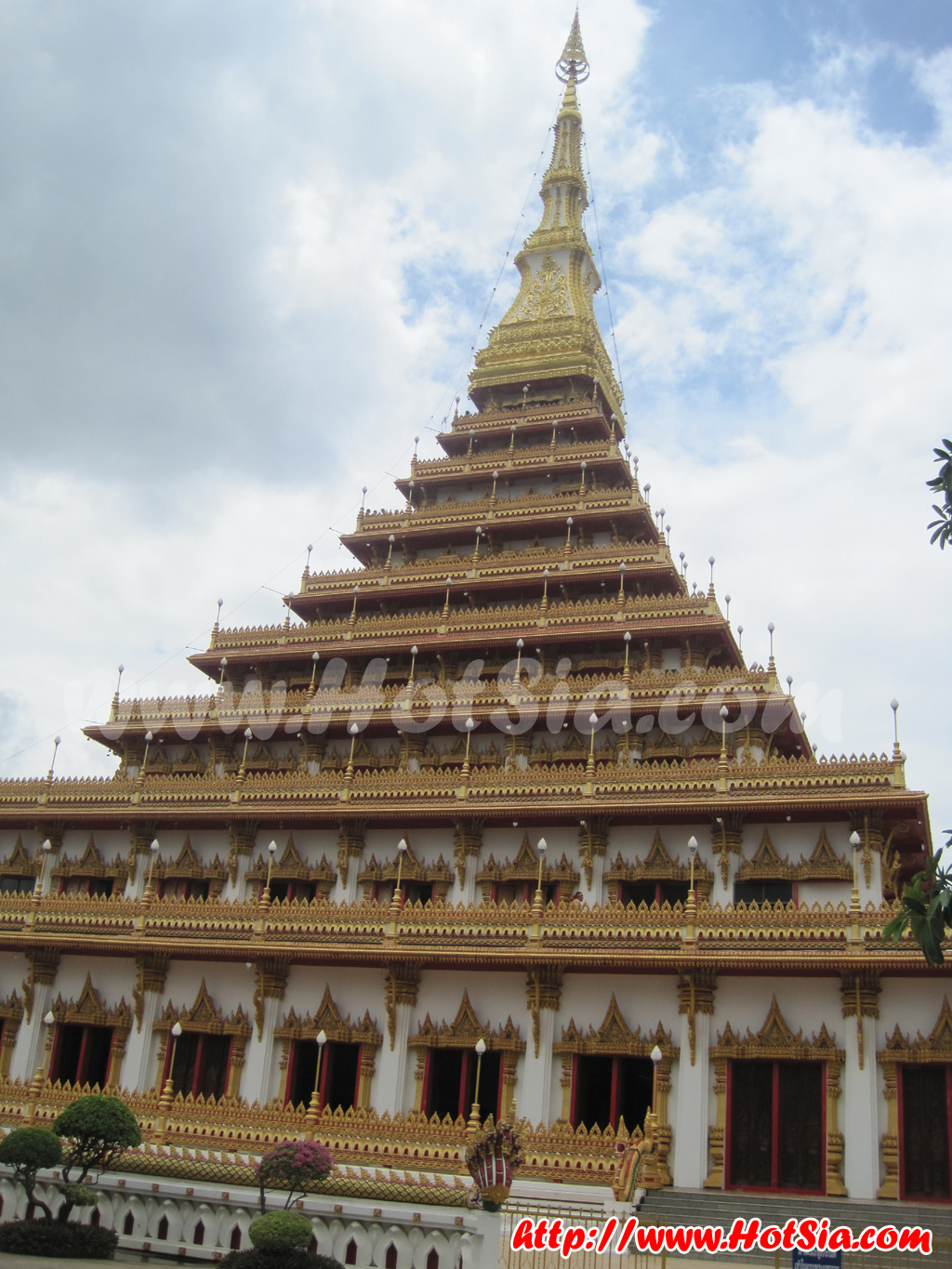
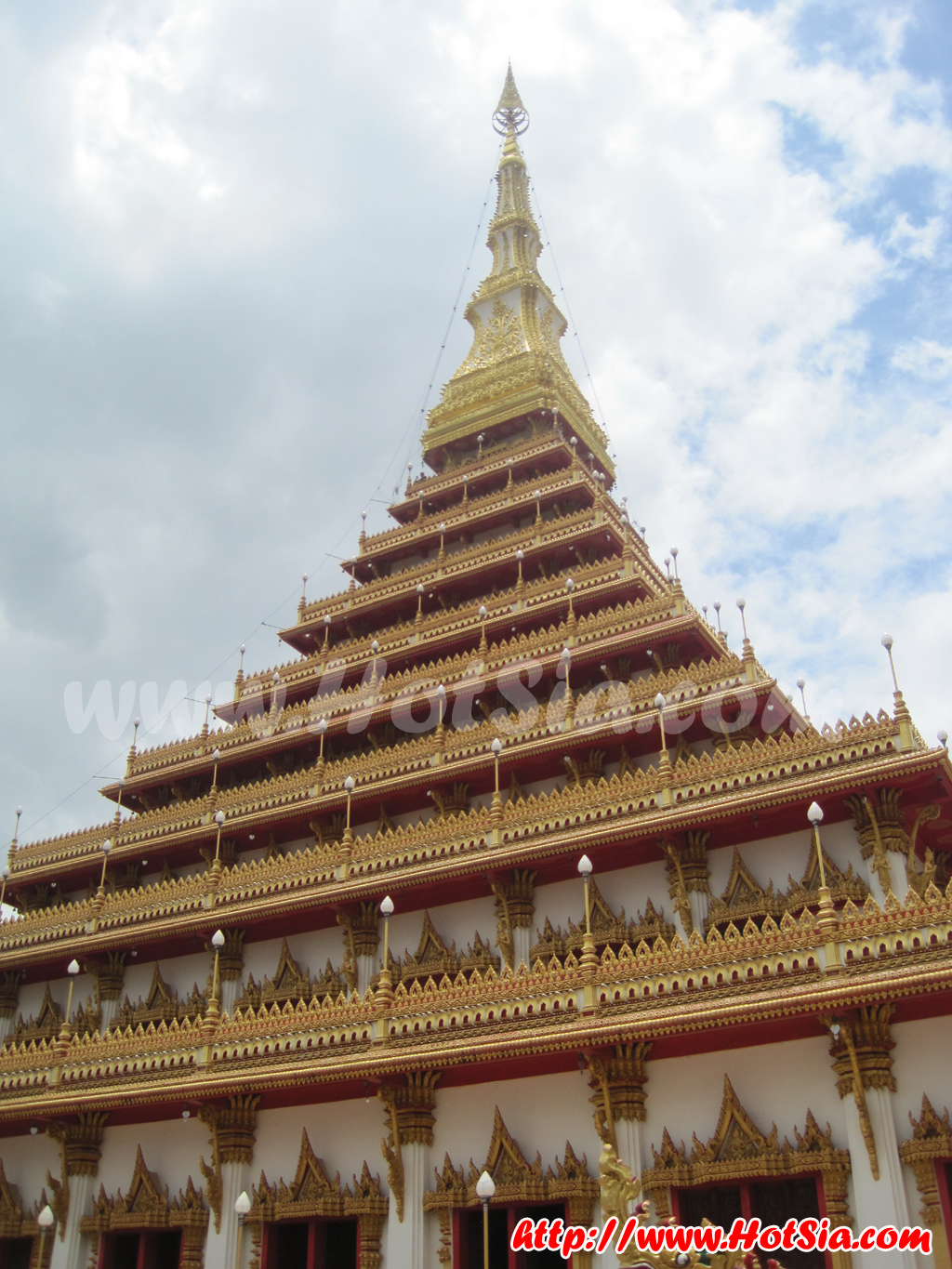
(Phra Maha That Kaen Nakhon) is located on Klang Mueang Road, beside Bueng Kaen Nakhon, Mueang District, inside Wat Nong Waeng Muang Kao, which is a royal temple. It features Phra Maha That Kaen Nakhon or the 9-tiered stupa with a square base 50 meters wide on each side. The top is a chedi modeled after Phra That Kham Kaen. It was built to commemorate the 50th anniversary of His Majesty the King’s reign and the 200th anniversary of Khon Kaen city. The stupa is 80 meters tall and contains 4 smaller stupas.
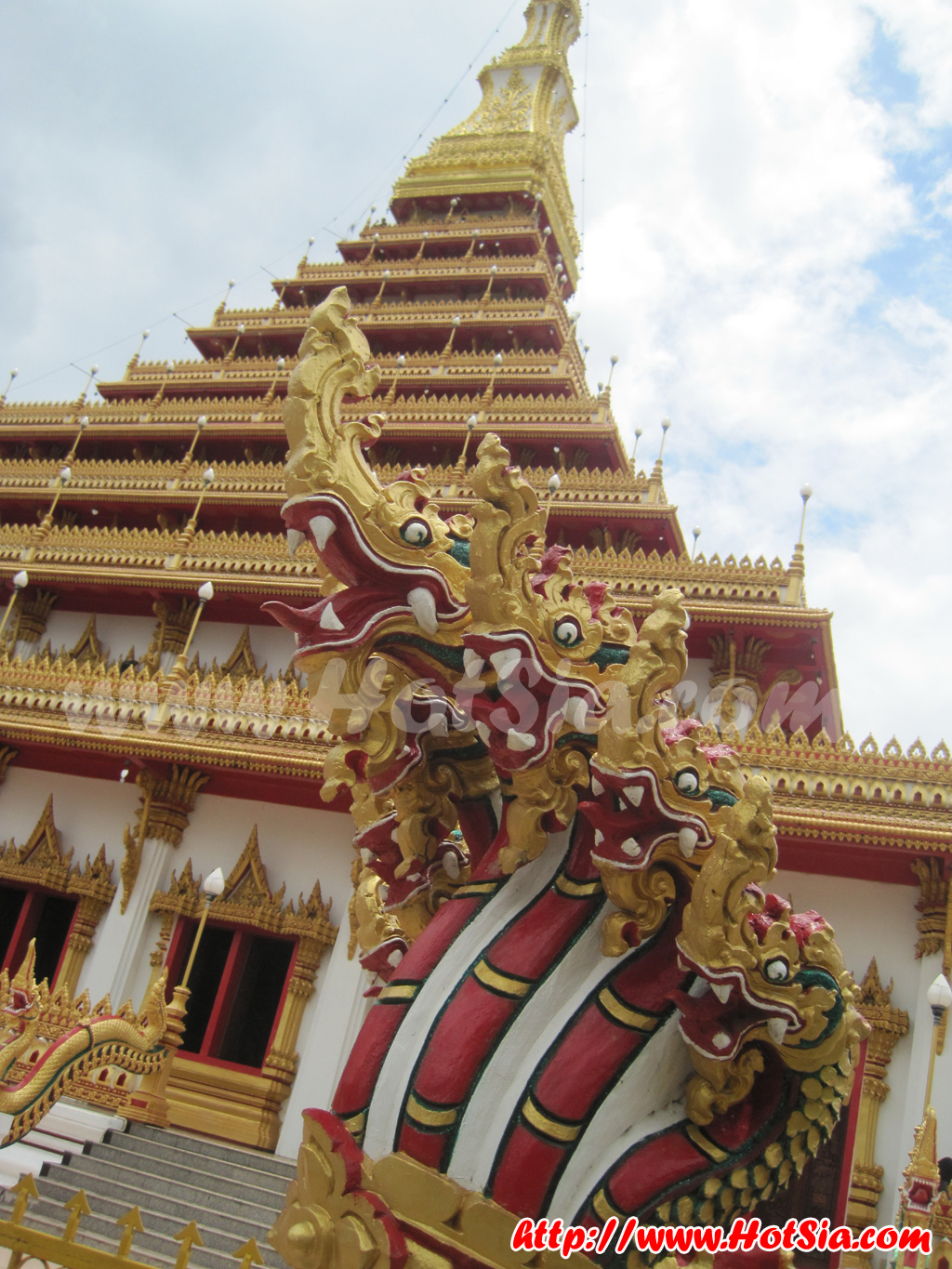
Situated at the four corners are 7-headed Naga walls surrounding it, showcasing Dvaravati art mixed with Indochina style, characteristic of the dry Isan region. History of Wat Nong Waeng, a royal temple formerly called Wat Nuea, was established in 1789 along with Wat Klang and Wat That by Thao Pia Mueang Paen, the first city lord at Ban Bueng Bon (Bueng Kaen Nakhon). In 1811, Thao Chammut Thao Pia Mueang Paen, the second city lord,
moved the city to Ban Don Phan Chat in Maha Sarakham area (Ban Non Mueang, Paeng Subdistrict, Kosum Phisai District, Maha Sarakham Province). Ban Bueng Bon then became the old city. The temple is located at No. 593 Klang Mueang Road, Nai Mueang Subdistrict, Mueang Khon Kaen District, Khon Kaen Province. It first received the royal boundary marker in 1899 by Phraya Nakhon Si Borirak (U) and last received it on August 27, 1984.
The sacred boundary area is 40 meters wide and 80 meters long, with the temple land covering 26 rai 65 square wah. It holds land title deed no. 713, survey page 794. The temple and surrounding area are flat, hexagonal in shape, surrounded by villages on three sides, and Bueng Kaen Nakhon lies to the east. It was a model temple in 1981, an outstanding developed temple in 1983, and was graciously elevated to royal temple status in 1984.
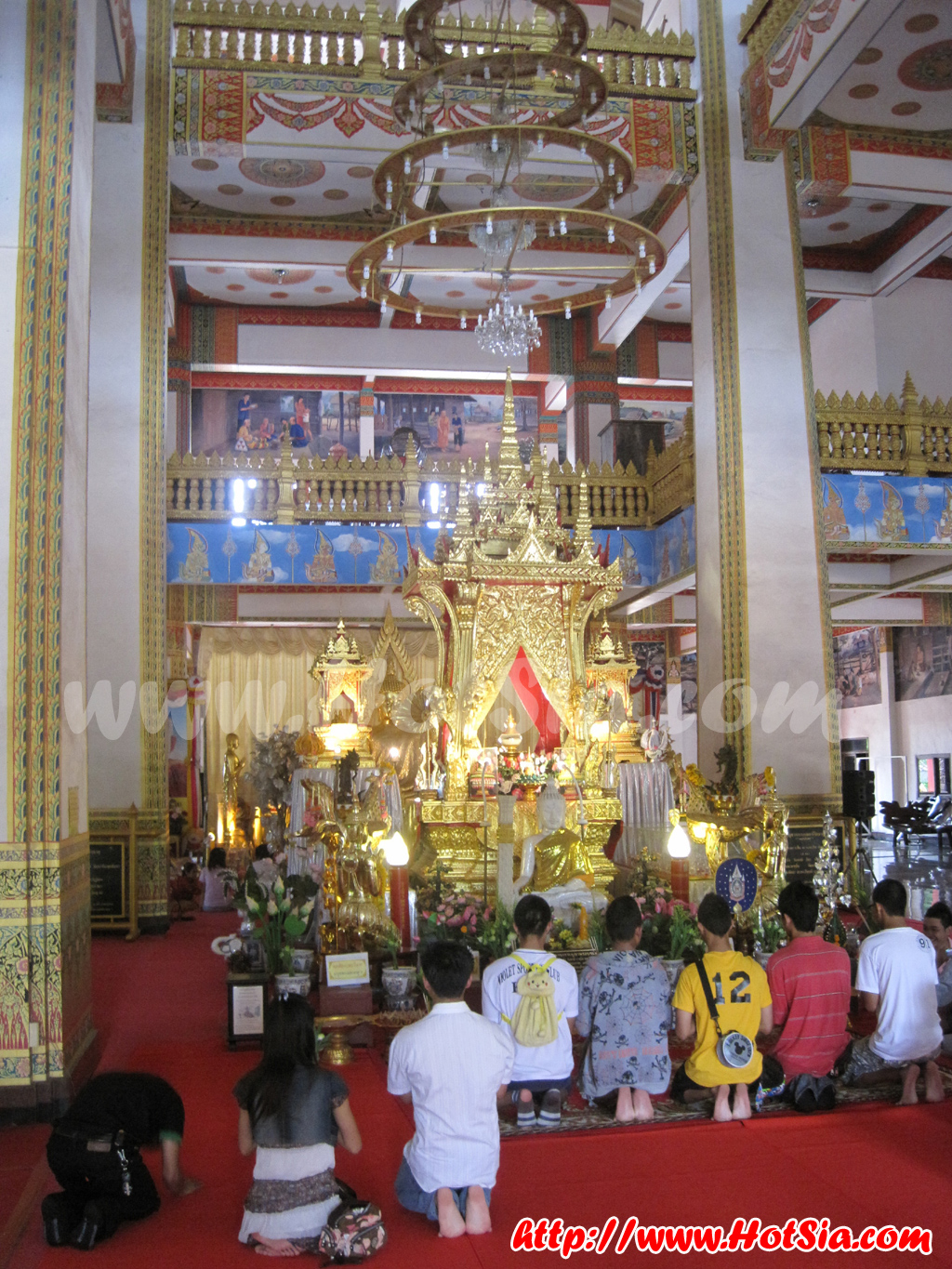
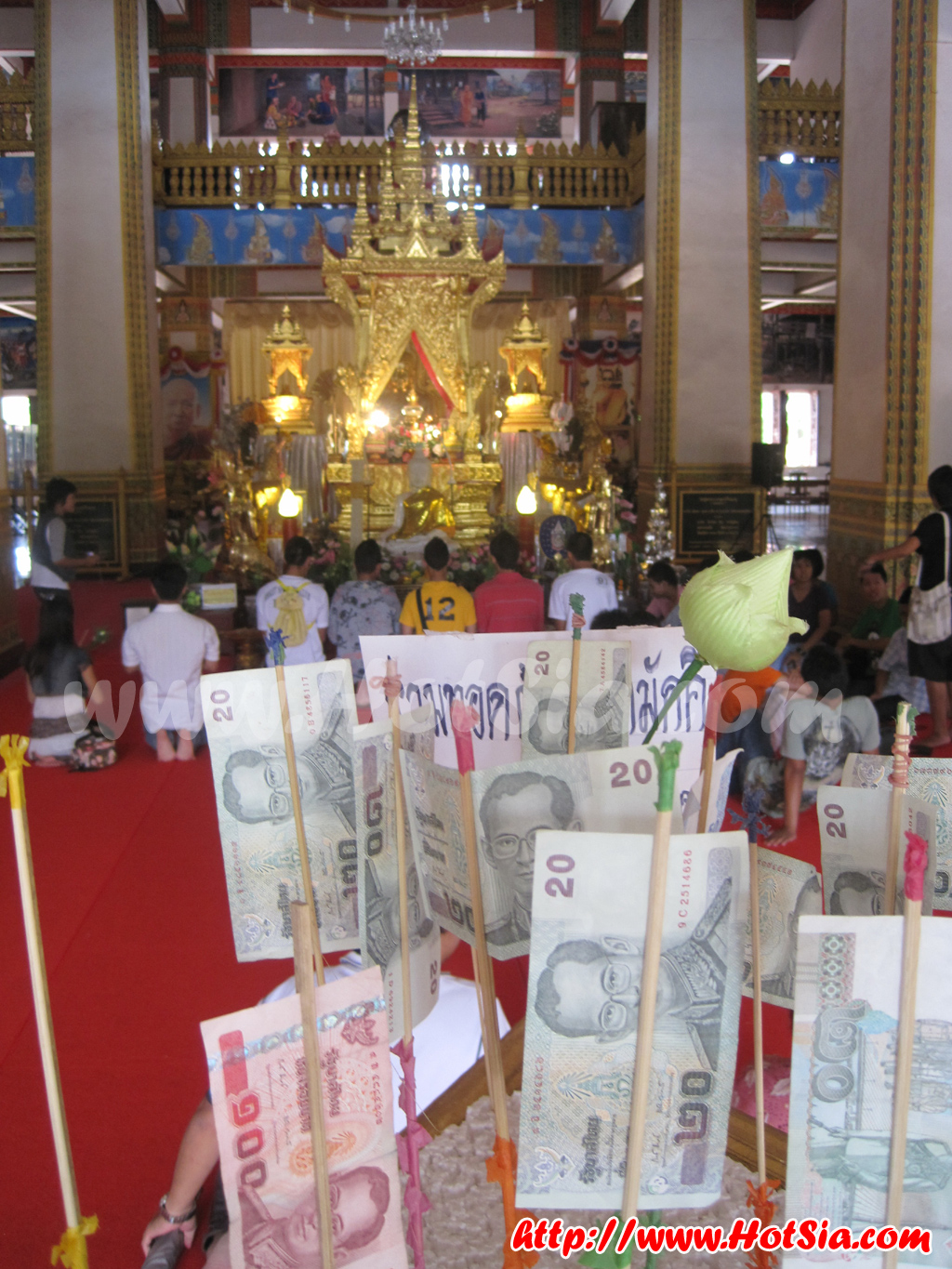
Inside the stupa are 9 levels: Level 1 is a hall with the Buddha’s relics enshrined on a central throne and three principal Buddha images in the middle. The doors and windows are carved with the Jampa Si Ton (Four Champa Trees) story, especially the doors with 3D carvings and murals about Khon Kaen’s history. Level 2 is a dormitory with doors and windows painted in Benjarong patterns and carvings of the Sang Sin Chai story.
On the upper walls are paintings about Kalam or various prohibitions. Level 3 is a study hall with doors and windows painted in Benjarong patterns and carvings of the Nang Phom Hom story. Level 4 is a Dhamma study hall housing a museum of antiques. Doors and windows depict the Buddha images for each day of the week, guardian deities of directions, and the characters Tu Phueng and Tu Sawoei. Level 5 is a museum hall containing belongings of Luang Pu Phra Kru Palat Busaba Sumano, former abbot of the temple. Doors and windows are carved with Buddhist Jataka tales.
Level 6 is the hall of the preceptor monks with doors and windows carved with the Vessantara Jataka story. Level 7 is the hall of the arahant disciples with doors and windows carved with the story of Phra Tay Mee Bai. Level 8 is the Dhamma hall, housing important Buddhist scriptures including the Tripitaka. The door is carved with the 16-tiered Brahma image. Level 9 is the Buddha hall with a central throne enshrining the Buddha’s relics. The door features 3D carvings.
The 16-tiered Brahma image is present, and visitors can enjoy panoramic views of Khon Kaen city from all four sides, especially the eastern side with a beautiful view of Bueng Kaen Nakhon. The temple provides young guides who explain the paintings and displayed items to enhance understanding. Phra Maha That Kaen Nakhon is located by the lake, originally called “Bueng Bon Khon Kaen” by locals due to the many bon plants growing there.
The name includes 'Khon Kaen' because the lake contained submerged logs. When the city moved from the west side of Bueng Bon Khon Kaen to the east side, locals began calling it the Old City Lake. If you visit Khon Kaen, you will see a log at Khon Kaen railway station, but it is not the origin of the province’s name. The province’s name actually comes from a burnt log in Bueng Kaen Nakhon. The history of the log in front of the station is as follows:
In 1960-1961, Mr. Yong Suttharat, an engineer supervising the Khon Kaen railway maintenance division, found a cut log behind Ban Han railway station (between Ban Phai and Mueang Phon stations), which was a golden takian wood. He placed it in a train cabinet behind Khon Kaen railway station as a symbol of the station. It is understood that in 1969, Mr. Sawat Sewatjinda, an engineer supervising the Khon Kaen railway maintenance division, invited Professor Thiti Hengrasamee from the Faculty of Architecture, Khon Kaen University, to design improvements.
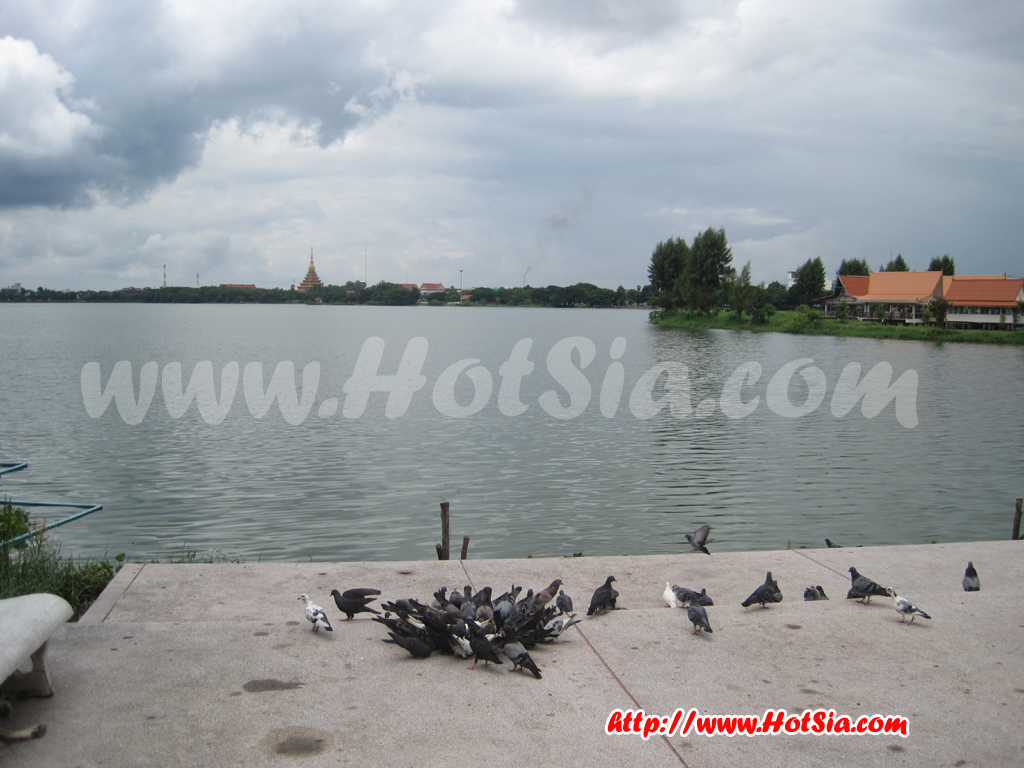
The log was painted black with white lettering and the surrounding garden was decorated. Later in 1996, the State Railway transferred the road to Khon Kaen Municipality for improvement, with conditions to renovate the road, roundabout, and the log area. The municipality assigned a private company to carry out the improvements and decorations. Buddha’s relics, the 9-tiered stupa, viewed from above Phra Maha That Kaen Nakhon, reveal the large Bueng Kaen Nakhon lake.
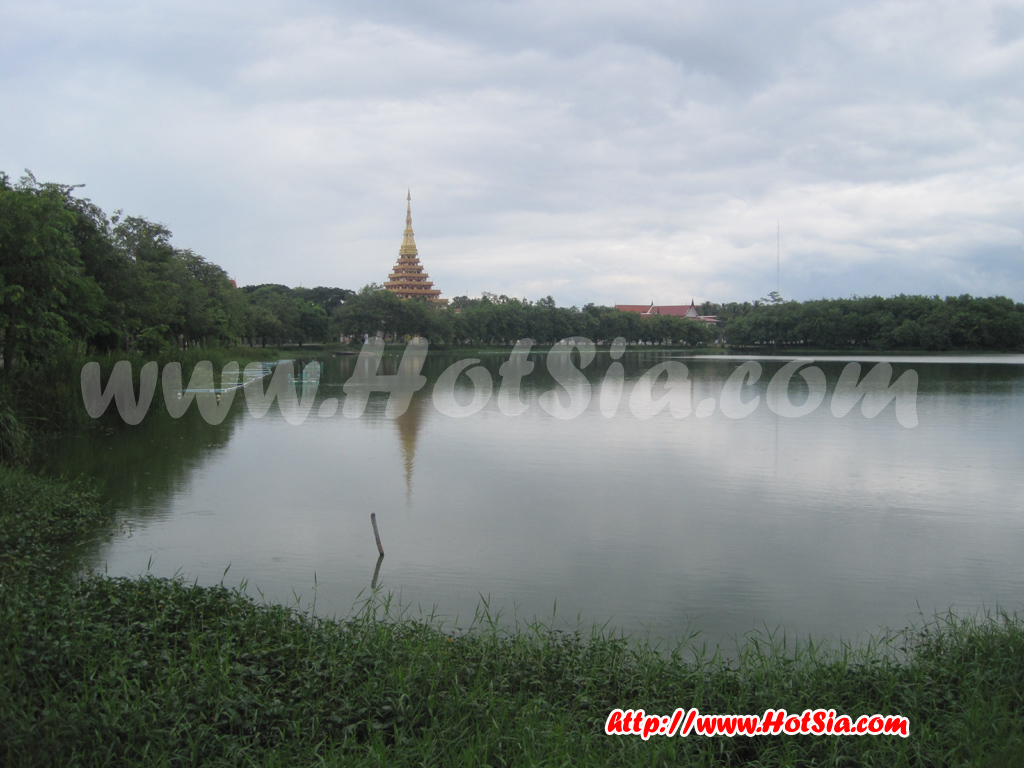
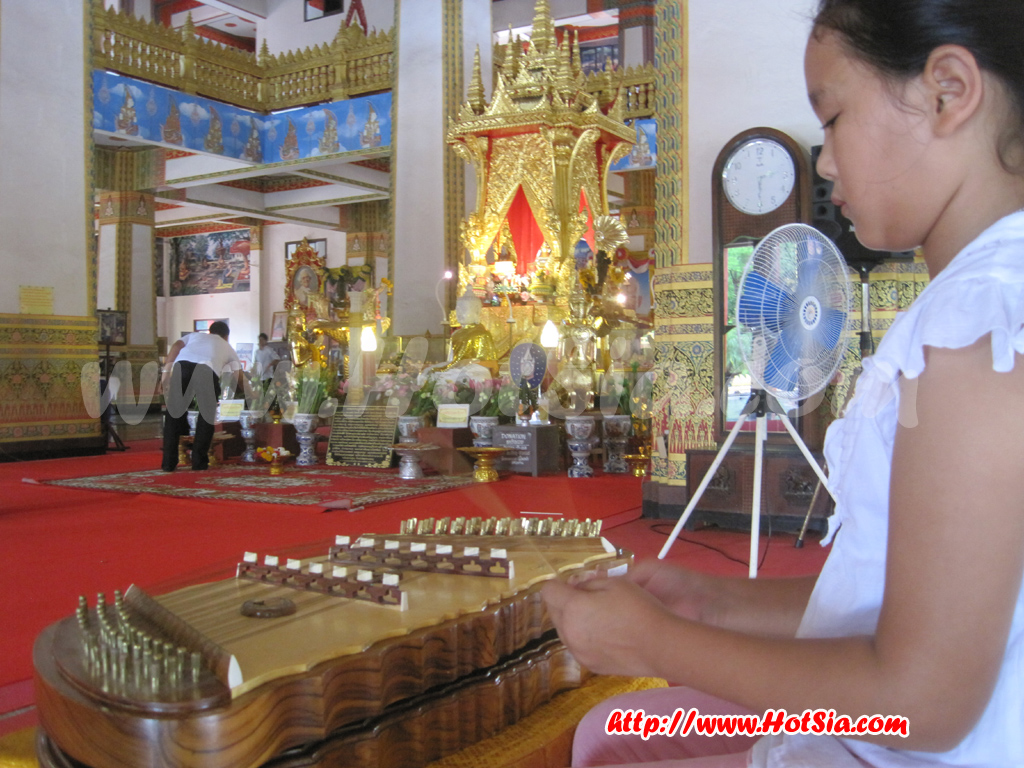
Another view of Bueng Kaen Nakhon shows the 9-tiered stupa of Wat Nong Waeng. Children playing the khim instrument perform at Wat Nong Waeng, at the lower level of the 9-tiered stupa. Video clip of climbing the 9-tiered chedi at Wat Nong Waeng with young guides leading the tour. Good children performing khim at the 9-tiered chedi of Wat Nong Waeng.