ไทย
ไทย
 English

Siem Reap Killing Fields
http://www.hotsia.com > เสียมเรียบ > ทุ่งสังหาร ข้อมูลเที่ยวเมืองเสียมเรียบกัมพูชา Broadway+ ระบำอัปสรา ร้านอาหารจีนในเสียมเรียบ เที่ยวกลางคืนเสียมเรียบ รถจากปอยเปตมาเสียมเรียบ ด่านปอยเปต / อรัญประเทศ แนะนำโรงแรมในเสียมเรียบ การเดินทางไปเสียมเรียบ ชาโดว์ออฟอังกอร์เกสท์เฮาส์ ระบำอัปสรา ระบำเขมร แนะนำโรงแรมถูกและดี ไนท์มาร์เก็ตเสียมเรียบ รถจากเสียมเรียบไปพนมเปญ เตรียมตัวเที่ยวสะใจ ทุ่งสังหาร(KillingFiled)
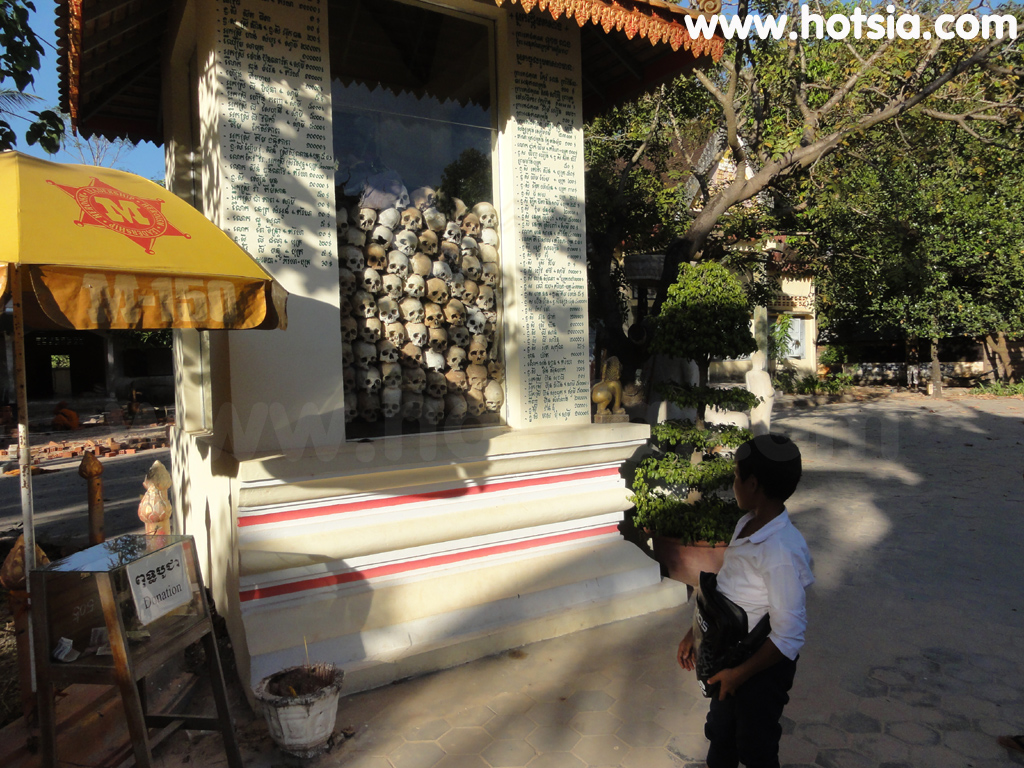
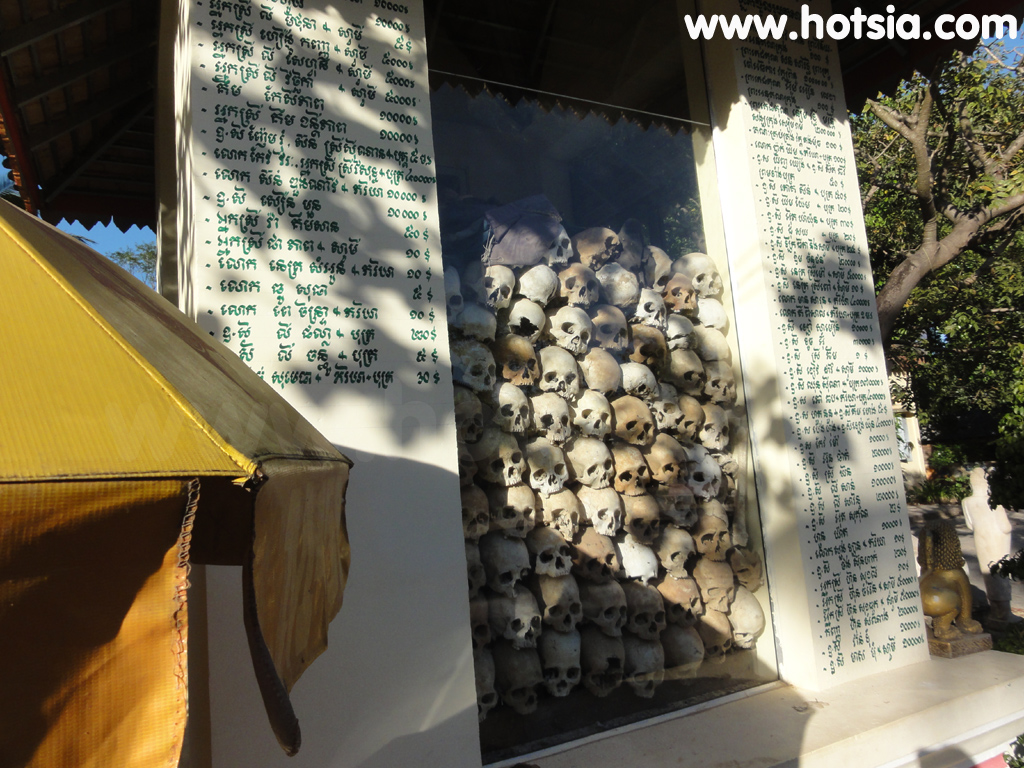
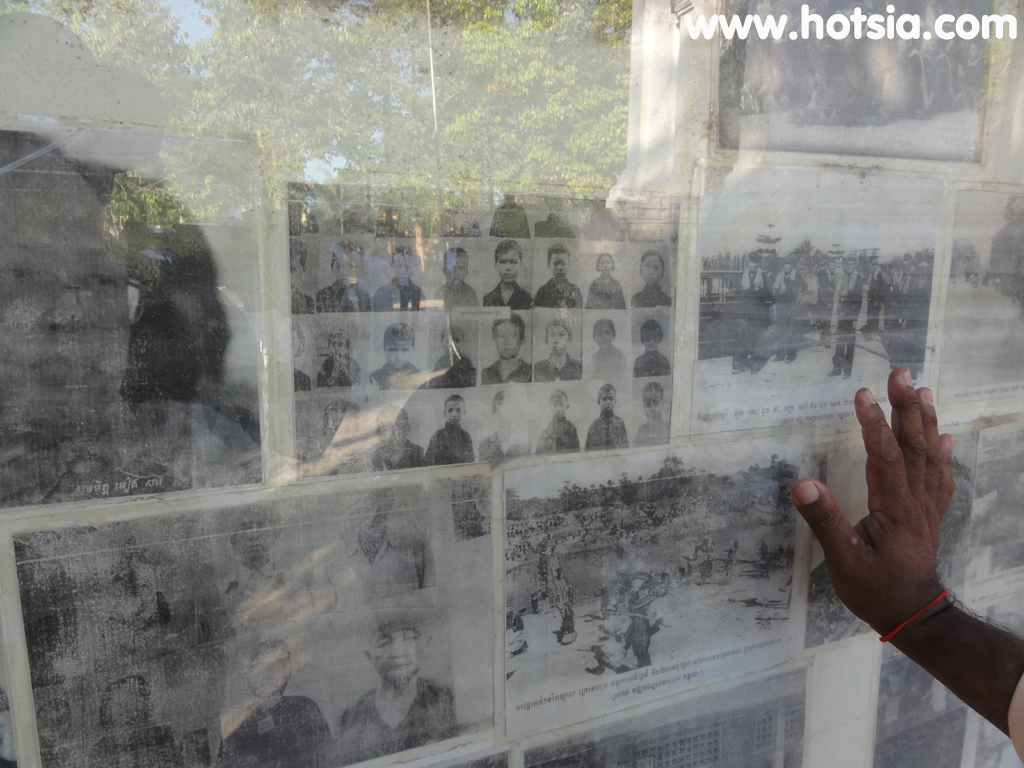
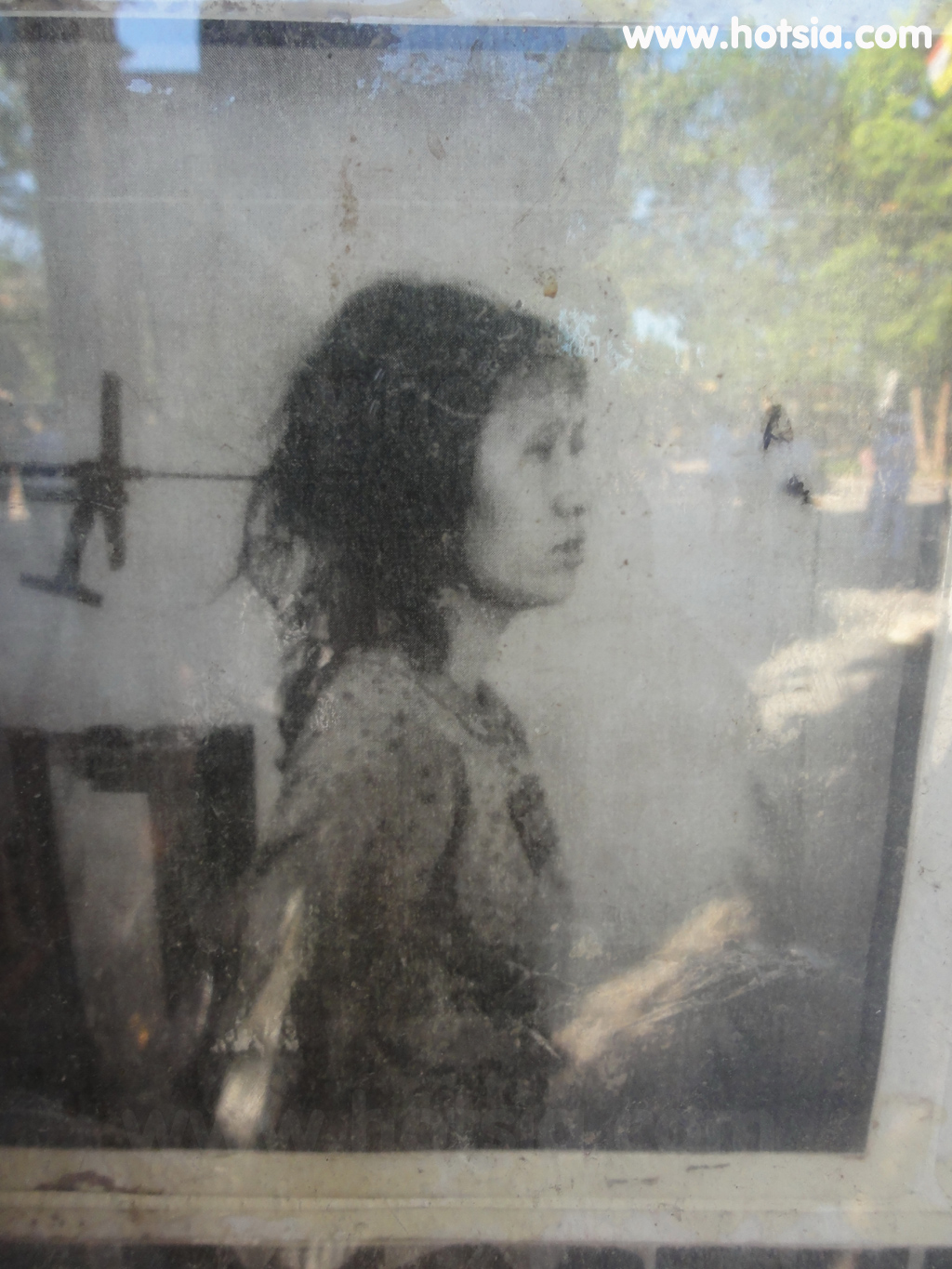
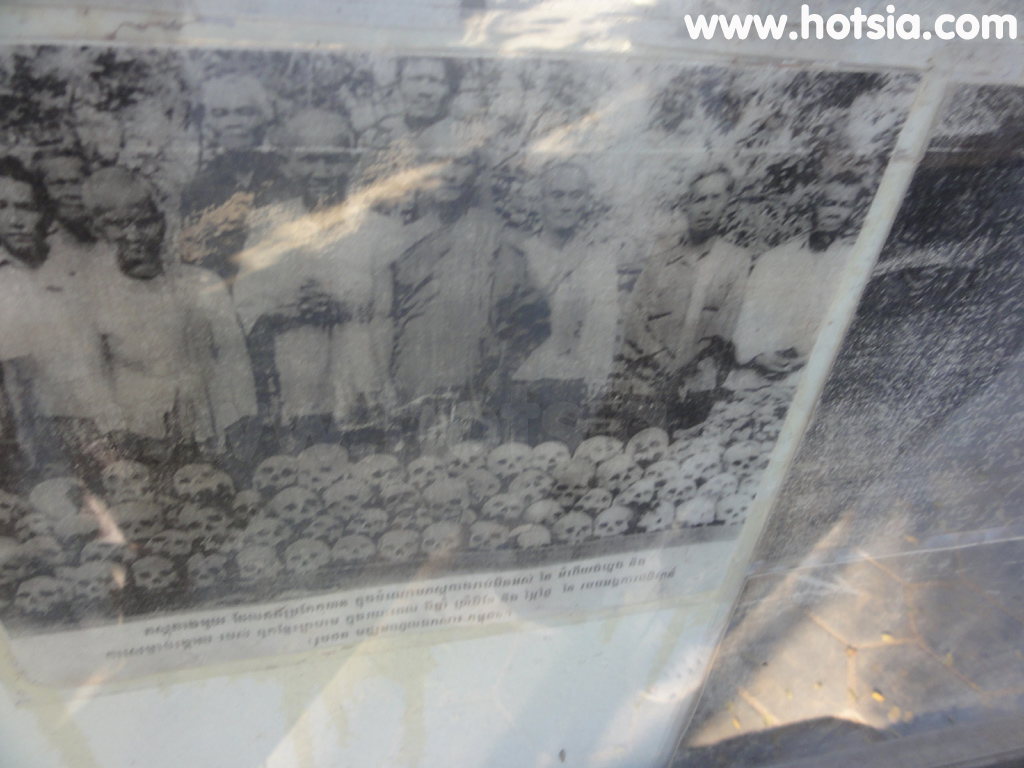
It's not only in Phnom Penh, but all over the country. The Killing Fields are places where the Khmer Rouge killed Cambodian people during their rule of over 3 years, with over three million deaths. Siem Reap also has Killing Fields, located on the way to Angkor Wat. It is an old temple area where bones used to be scattered all over the ground, and they were then collected and placed in the stupa as seen here. I have already taken you to the Phnom Penh Killing Fields, which was a later trip with very comprehensive information.
Follow the Phnom Penh Killing Fields here Mr.Hotsia December 2011 mr.hotsia recommends hotels in Siem Reap Additional information from Wiki: The Khmer Rouge, also known as the National Army of Democratic Kampuchea (Armée nationale du Kampuchéa démocratique), was the communist force that once ruled the Kingdom of Cambodia, which was renamed Democratic Kampuchea from 1975.
The Khmer Rouge represented the political power success of the communist party in Cambodia, which later developed into the Communist Party of Kampuchea (Parti communiste du Kampuchéa PCK) and the Democratic Kampuchea Party (Parti du Kampuchéa). The Khmer Rouge regime aimed to create a "new society" based on an ideology called "total revolutionary ideology" (idéologie de révolution totale), maintaining dictatorship by the working class.
The first action of the Khmer Rouge after gaining power was to forcibly evacuate all Cambodian people from Phnom Penh and other major cities to rural areas to work in agriculture and communal labor. They identified "class enemies" such as soldiers, government officials, royalty, educated people, or professionals in various fields to be eliminated. This caused many Cambodians to die from executions, forced labor,
and starvation, estimated between 850,000 to 3 million people. Compared to the total Cambodian population at that time (about 7.5 million in 1975), the Khmer Rouge regime was one of the most violent regimes of the 20th century. After ruling Cambodia for 4 years, in 1979 the Khmer Rouge's power ended.
This was due to the invasion and occupation of Cambodia by forces from the Socialist Republic of Vietnam. However, the Khmer Rouge's resistance movement, especially in western Cambodia with bases in the Kingdom of Thailand, continued through the 1990s until 1996 when Pol Pot, the leader at that time, officially ended the Khmer Rouge after signing a peace agreement. Video of the Siem Reap Killing Fields.
GPS coordinates (POI) 13°22'58.962"N, 103°51'36.377"E 13°22'59.166"N, 103°51'36.414"E 13°22'58.632"N, 103°51'36.173"E 13°22'58.728"N, 103°51'36.101"E 13°22'58.368"N, 103°51'36.473"E