ไทย
ไทย
 English

Travel Samut Prakan: The Lotus Throwing Festival
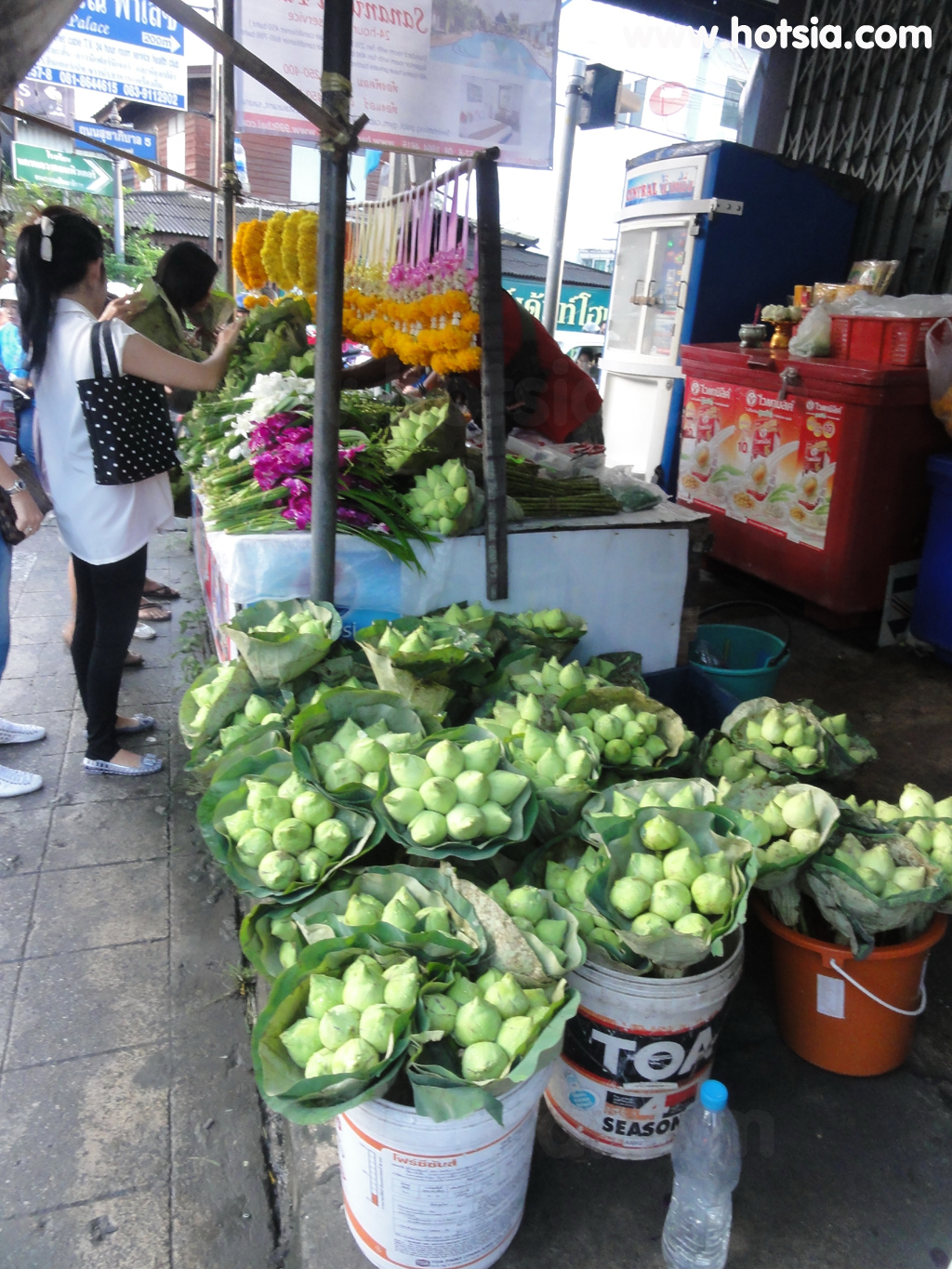
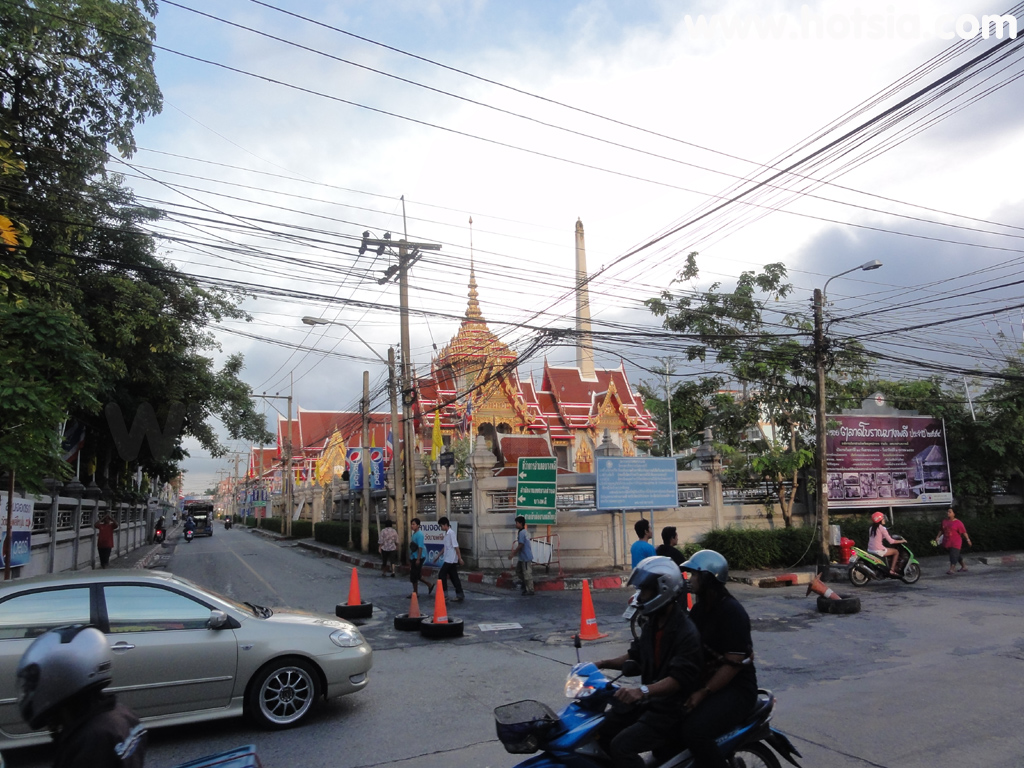
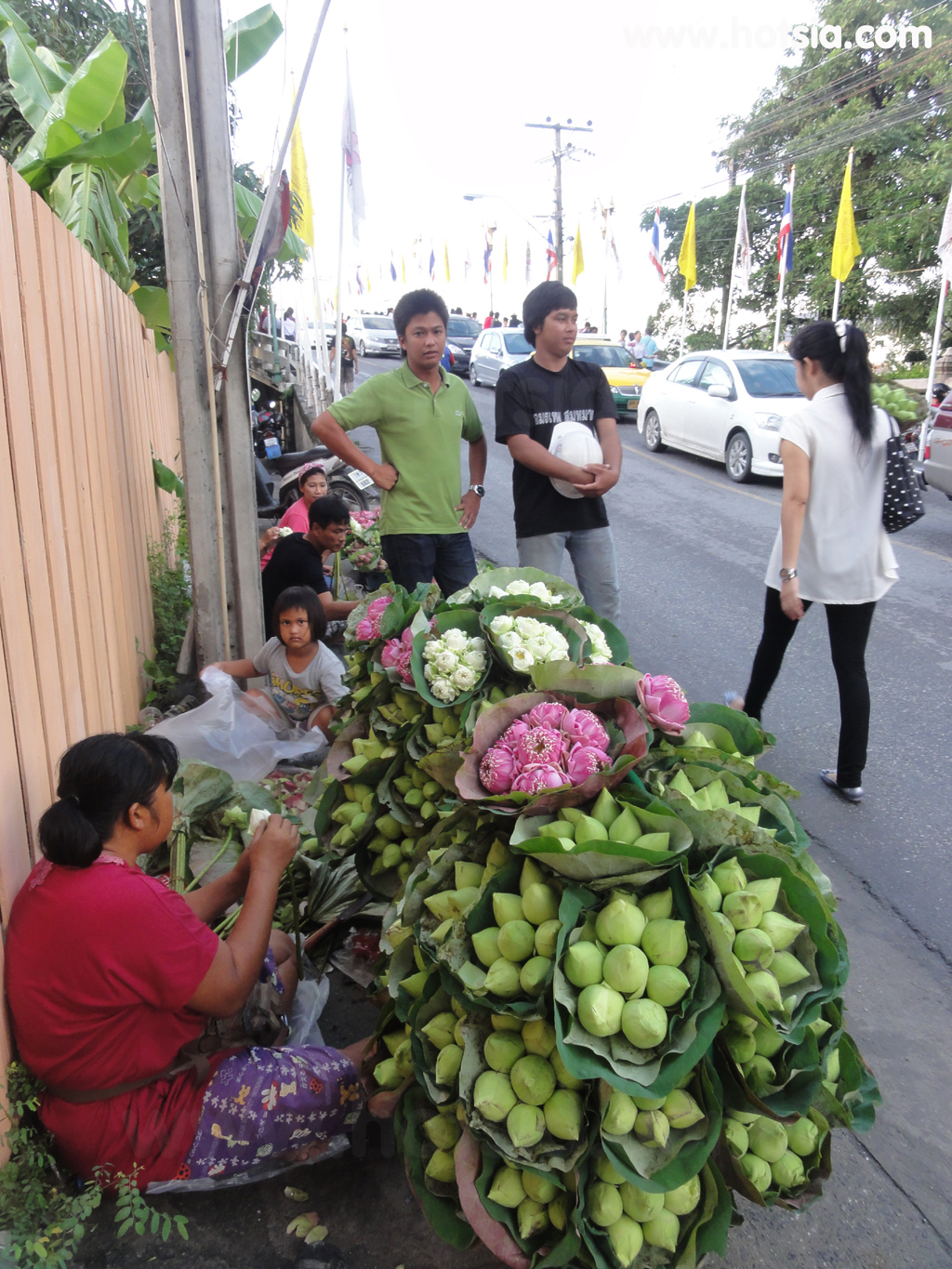
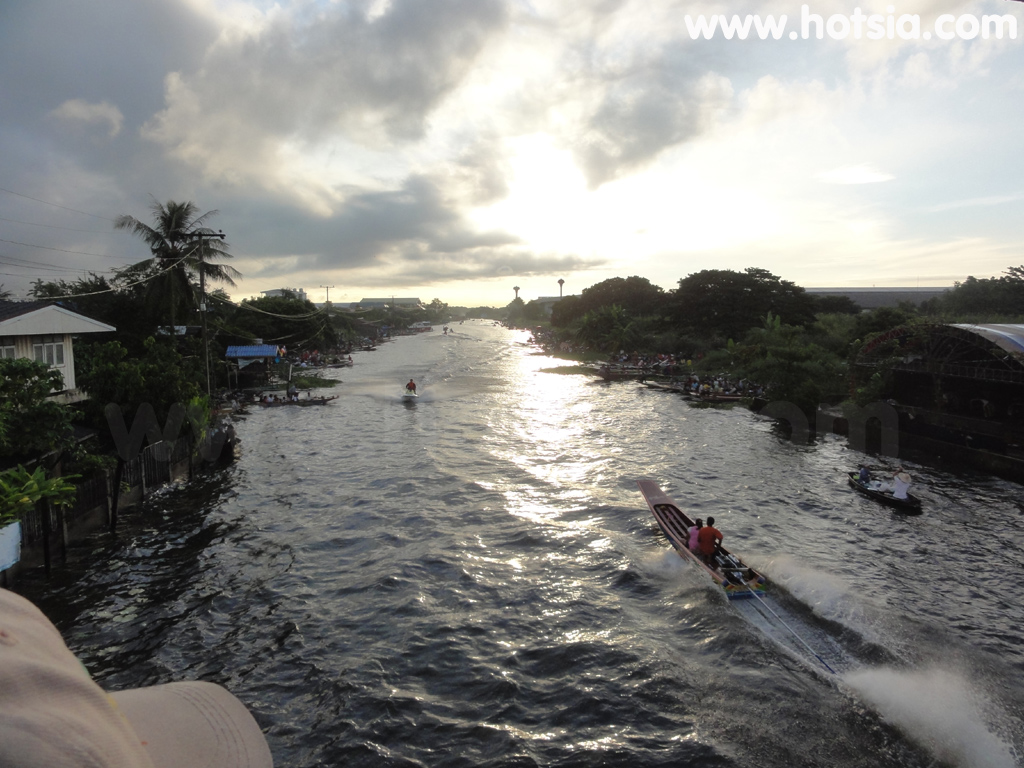
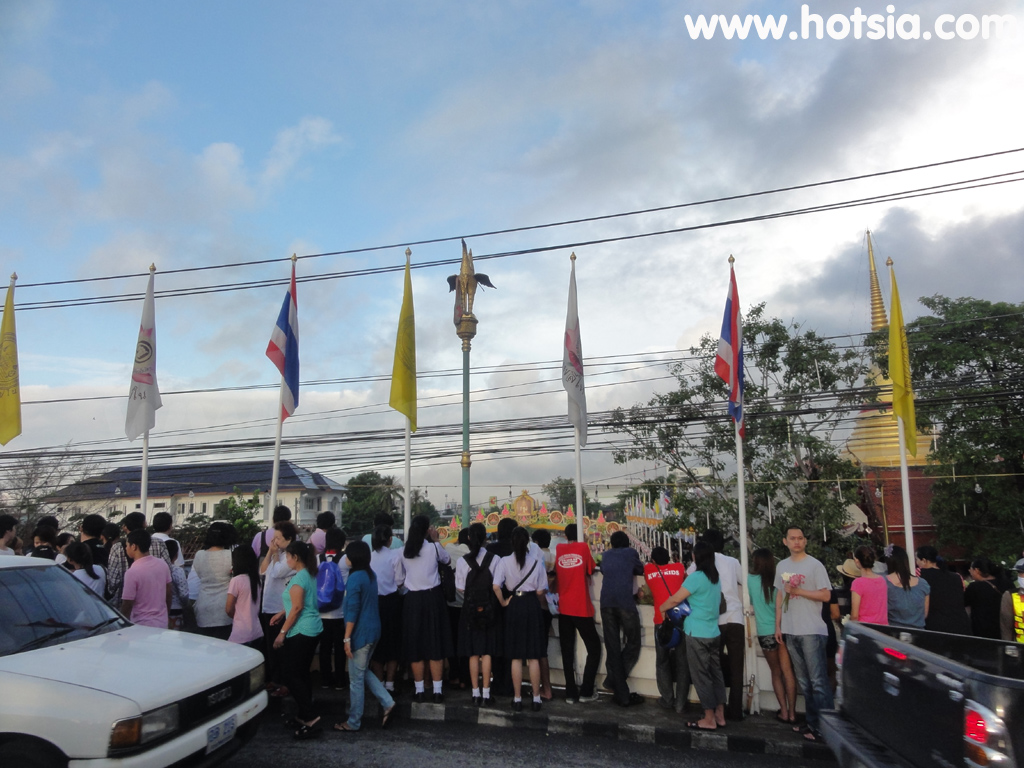
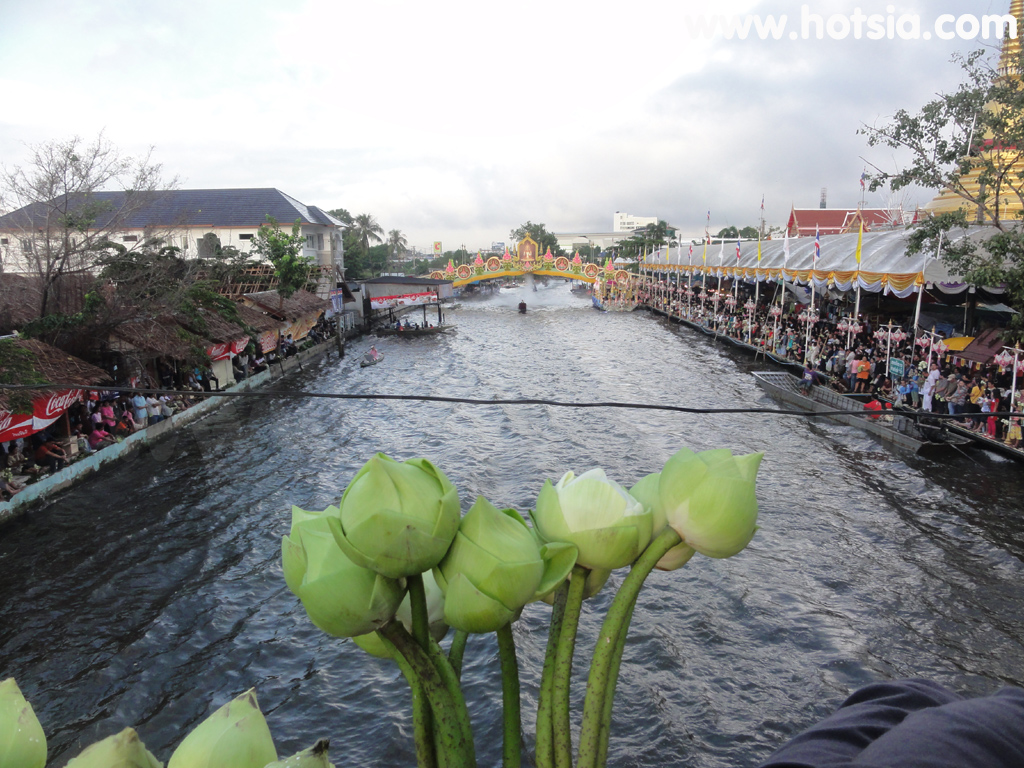
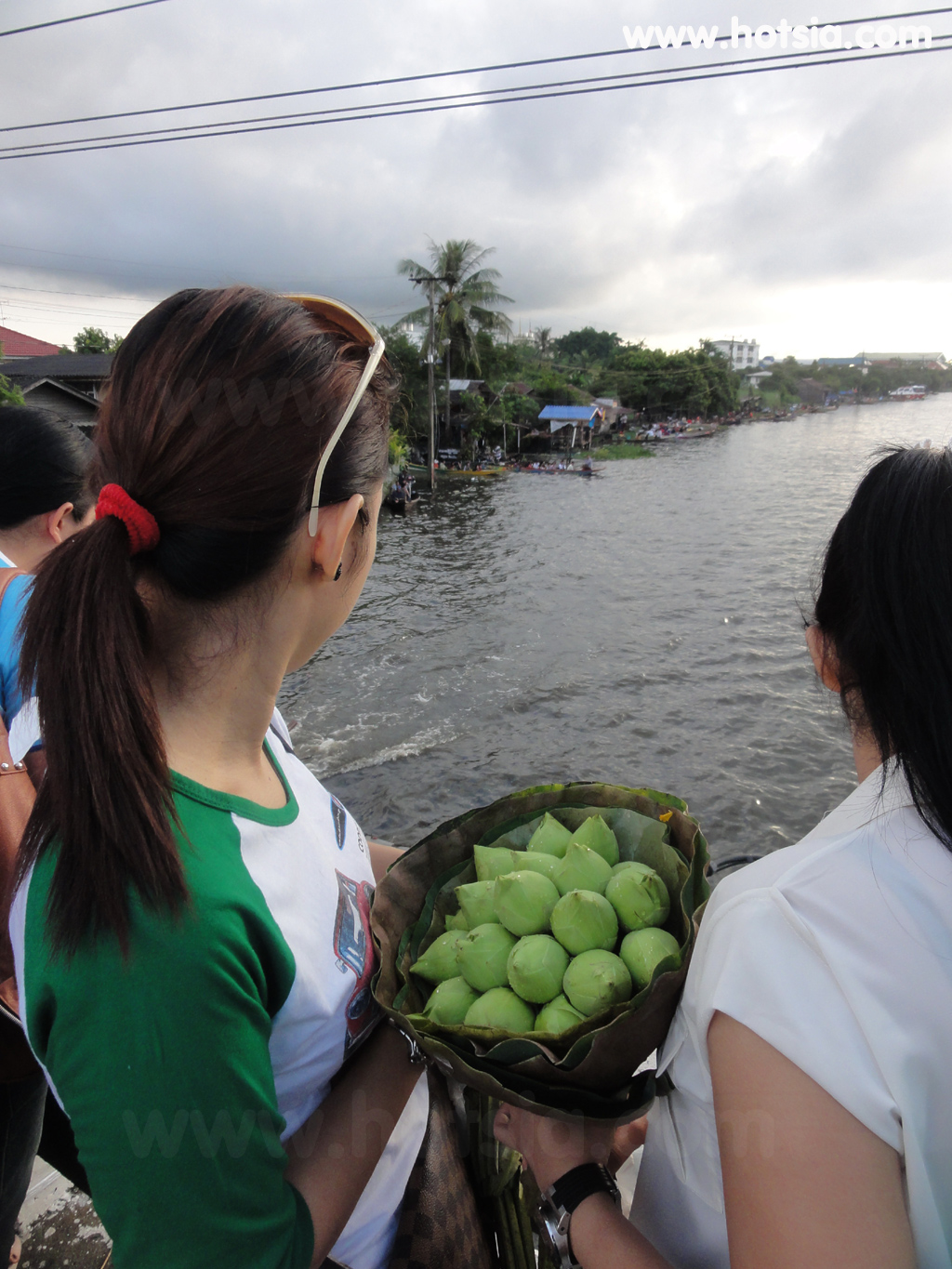
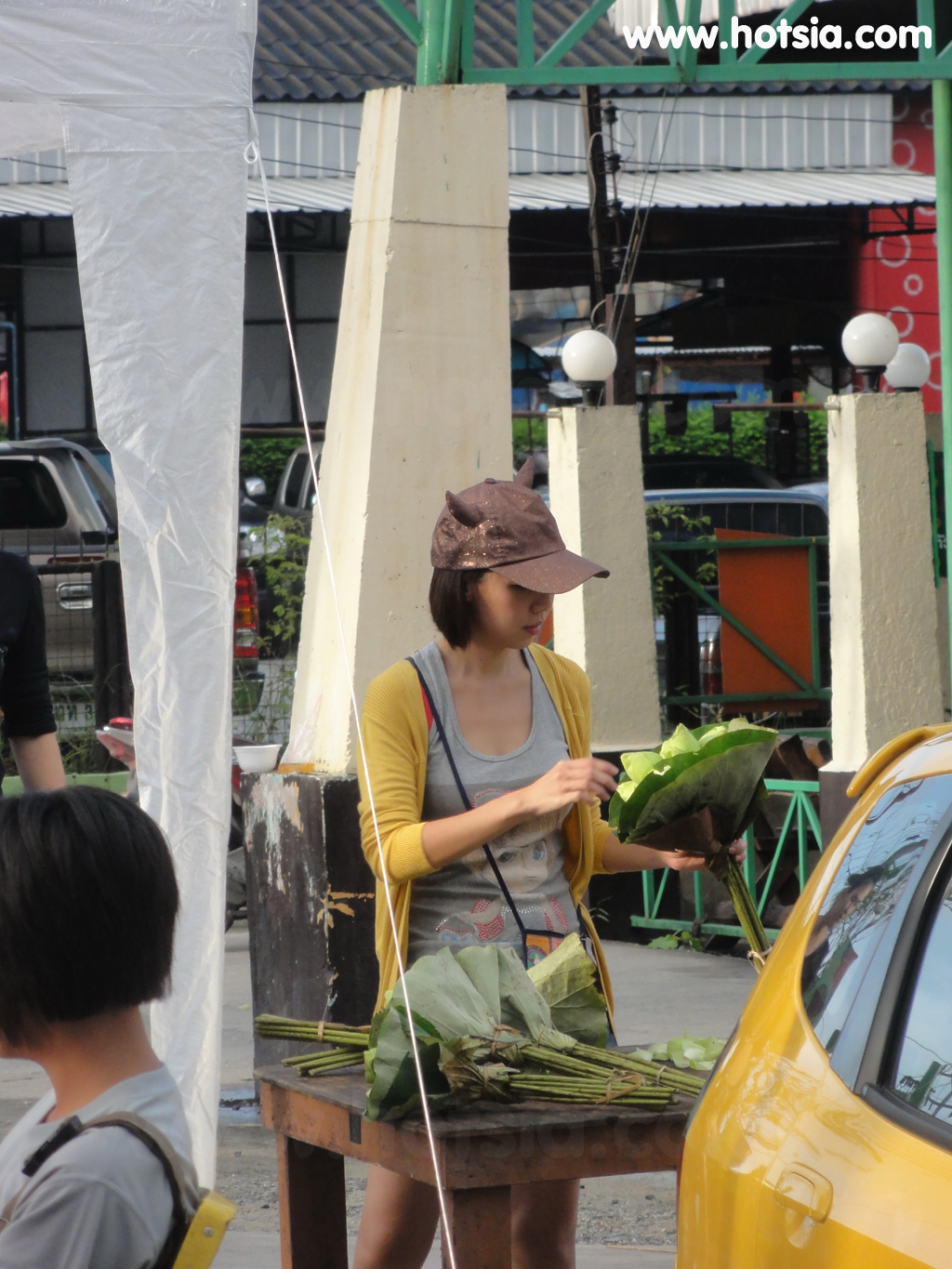
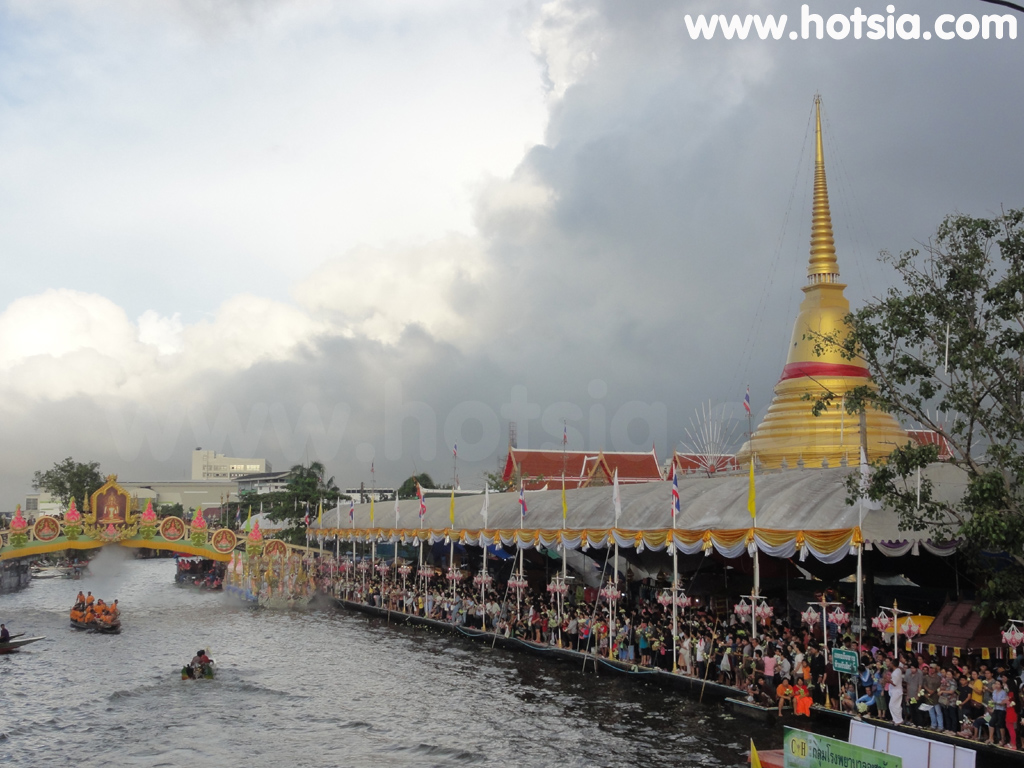
http://www.hotsia.com > Travel Samut Prakan > The Lotus Throwing Festival I live in Bang Bo, not far from Wat Luang Pho To Bang Phli Yai, where the Lotus Throwing Festival is held every year. However, I had never visited until this year when I finally got the chance. The Lotus Throwing Festival is an event where locals throw lotus flowers onto boats carrying a replica of Luang Pho To, who arrives by boat. Participants hold the lotus stem at the tip of their wish and then throw the lotus to land in front of Luang Pho successfully. Lotus flowers are sold by vendors along the canal during the event.
I guess in the past, everyone probably brought their own lotus flowers because Bang Phli Yai had plenty of lotus flowers. According to legend, when Luang Pho To arrived, he came ashore at the lotus pond. Nowadays, lotus flowers are harder to find, so locals and tourists buy them to throw. Luang Pho To is a sibling of Luang Pho Sothon and Luang Pho Wat Ban Laem. They floated together but landed at different places. Luang Pho To landed at the lotus pond at Wat Bang Phli Yai, which is why the festival commemorates Luang Pho To's arrival.
This tradition has continued to this day. The Lotus Throwing Festival is held annually during the end of Buddhist Lent. Additional information from http://personal.swu.ac.th: The festival starts from the 13th waxing day of the 11th lunar month to the 14th waxing day of the 11th lunar month, before the end of Buddhist Lent. The Lotus Receiving tradition is a local custom of Bang Phli District, Samut Prakan Province, passed down since ancient times without clear historical records of its origin. There are three hypotheses about the origin of this tradition.
Let's explore the Lotus Throwing Festival at Bang Phli Yai. In the past, the Bang Phli area was inhabited by three groups: Thai, Mon, and Lao. Each group had leaders overseeing their livelihoods. The Mon people traditionally dug fish ponds. Later, all three groups—Thai, Mon, and Lao—agreed to clear and expand the land for farming. The area was once covered with dense reed and various trees.
The southern bank of the Samrong canal was full of mangrove forests with salty water, dangerous with many wild animals. The northern bank had large swamps rich with many lotus flowers. The three groups continued clearing the land until they reached a three-way junction: northwest to Khlong Salut, north to Khlong Chuat Lak Khao, and northeast to Khlong Lat Krabang. The three groups
agreed to separate and farm in different directions to better understand the land. The Lao went to Khlong Salut, the Thai to Khlong Chuat Lak Khao, and the Mon to Khlong Lat Krabang. The Mon farmed for about 2-3 years but faced many pests like birds and rats damaging crops. When farming failed, the Mon planned to migrate back to their original home at Pak Lat.
(Phra Pradaeng). They began migrating at dawn on the 14th waxing day of the 11th lunar month. Before leaving, they collected many lotus flowers from the local swamp. The Thai, familiar with the Mon, asked why they collected so many lotus flowers. The Mon said they would use them to worship the Phra Katha Phan (Great Sermon) at Pak Lat and asked the Thai friends to gather lotus flowers at Wat Luang Pho To the following year on the 14th waxing day of the 11th lunar month for them to receive.
The Thai, known for their generosity and camaraderie, agreed. The Mon then paid respects to Luang Pho To and took holy water from him for blessings before returning to their homeland at Pak Lat, bringing lotus flowers to worship the Phra Katha Phan. The next year, the Thai people of Bang Phli gathered lotus flowers at Wat Bang Phli Yai as requested. The Mon came to collect lotus flowers every year, arriving at night by boats carrying 50-60 people, reaching the temple around 1 to 4 AM.
Every visit was accompanied by gong beating and singing along the way in a joyful atmosphere, including various boat games. The welcoming hosts also enjoyed the festivities with great hospitality. The Thai prepared various savory and sweet dishes to serve guests at the temple pavilion. After feasting, they offered lotus flowers to Luang Pho To before the Mon took them back to worship the Phra Katha Phan at Pak Lat (Phra Pradaeng) and farmed in Bang Phli (Bang Kaeo Subdistrict).
It is said that the Mon people migrated to Thailand with Chao Phraya Maha Yot (Jeng Khotchaseni) during the Thonburi period. This migration was due to King Mangra planning to attack Thonburi, recruiting the Mon, who were Burmese subjects, to fight. The Mon were oppressed, their families killed, leading them to rebel against Burma. They fought but were defeated and fled to seek protection under King Taksin the Great, bringing Mon traditional music with them in 1774. The king graciously allowed the Mon to settle at Pak Kret, Nonthaburi, and Pak Khok, Pathum Thani.
Later, during King Rama I's reign, the Mon families and Chao Jeng were relocated to Nakhon Khuean Khan (Phra Pradaeng) in 1824. The Mon were later rewarded with land in Bang Phli for their good deeds. This is why the Mon farmed in Bang Phli. They came only during the farming season and returned to Pak Lat afterward. After Buddhist Lent, most Mon descendants at Pak Lat, who are devout Buddhists, returned to make merit at their home temples. Upon returning, they collected lotus flowers from Bang Phli Yai, which were abundant then, to make floral offerings with incense and candles for merit-making ceremonies featuring the Phra Katha Phan sermon at the end of Buddhist Lent.
Initially, they collected lotus flowers themselves. Later, the people of Bang Phli noticed the Mon collected lotus flowers annually and began preparing lotus flowers for them, reflecting the Thai spirit of generosity. At first, they handed the flowers directly with thanks. As familiarity grew, if nearby, they passed flowers hand to hand; if far, they threw them, hence the term 'Receiving Lotus.' Originally, Bang Phli Yai Subdistrict had many lotus flowers. Nearby districts like Mueang Samut Prakan, Phra Pradaeng, and others also came to collect lotus flowers during the end of Buddhist Lent, as lotus flowers are sacred in Buddhism. For example, the Buddha is often depicted sitting, standing, or walking on lotus flowers. Also, in the story of Phra Malai, a poor man who offered lotus flowers was reborn as a celestial being. Therefore, in ancient times, people favored offering lotus flowers on the last day of Buddhist Lent, believing it brought great merit, even staying overnight in the area to collect lotus flowers.
Travel Samut Prakan: The Lotus Throwing Festival Image 2
Travel Samut Prakan: The Lotus Throwing Festival Image 3