ไทย
ไทย

Phayao Homestay Trip at Ban Huak Border Market
Travel to Ban Huak Homestay and Ban Huak Border Market. Explore Ban Huak at http://www.hotsia.com > Ban Huak Homestay and Border Market. Mr. Hotsia tours Phayao city and beyond, including a boat trip to see the lotus at Kwan Phayao, traditional Kalamae sweets in Chiang Kham, Kwan Phayao viewpoint, Kwan Phayao walking street, Luang Pho Kamthep at Wat Nantararm, solo adventure at homestays, Miao (Yao) homestay, wild honey hunting and tasting at Ban Pha Daeng, Ozone Valley Homestay Ban Huak #1, and Ozone Valley Homestay Ban Huak #2.
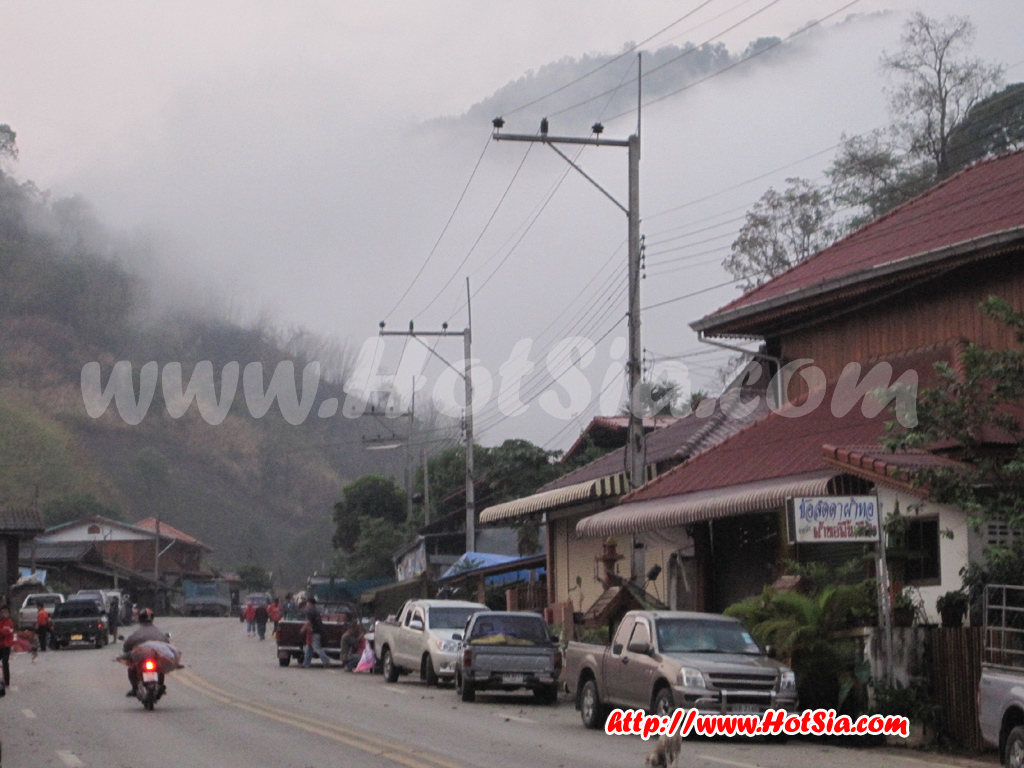
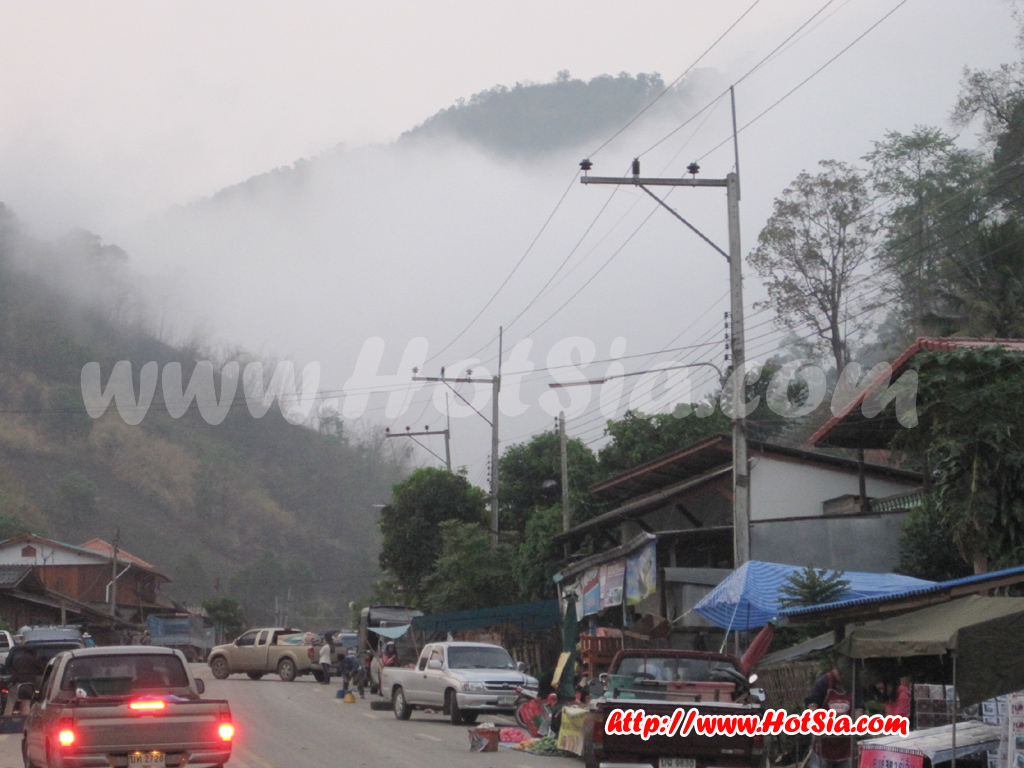
Phayao province shares a border with Xayaburi Province, Lao People's Democratic Republic (Lao PDR), with a total border length of approximately 36 kilometers. It borders Chiang Kham District for 16 kilometers and Phu Sang Minor District for 20 kilometers. The border area is mostly mountainous with natural routes suitable for border trade, used by people from both countries for crossing. The main crossing point is 'Kiu Hok' near Ban Huak, Village No. 3, Phu Sang Subdistrict, Phu Sang Minor District.
In 1994, a border relaxation point was opened at Kiu Hok, Ban Huak, to facilitate communication and trade between the two countries. The landscape has since been modified. Currently, Ban Huak serves as a border trade point but is only a relaxation point, not a permanent checkpoint. There have been no customs officers, immigration officers, or government agencies stationed permanently at this point.
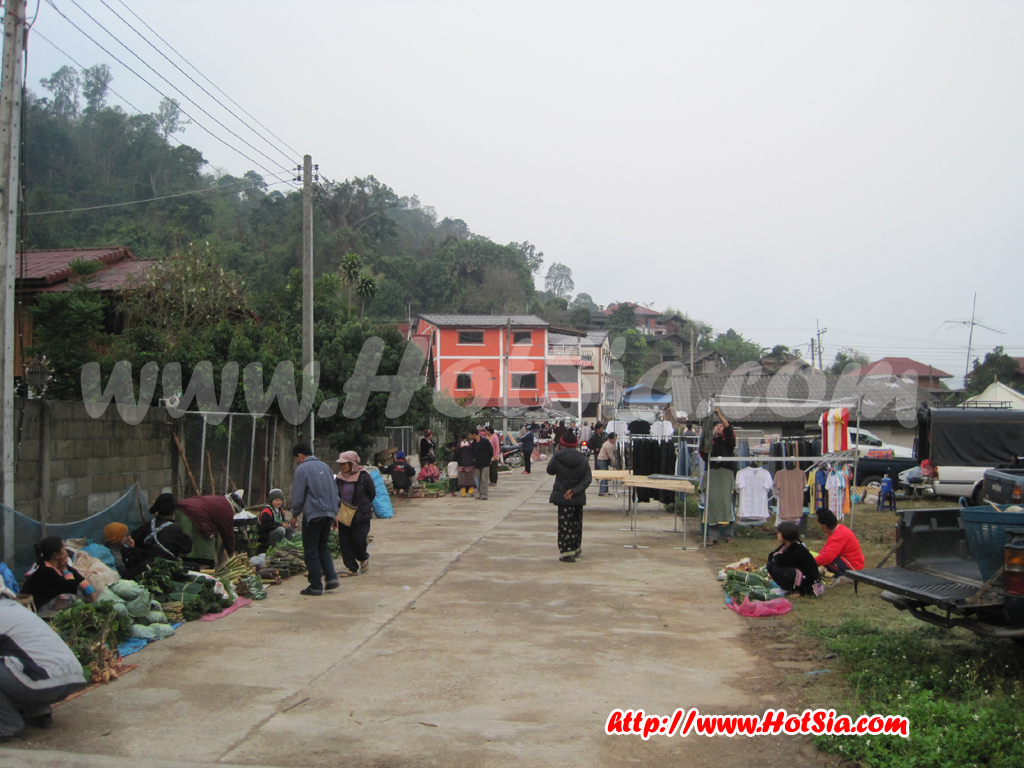
Currently, the Department of Town Planning has completed a project to develop a city plan for Ban Huak Border Market to organize trade and related government offices. People from both countries conduct trade under agreements recorded in meetings of the Joint Committee for Maintaining Peace along the Thai-Lao border between Phayao Province and Xayaburi Province, Lao PDR, since 1995. On the 10th and 30th of every month, a border market opens to support border trade, attracting about 600-700 traders daily. Lao people come early to apply for border passes.
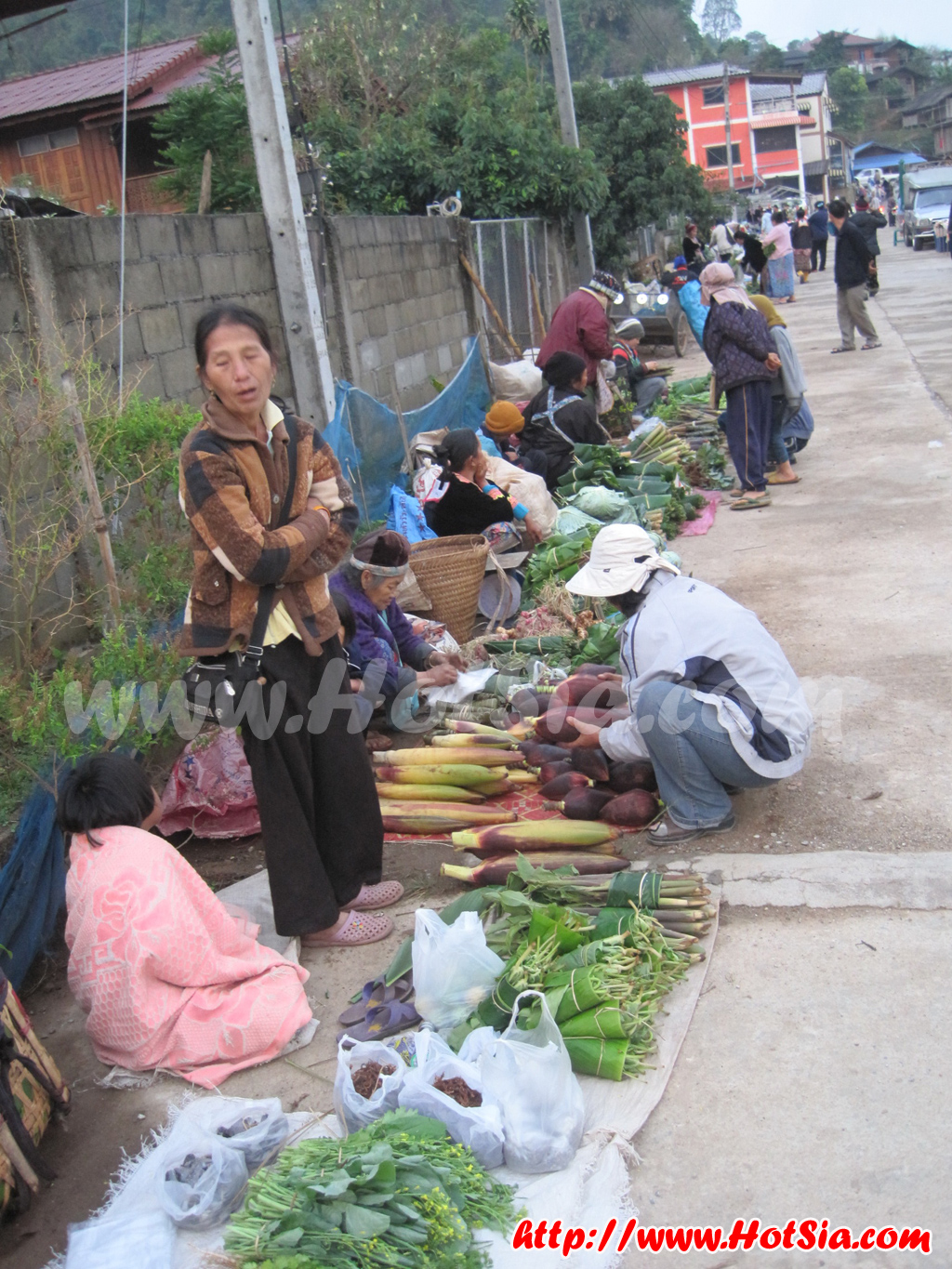
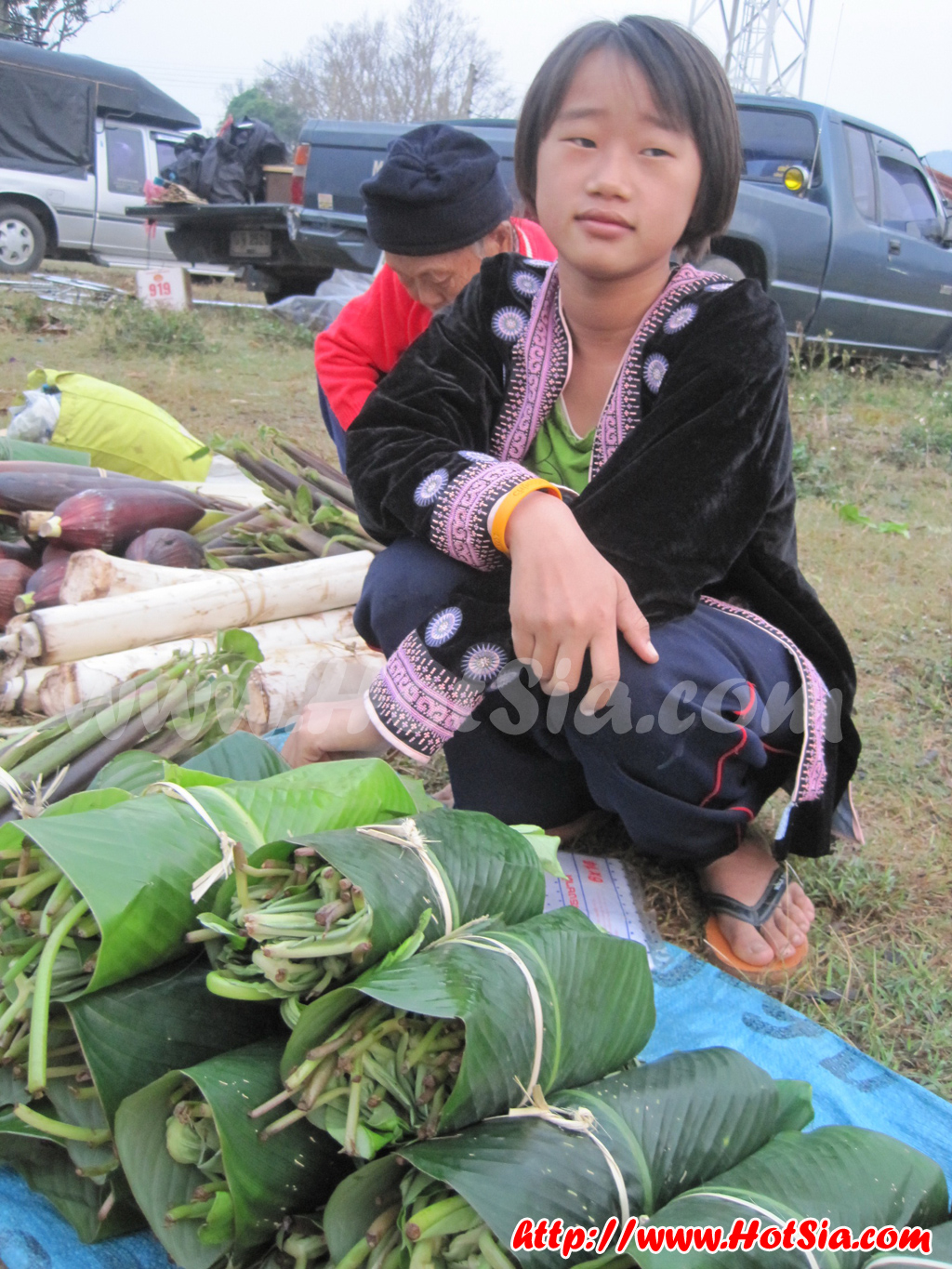
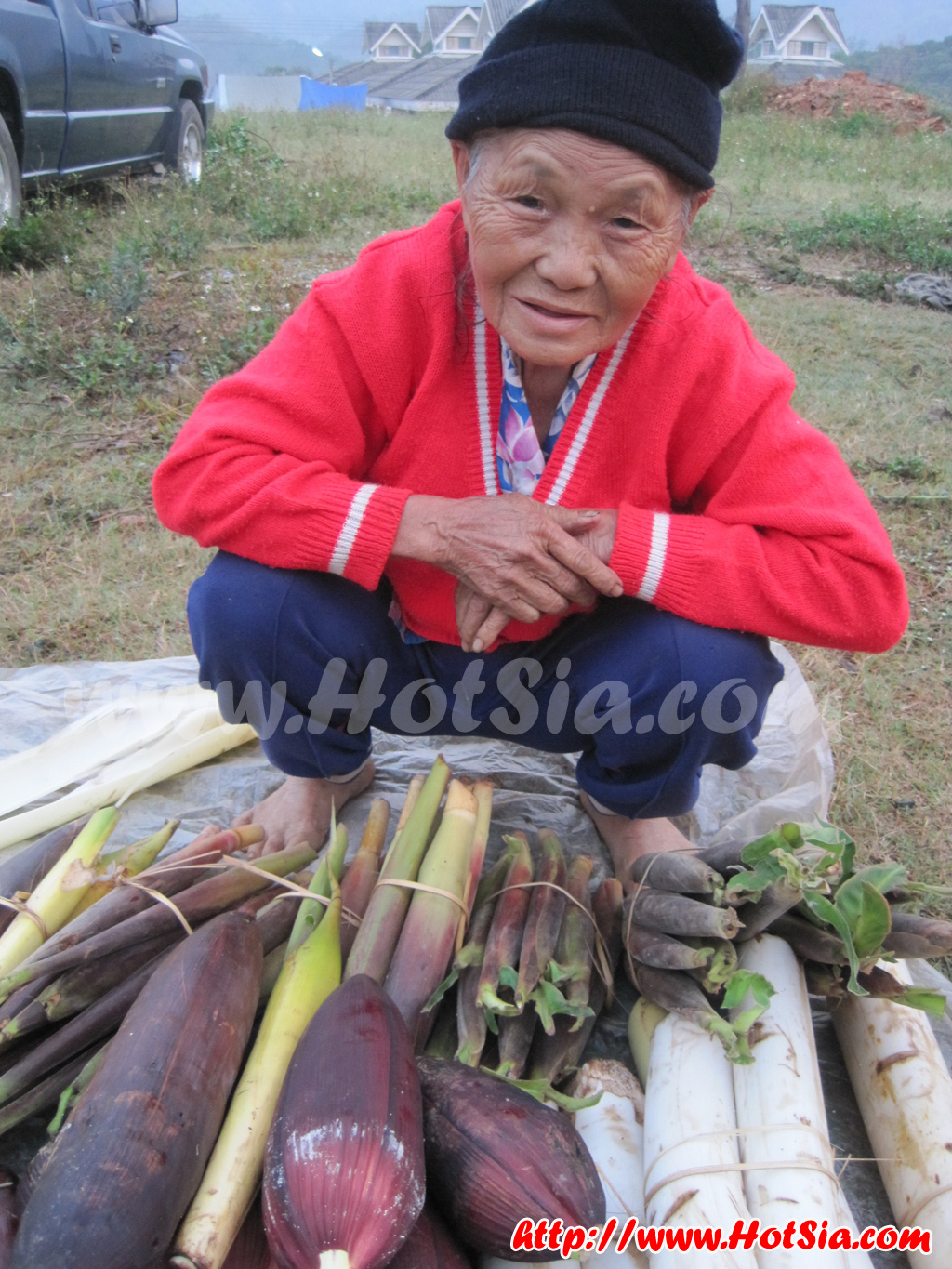
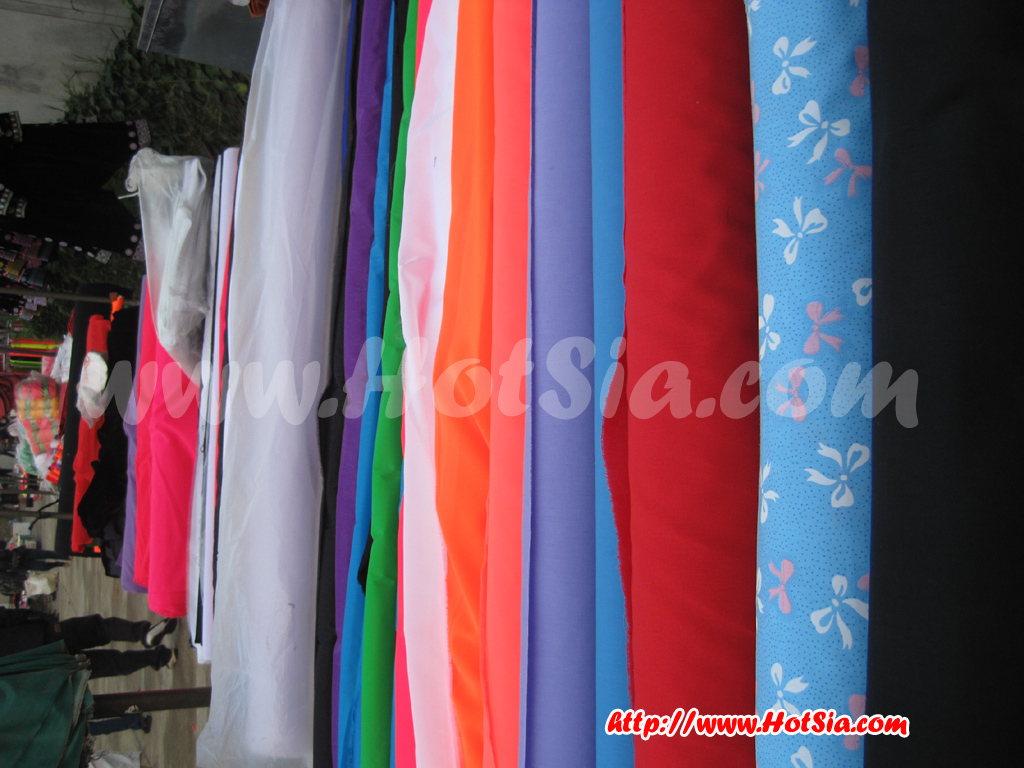
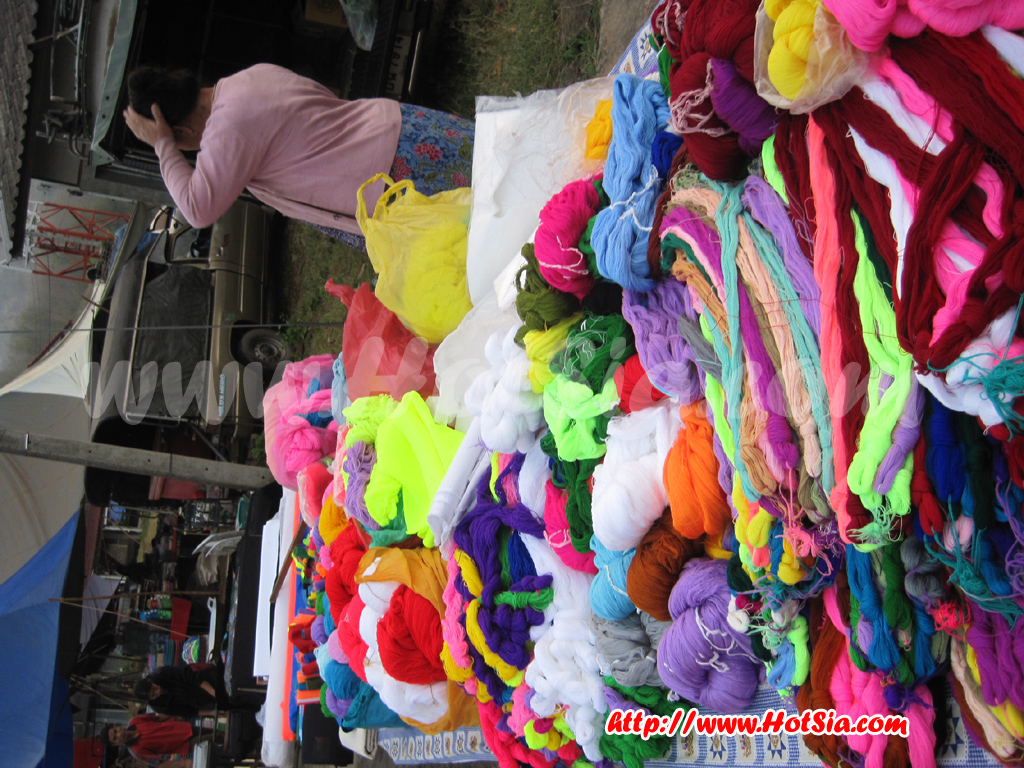
Today, I woke up early to visit Ban Huak border market. In the morning, many Hmong people descend from the mountains to buy and sell goods. Lao people line up early to apply for Thai entry cards, with the checkpoint opening at 8:30 AM. During my morning walk, I mostly saw Thai and Hmong sellers.
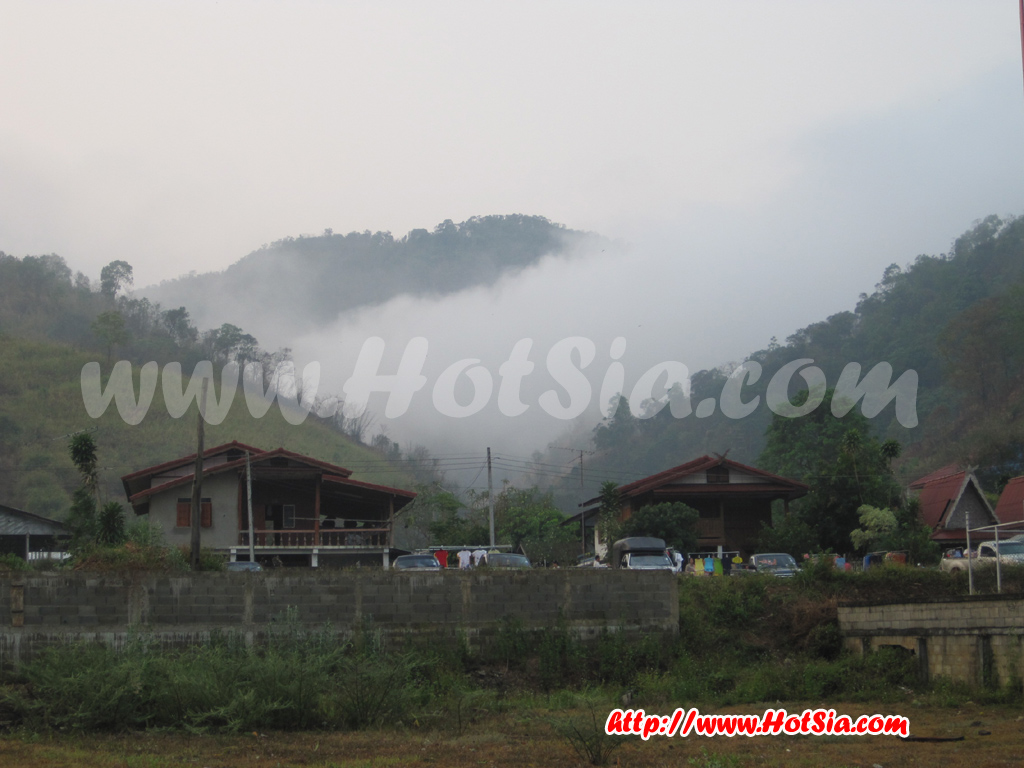
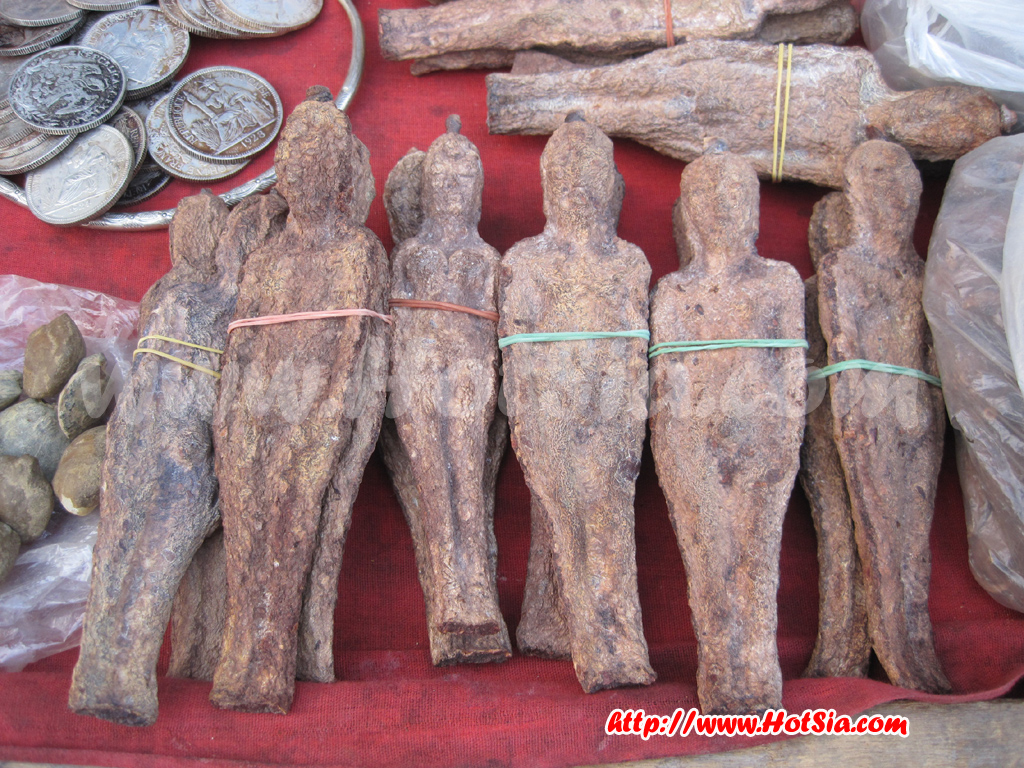
Ban Huak enjoys pleasant weather year-round, never hot, always comfortably cool. On this early April morning, it was cold enough to wear jackets. The charm of Ban Huak border market lies in products from Laos and goods brought by the Hmong, which are rarely seen elsewhere. For example, on my visit, a Hmong seller offered dried tiger penises, not fresh ones.
I asked the price, which was several thousand baht if I remember correctly. They said it’s rare. Most buyers use it for medicinal pickling, believed to enhance sexual vitality. This contributes to the gradual extinction of tigers. Another rare wild animal I encountered at Ban Huak is the flying squirrel, which glides from high places like a large flying squirrel at sunset or twilight.
The flying squirrel exhibits a curious behavior: it emerges from its resting place and hangs upside down like a bat, gripping a branch with both hind feet and letting its body hang vertically, with its head and front feet curled toward its body. At a glance, it looks like a bat hanging upside down. This behavior remains unexplained. The flying squirrels at Ban Huak market today numbered two.
The seller said a Lao person entrusted them for sale at a few hundred baht each. The flying squirrels we saw were already roasted and helped villagers sell wild honey. Other interesting items include forest herbs and wild plants sold by hill tribe people. As for food, I tried some which tasted like unsweetened sticky rice wrapped in banana leaves—very bland. But food preferences depend on what one grew up eating.
Since I stayed at a homestay here, I got to know many locals and had the chance to help sell wild honey. In Ban Huak, there is one honey hunter who collects honey and sells it. The hunter uses protective gear including a hat and suit to avoid bee stings, unlike the Mien tribe we met who rely solely on skill without protective clothing. I tried shouting to sell but didn’t sell a single bottle. However, I have a video to share with friends.
The people of Ban Huak are very friendly and welcoming to tourists. While I was selling honey, Aunt Bua, whom I had talked with before, kindly prepared a meal for me before I left Ban Huak and tied a blessing bracelet on my wrist. I sincerely thank Aunt Bua here. Besides visiting the market, I also planned to go with P'Payap, but unfortunately, the place was too remote, so P'Payap had to return to get traps for catching mole rats.
Mole rats are a delicacy for locals here but are becoming increasingly rare. Visiting Ban Huak border market, staying with locals, touring, cooking, and learning about their life made me very happy. I recommend anyone visiting Phu Chi Fa not to miss spending a night at 'Ozone Valley Ban Huak' before leaving. P'Payap’s mole rat trapping and a recommended Chinese herbal stewed beef noodle shop at Ban Huak are also worth mentioning.
Before traveling to Chiang Khong to stay with the Tai Lue community there, I took the route along Highway 1021 between Chiang Kham and Chiang Rai, turning right at Ban Sob Bong onto Highway 1093 to reach Ban Huak, or turning right at Phu Sang School via the Ror Por Chor route to Ban Huak. Thanks to Uncle Boonyuen Khemthong from Ban Huak, Village No. 3, Phu Sang Subdistrict, Phu Sang Minor District, who drove me from Chiang Kham.
Hmong children selling vegetables at Ban Huak border market. Hmong people arrive early to sell goods. A view of one corner of Ban Huak border market. Makri fruit is very expensive at Ban Huak. Fried cicada pupae I got to eat before leaving. The gateway to Indochina at Ban Huak. Peach fruit sold at Ban Huak border market. Aunt Bua prepared another meal and tied a blessing bracelet before I left.