ไทย
ไทย
 English

Phayao Homestay Travel: Mien (Yao) Village, Pha Daeng Village, Phayao - Wild Honey Tasting
Homestay Travel at Mien (Yao) Village, Pha Daeng Village, Phayao - Wild Honey http://www.hotsia.com > Homestay Travel at Mien (Yao) Village, Pha Daeng Village, Phayao by Mr. Hotsia exploring Phayao city and beyond. Boat trip to see lotus flowers at Kwan Phayao, traditional Kalamae candy in Chiang Kham, Kwan Phayao viewpoint, Kwan Phayao walking street, Luang Pho Kamthep at Nantaram Temple. Solo adventure homestay travel with Mien (Yao) people, wild honey catching and tasting at Pha Daeng Village, Ozone Valley Homestay at Ban Huak #1 and Homestay at Ozone Valley Ban Huak 2.
Waking up early to a bright day on Doi Pha Daeng. The morning sky view during the hot season, although there is no sea of mist, feels much fresher than sleeping on flat land. The corn whiskey from last night didn’t give me a headache at all. It’s refreshing and clear, unlike some types of whiskey on flat land. The village headman and his parents woke up before me around 5 a.m., steaming rice and preparing food for visiting guests. My role was simply to eat, travel, and chat with various Mien people.
Let's look at the view. The photo below shows the morning view from in front of the village headman’s house (left). On the right is the house where I stayed last night. It’s a simple house with a dirt floor, but eating and drinking inside felt very warm and cozy. From the village headman Awut’s house, the view is beautiful. For today’s plan, I talked with the village headman about going down the mountain with him. He was taking his grandfather to get a haircut in Phran District, so I asked to join for a walk.
Phran District belongs to Chiang Rai Province. The distance from Doi Pha Daeng to Phayao Province and Phran District is about the same, but locals prefer going to Phran because it’s a larger, older district before Phayao was separated from Chiang Rai. I walked around Phran’s fresh market and bought two native chickens (free-range). I also bought galangal, lemongrass, and kaffir lime leaves. Tonight, I plan to cook fish sauce braised chicken. The Mien people know my cooking skills are quite good. Ice cream was refreshing.
I treated the Mien children to an ice cream each. After shopping, I returned to Doi Pha Daeng. Since it was still daylight, I walked around the village and found Mien children playing in groups. An ice cream truck came up the mountain, so I told the kids to have one each. I had one too. The children were very happy. Actually, this village has only about 30 households and not many children, just a few dozen. I finished walking around the whole village in a short time.
I walked and chatted with the Mien people, gaining a better understanding of their lifestyle. All Mien women sew traditional cloth. The men in this village work in lychee and coffee plantations. Some young people work in the lowlands, mostly selling soy milk. Most soy milk sellers in the north are Mien. “Mien people don’t wear traditional Mien clothes anymore except during festivals or when someone gives blankets,” a Mien woman told me after I asked if they still wear Mien outfits.
The Mien (Yao) traditional reed pipe, called Pi Jad or Pi Khaj. When I visited a Mien house, I talked about the Mien people and they showed me the reed pipe. I summarized the Mien musical instruments below. The photo above shows the reed pipe I photographed from the homeowner. There are only two in the whole village, and very few people can sing and play Mien music here.
If you visit during wedding festivals, you can see Mien musical performances. Today, I talked with a group of Mien housewives until almost dark, then returned to cook braised chicken at the village headman’s house. When preparing the chicken, I realized there was too much, so I divided it into stir-fried with holy basil and salty braised chicken. The salty braised chicken is very simple: just galangal, lemongrass, kaffir lime leaves, and fish sauce. However, the Mien kitchen does not use fish sauce.
They use salt instead. The simple steps: heat oil, add chicken, then add prepared galangal, lemongrass, and kaffir lime leaves. Add salt, and if available, add some liquor. Add a handful of rice grains and stir-fry until fragrant. When the chicken is cooked and aromatic, remove from heat. This makes delicious salty braised chicken. Another dish I made for the Mien was stir-fried chicken with holy basil. This dish is very easy, so no explanation needed. While cooking, I taught them to try making it themselves for future meals.
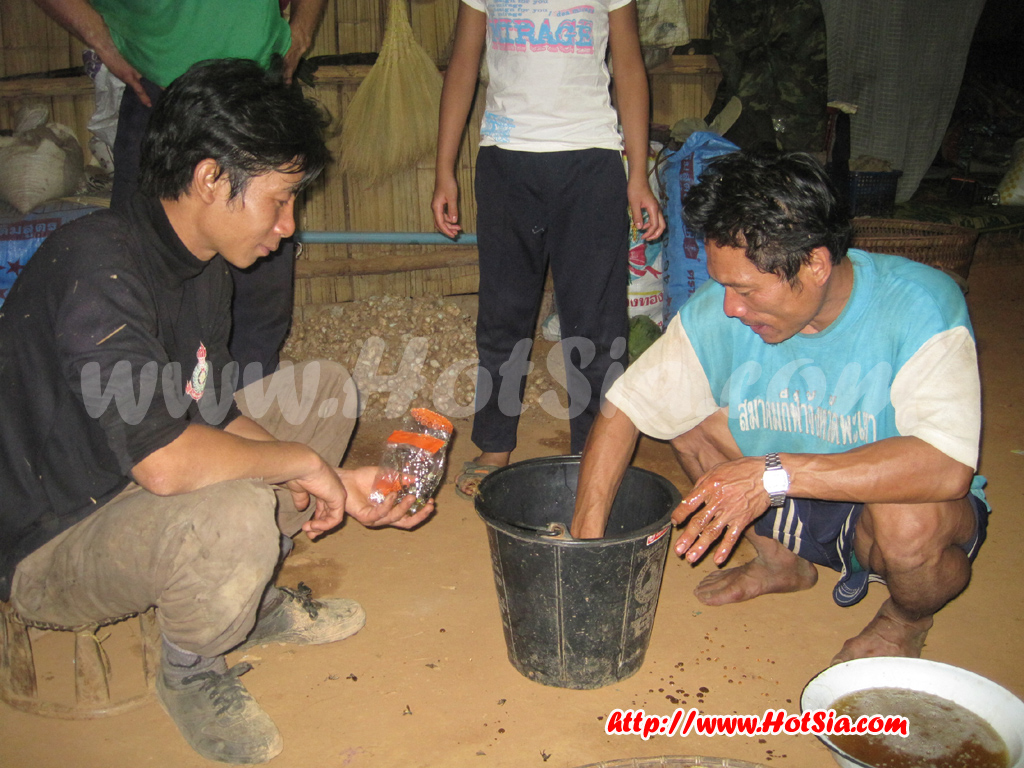
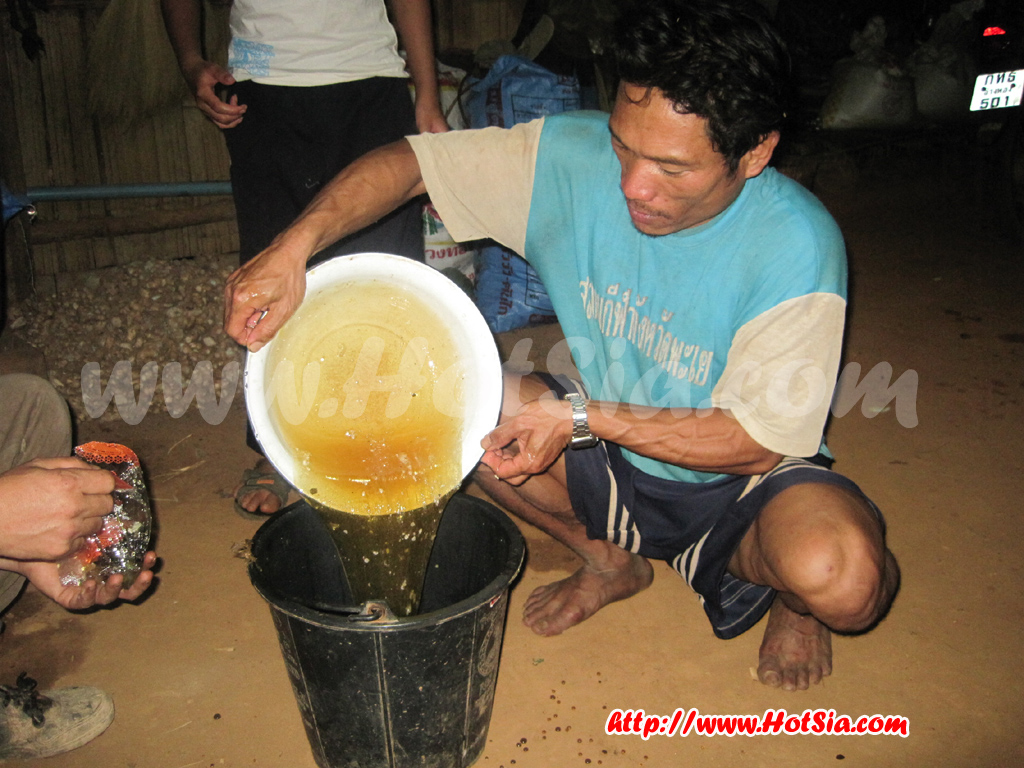
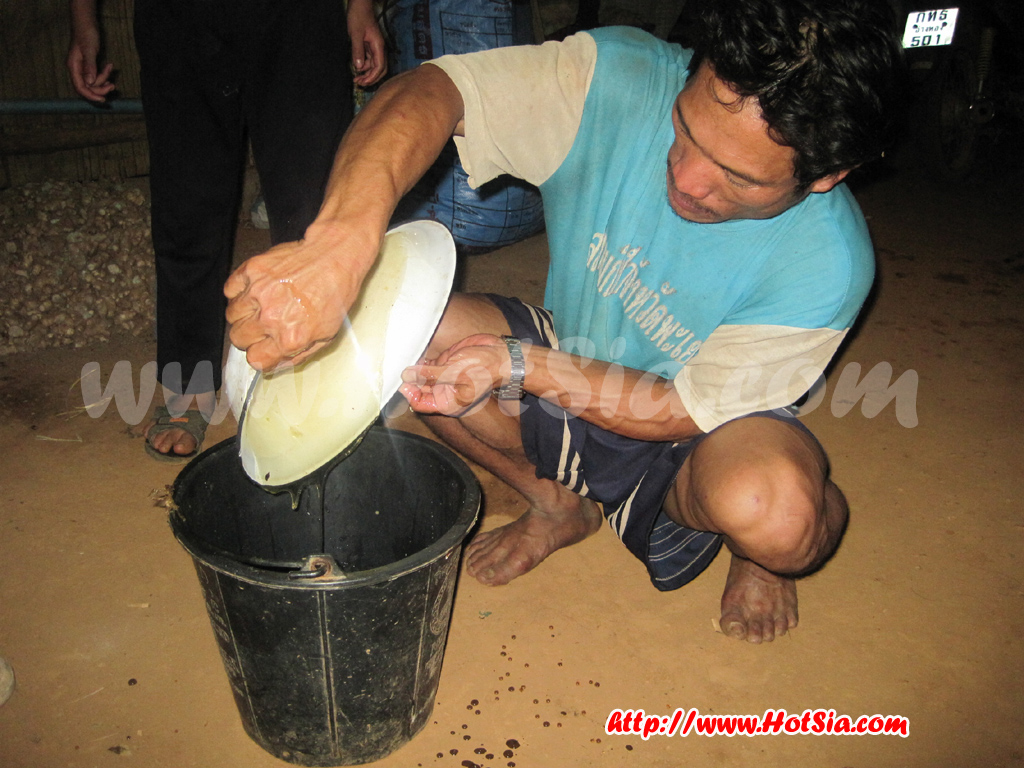
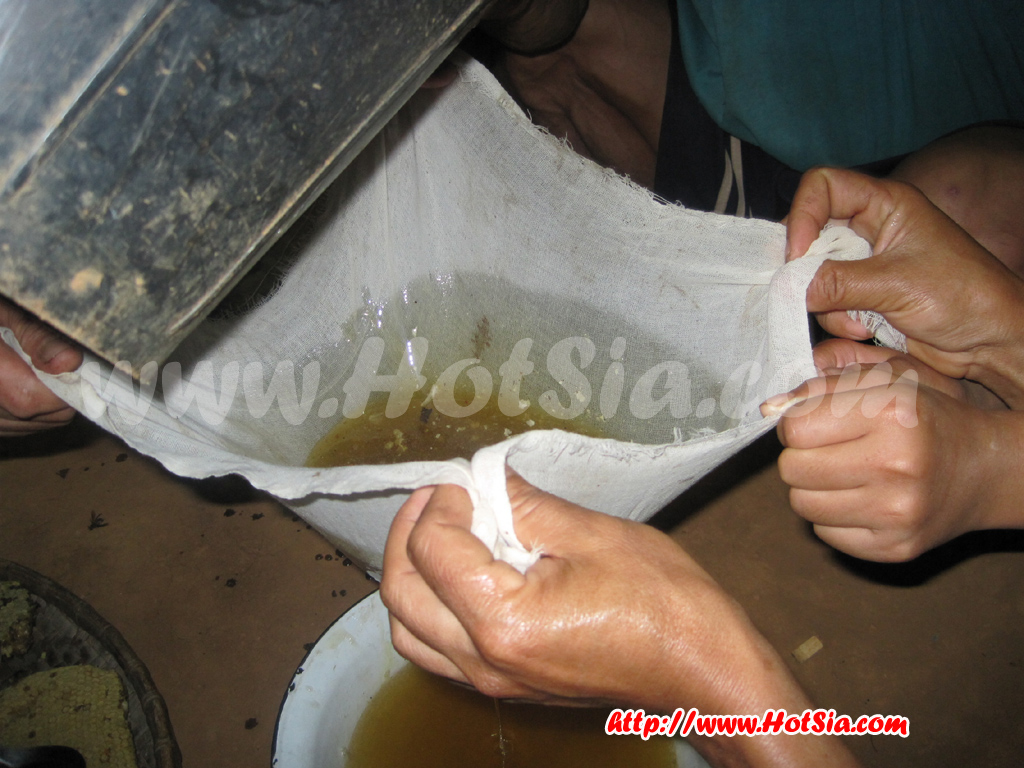
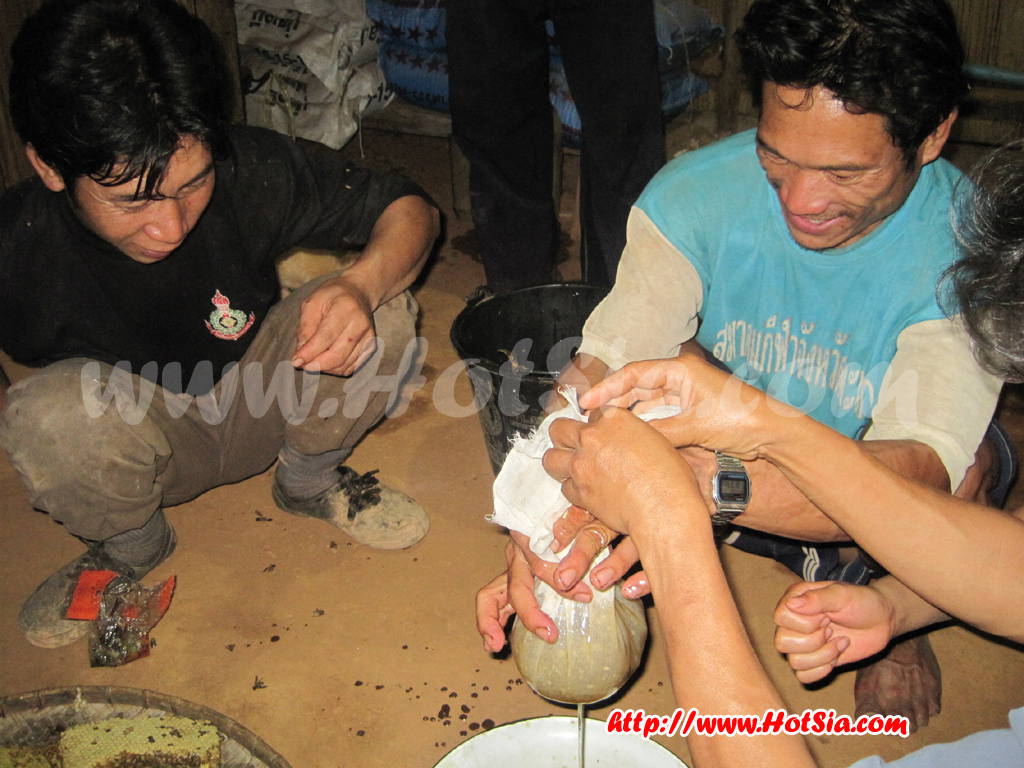
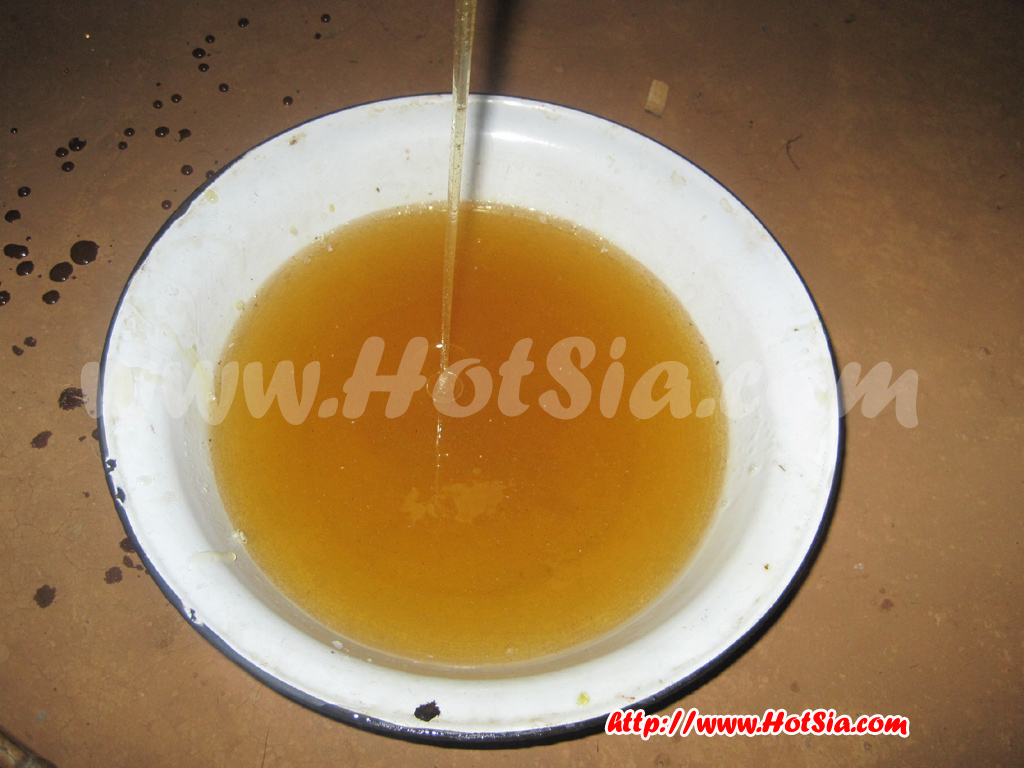
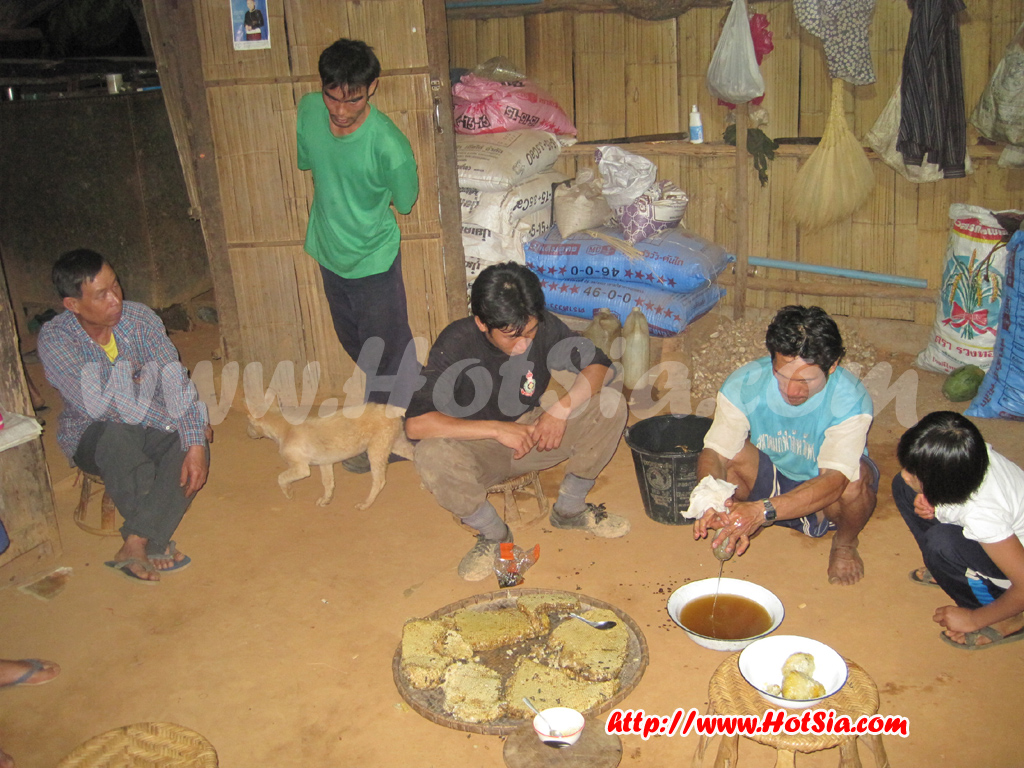
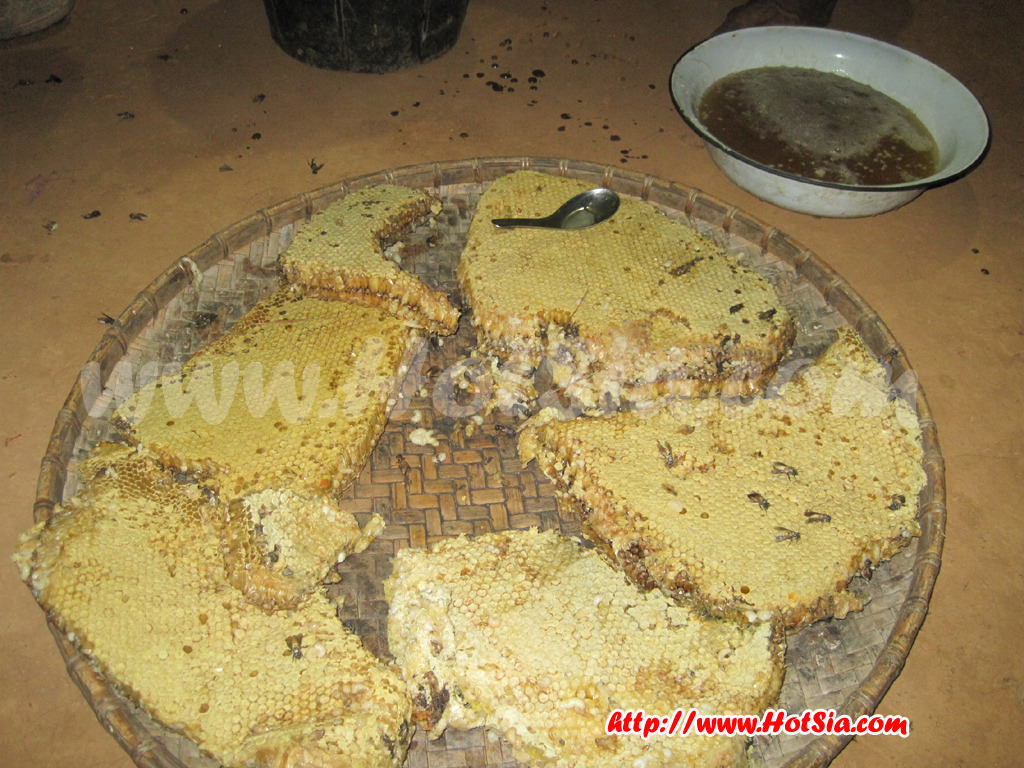
Below is the salty braised chicken I made. Looks delicious, right? Also, stir-fried holy basil chicken by me. While I cooked, village headman Awut made raw pork larb. They eat it raw, but I stir-fried mine first. After cooking, we exchanged experiences and talked about their lifestyle and I shared stories. We ate and sipped corn whiskey. Then a neighbor came to say they had just gotten fresh wild honeycombs and were about to extract the honey.
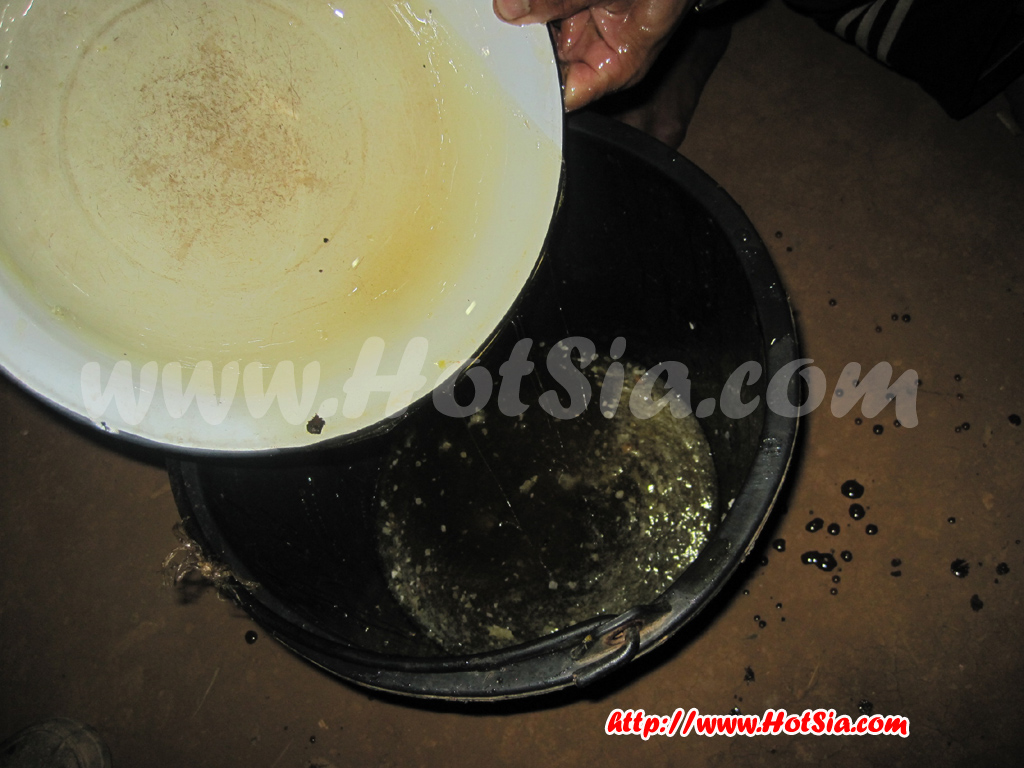
I grabbed my camera and went immediately. It was lucky for me that the neighbor had fresh wild honeycombs because it was my first chance to see and taste fresh honey straight from the forest. It wasn’t farmed honey but truly wild honey. During the hot season when I visited, bees find it harder to collect flower nectar, so the honey is exceptionally sweet in this fifth month. They even have a song about the sweetness of fifth-month honey. I got more information from them.
About why it’s called fifth-month honey: “The sweetness and value of fifth-month honey mainly come from the very low humidity in the fifth month, which increases honey concentration. Also, it’s springtime, so the honey contains nectar from various flowers. As you know, honey is glucose sugar, easily absorbed by the body, used for health nourishment and as an antiseptic to kill bacteria.
Therefore, it’s believed that the flower nectar collected by bees from the forest in the fifth month comes from many medicinal herbs.” “There are two types of wild bees: those collected during the day and those at night,” village headman Awut told me. The honeycomb I ate was collected during the day. The Mien’s method of wild honey collection is similar to many places: using smoke to drive bees out of the hive. They light a fire and then extinguish it. If not extinguished, shining a flashlight can cause bees to attack.
Then they carefully remove the honeycomb from its attachment. This ancient method requires courage. Nowadays, they have adapted protective gear: thick shirts, long pants, gloves, shoes, and a helmet with a face shield to protect against bee stings. No matter the method, bee stings are inevitable. Wild giant bees can be dangerous and require medical attention if stung. The wild giant bees I ate honey from are very rare, according to village headman.