ไทย
ไทย

Traveling Phnom Penh Killing Fields
http://www.hotsia.com > เที่ยวพนมเปญ > ทุ่งสังหาร ข้อมูลเที่ยวกรุงพนมเปญ ประเทศกัมพูชา เดินทางจากเสียมเรียบไปพนมเปญ หมี่ผัดข้างวังพนมเปญ 2012 โรงแรมในพนมเปญ โรงแรมอังกรอมิถุนา สีสันกลางคืนพนมเปญ ก๋วยเตี๋ยวอร่อยพนมเปญ สายการบินกัมพูชาอังกอร์แอร์ mr.hotsia แนะนำโรงแรมในพนมเปญครับ สมัยเขมรแดงในกรุงพนมเปญ สมัยเด็กๆผมได้ยินเรื่องราวการสู้รับของเขมรแดงและทหารกัมพูชา
I saw news images on TV back then showing many people fleeing to the Thai border. Later, I learned and understood the background of the events during that time (1975-1979) when the Khmer Rouge ruled the country. But I was not as affected until I visited the Killing Fields, the actual site of the killings. There is plenty of information about the Khmer Rouge online, so I won’t repeat it here. Instead, I will share the perspective of a traveler who has been there and how it felt. Mr.Hotsia will tell you the story.
A brief introduction: back then, Cambodia’s population was about 7.5 million. During the Khmer Rouge regime, 3 million people died—almost half the country. The numbers alone are horrifying. This place is called the Killing Fields because it was where prisoners were brought to be executed. The actual prison was in Phnom Penh, called Tuol Sleng. Prisoners were loaded onto trucks, blindfolded, forced to confess crimes, and then brutally executed in various ways.
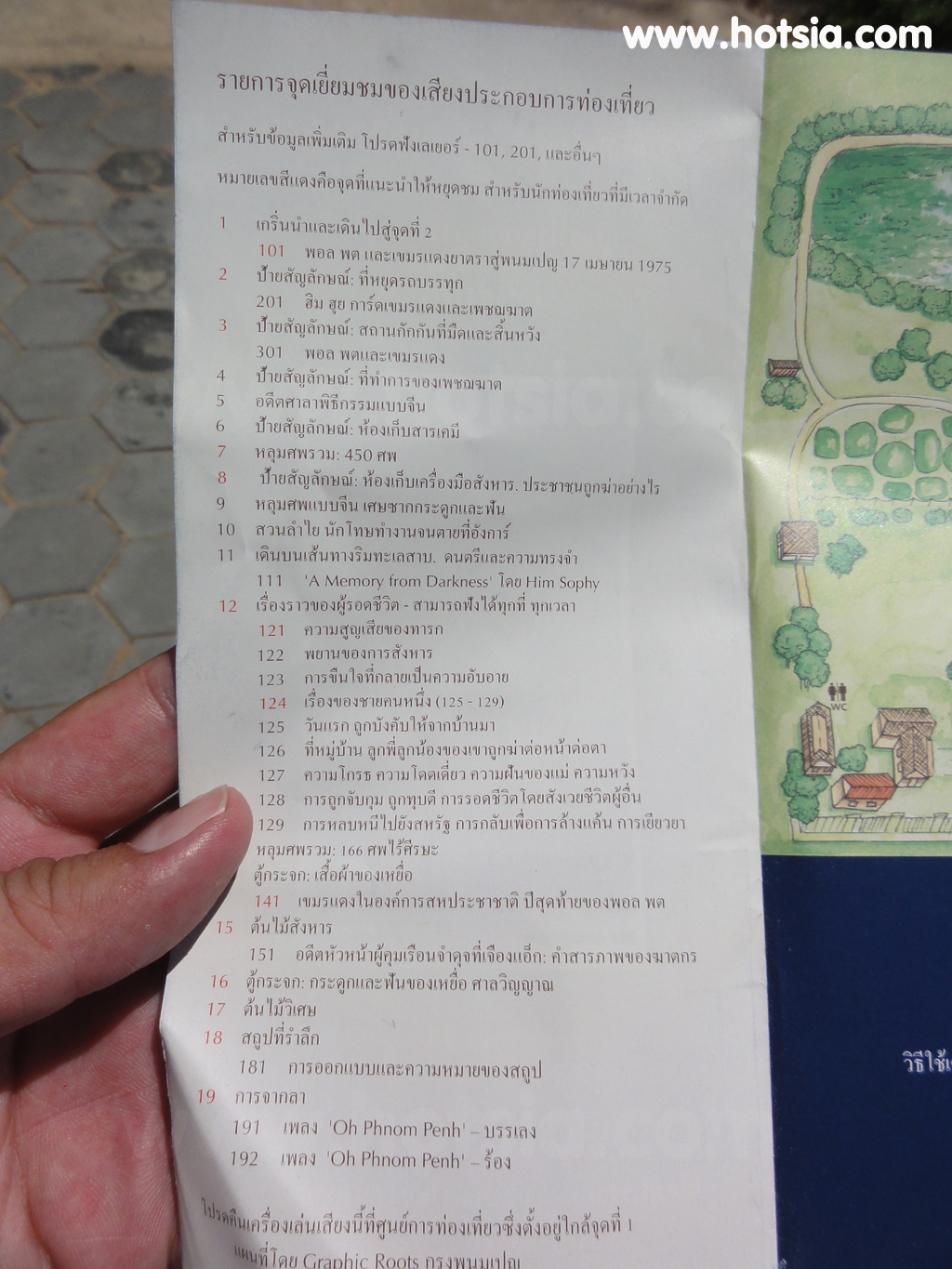
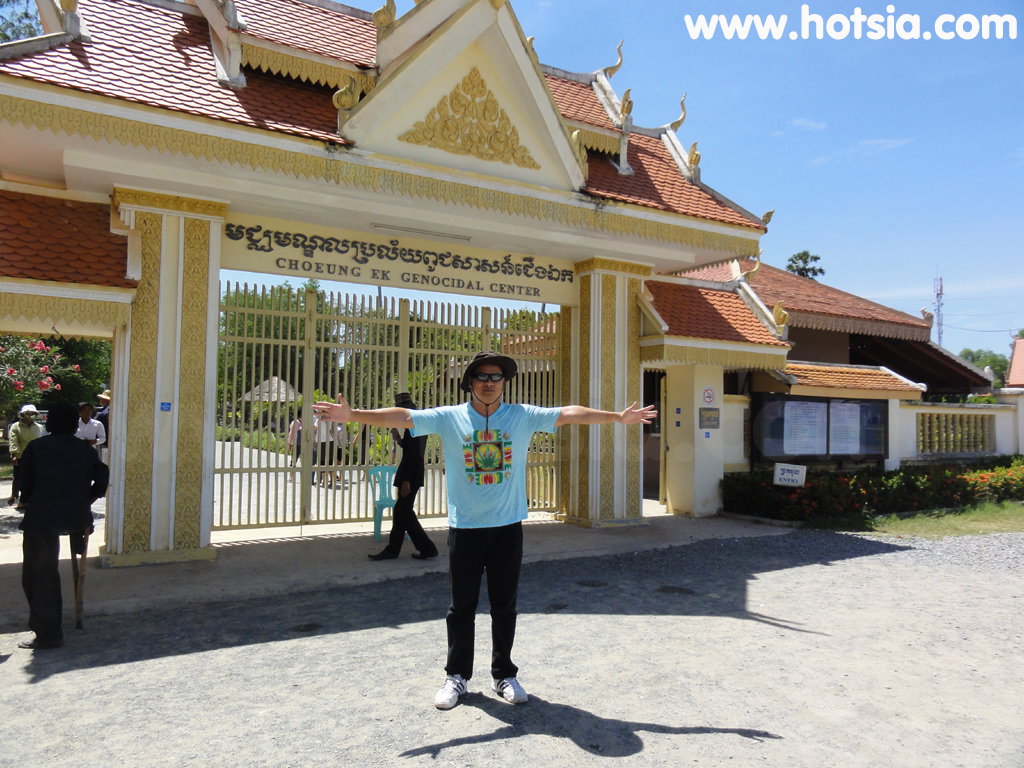
This area, the Killing Fields, is officially called Choeung Ek. There are dozens of mass graves here, but only some have been excavated. Even the excavated parts contain countless skulls. Behind the fields, in the rice paddies and grasslands, many graves remain unexcavated. The Cambodian government decided not to disturb the remains so the dead could rest in peace. Around the Killing Fields are marked points with numbers where visitors can listen to information in Thai about each location.
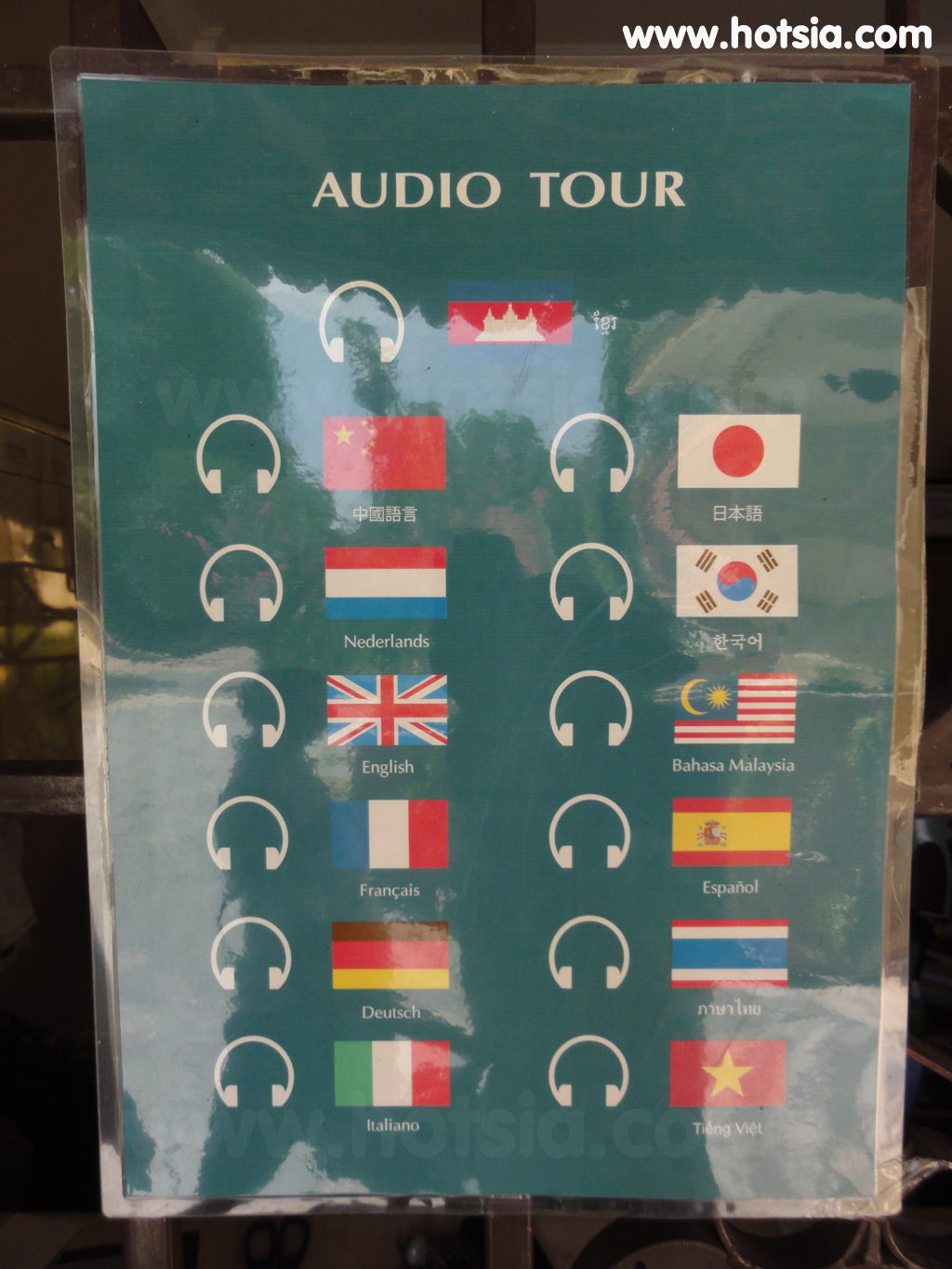
Besides Thai, there are many other major world languages available. The atmosphere there is extremely somber. Every tourist wears headphones in their own language and stands quietly at various points, with no one smiling. The most heartbreaking spot for me was the tree used to kill children by grabbing their legs and smashing their heads against it. The tree still stands. Without the photos provided and survivors’ testimonies, Mr.Hotsia would not have believed such events happened.
To help Thai people understand as much as possible, I recorded nearly all the Thai audio narrations for you to listen to. You will learn about the events of that time without exaggeration. Thanks to the producers. I recommend everyone reading this to listen carefully to each story to truly understand what happened from the words of those who lived through it. The Killing Fields here are the largest in Cambodia.
Located about 15 kilometers from Phnom Penh, you need to hire a tuk-tuk to get there. If you go with several people, the cost is about 200 baht. Four people is ideal. I recommend going in a group of four. When arranging a tuk-tuk, contact your hotel to ensure reliable service and fair pricing. Basic English is sufficient. Entrance to the Killing Fields is inexpensive, around 60 baht if I recall correctly. The top three places to visit in Cambodia are Angkor Wat, Tonle Sap, and third is this Killing Fields. It’s a must-see.
Mr.Hotsia’s travel clip to the Killing Fields: entrance fee is 5 USD per person, with Thai audio narration. Graves of women and children thrown into pits, infants killed by smashing heads against trees. This clip includes the Killing Fields song, followed by stories of Khmer Rouge women killed over two bananas, and the Khmer Rouge evacuation of Phnom Penh. GPS coordinates: 11 29 3.479 N, 104 54 4.361 E.
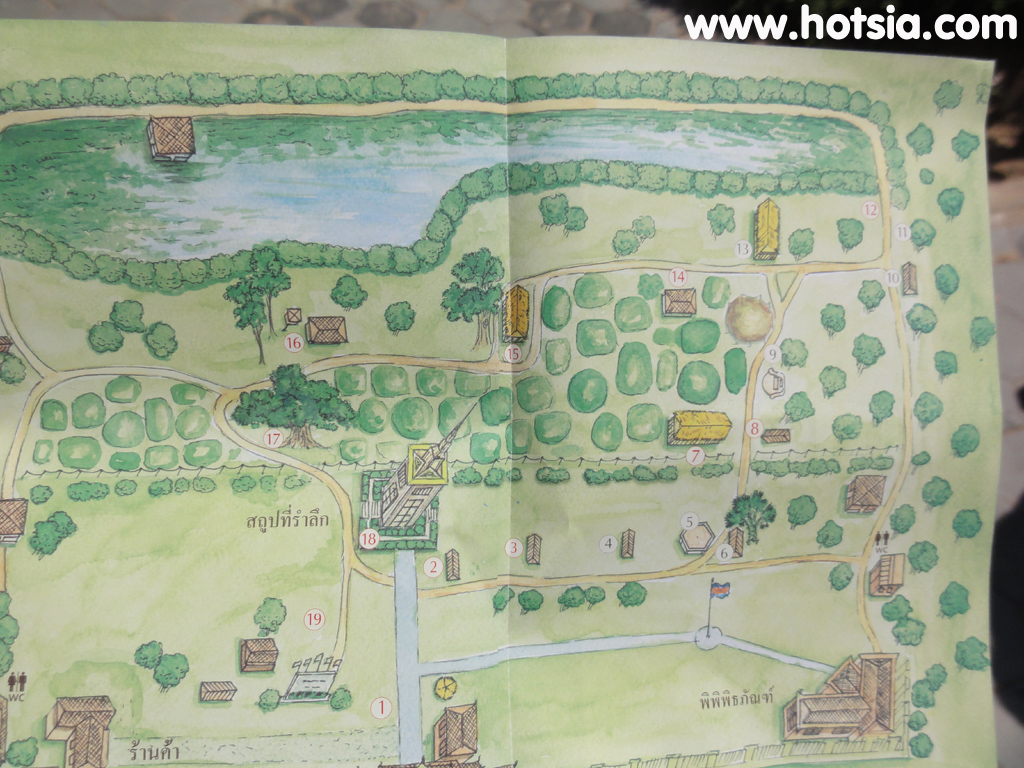
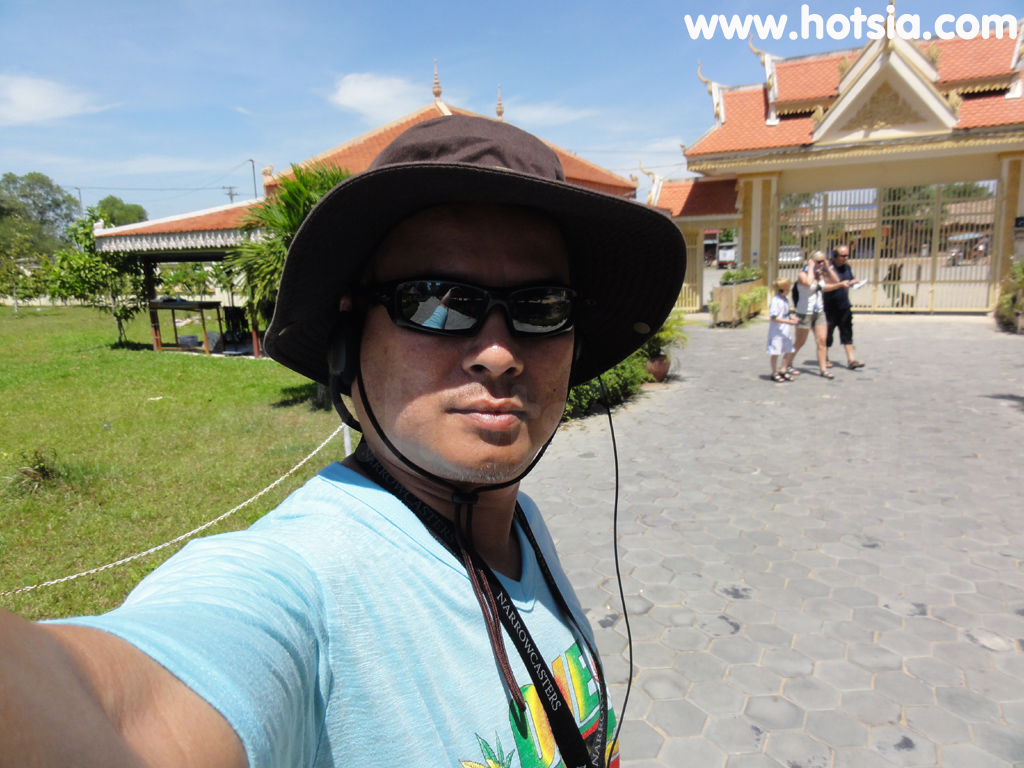
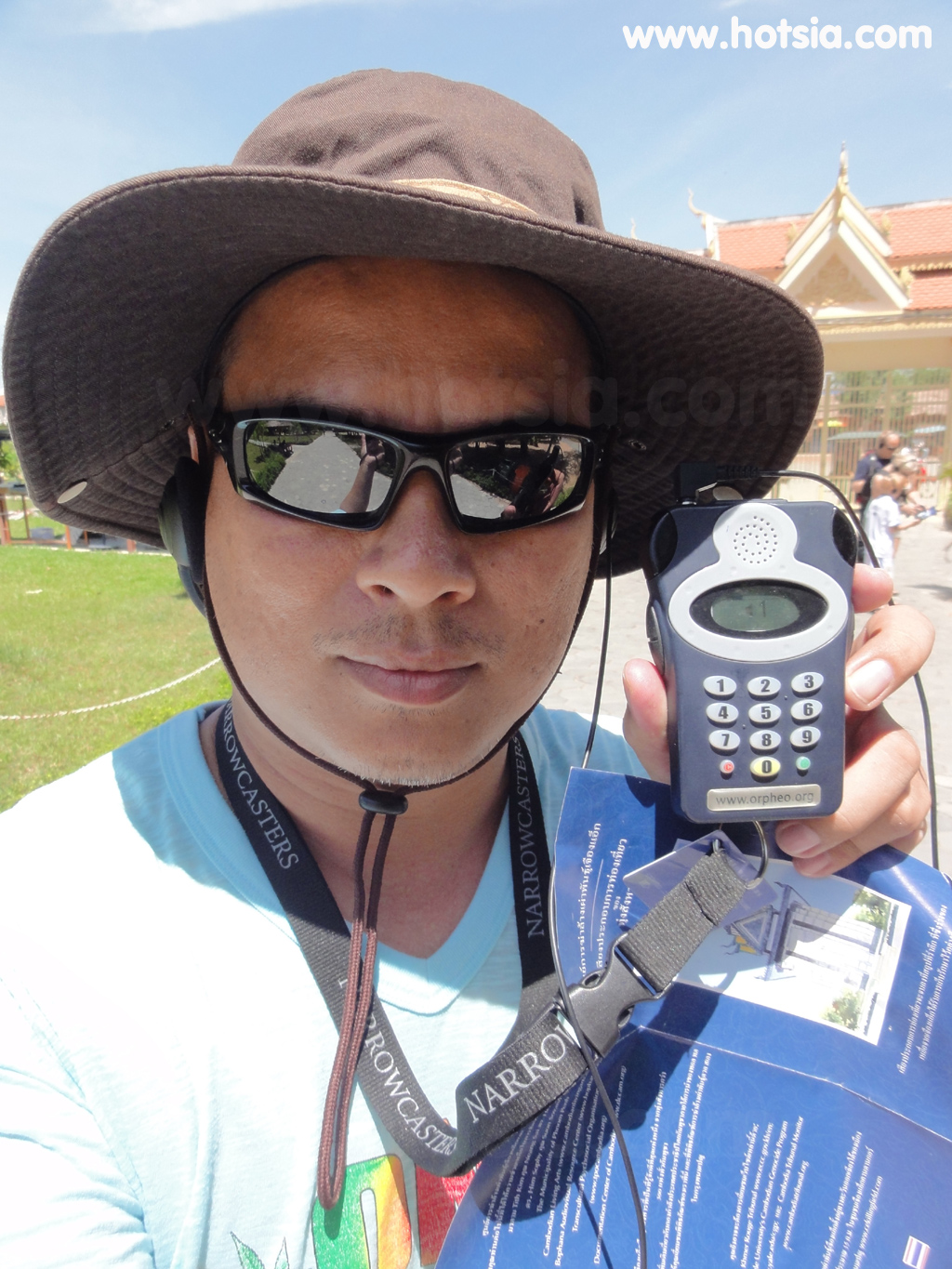
At the entrance to the Killing Fields after a tuk-tuk ride: 11 29 3.06 N, 104 54 4.817 E. Narrations are available in 33 languages, including Khmer. Very convenient for tourists. Price: 5 USD. GPS: 11 29 3.683 N, 104 54 4.883 E. Map of the entrance and audio narration points. GPS: 11 29 3.516 N, 104 54 4.985 E. Start listening at point one. It begins sadly. GPS: 11 29 3.683 N, 104 54 5.297 E. Personal audio devices allow you to press the number on signs around the Killing Fields.
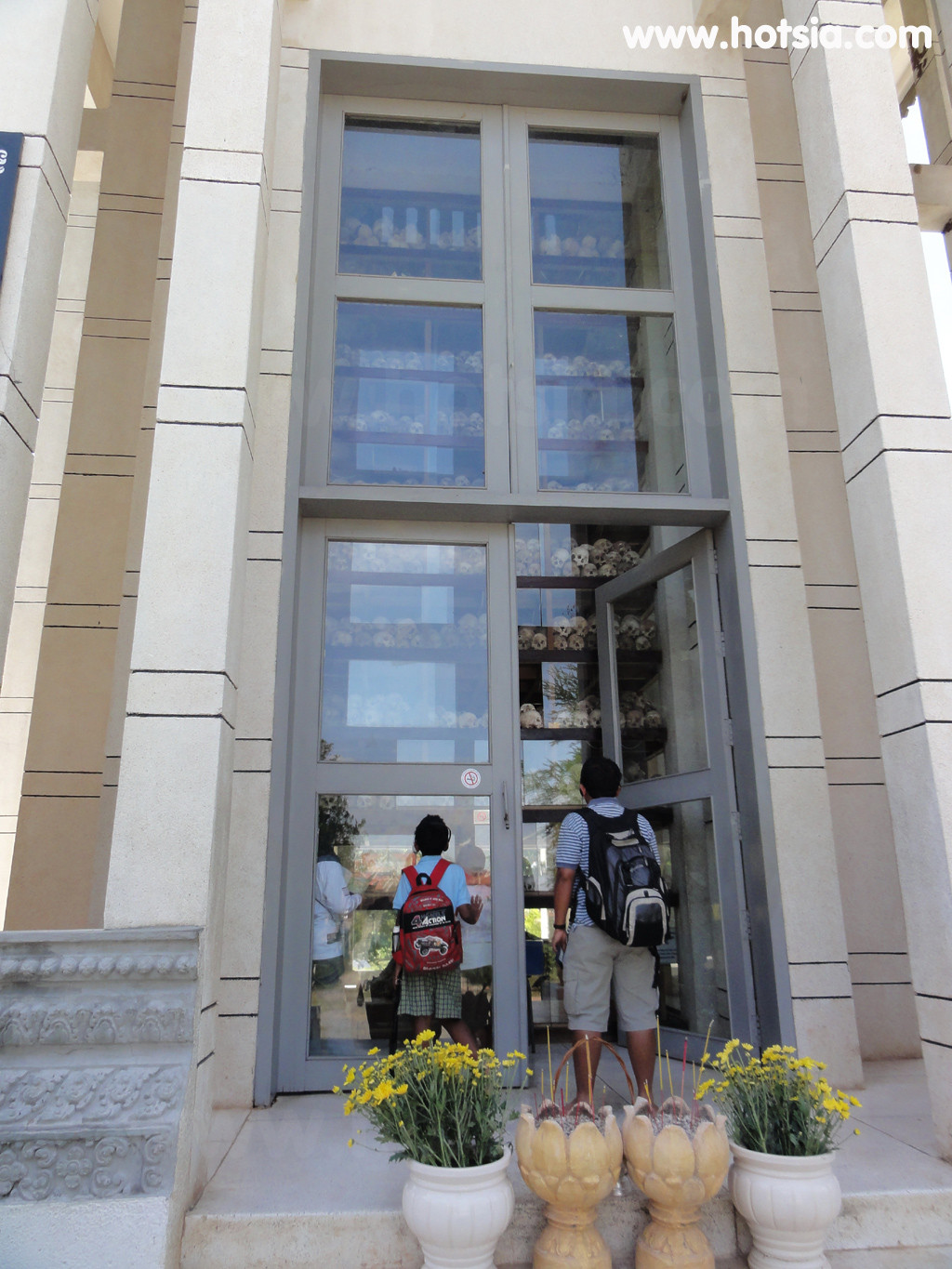
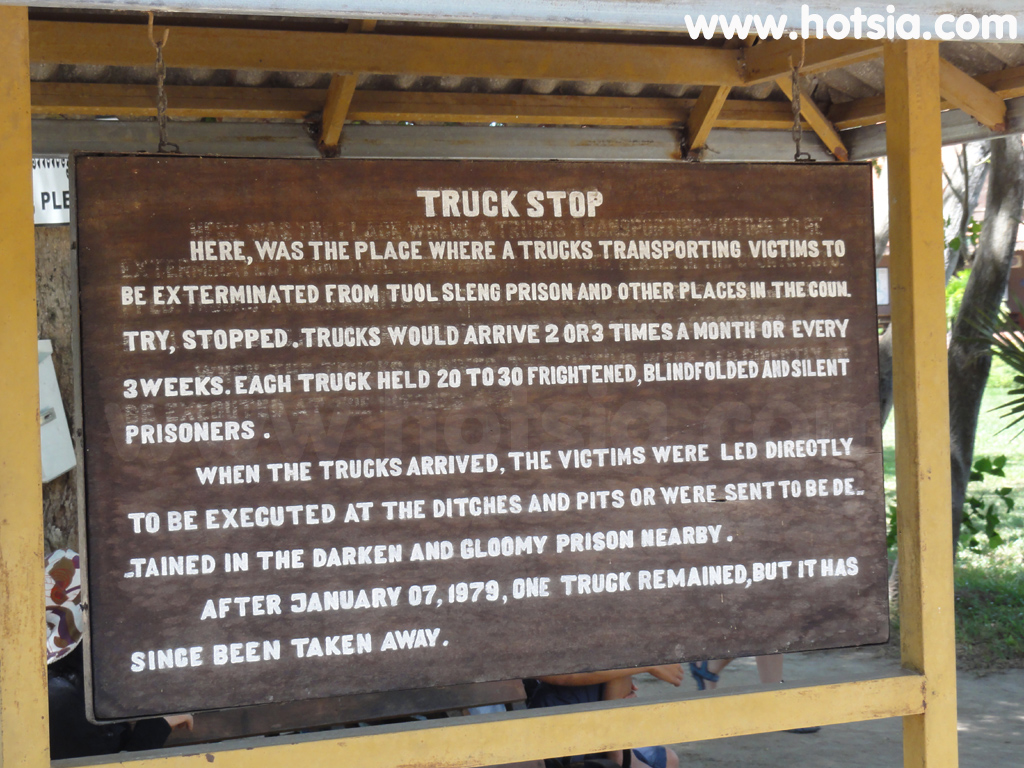
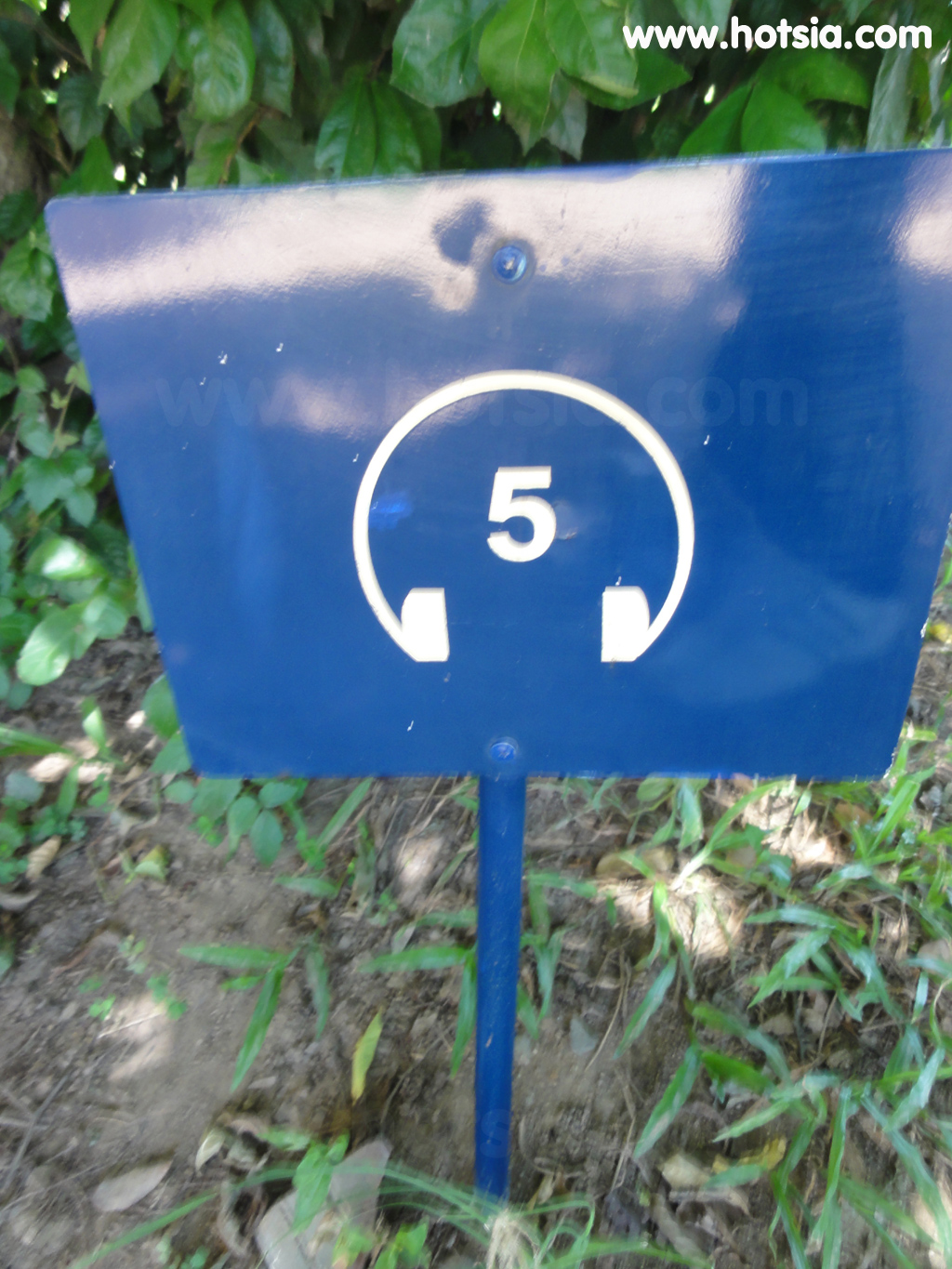
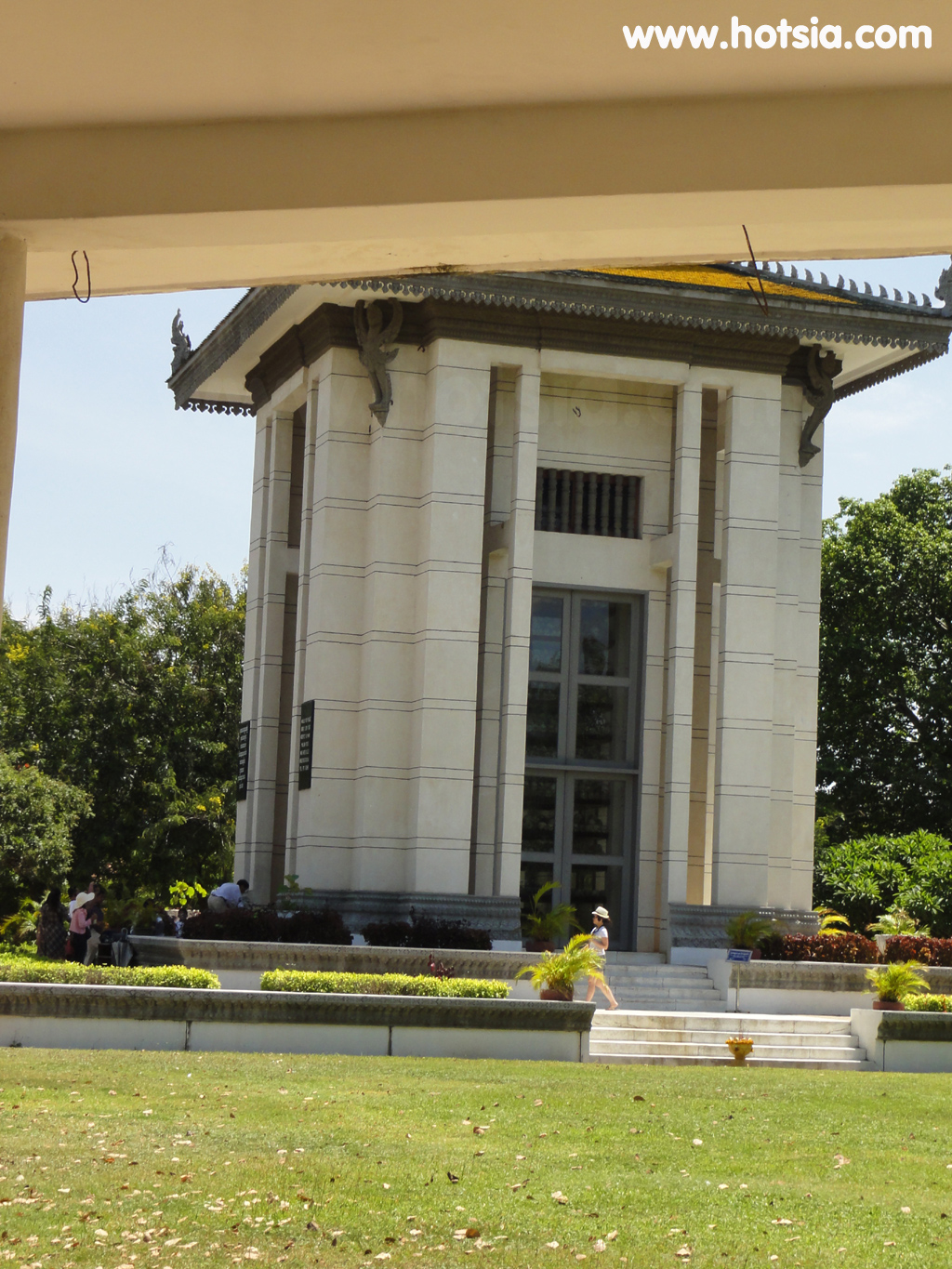
For example, graves, trees, etc. GPS: 11 29 3.798 N, 104 54 6.953 E. The building constructed to store the skulls of victims. GPS: 11 29 3.935 N, 104 54 6.929 E. Storytelling about bringing prisoners to the Killing Fields. GPS: 11 29 2.97 N, 104 54 6.689 E. Example at point 5: press number 5 and listen to the clip I recorded. GPS: 11 29 2.477 N, 104 54 7.409 E. Storage of human skulls from the Killing Fields. GPS: 11 29 3.966 N, 104 54 8.615 E. This tree was used to grab children’s legs and smash their heads.
If you haven’t listened to the clips yet, please watch the videos above. Stories of Khmer Rouge soldiers at the front of the Killing Fields. You can select the language you want to listen to. GPS: 11 29 3.737 N, 104 54 4.871 E. Each visitor receives one audio device to use and return. Some points have explanations. GPS: 11 29 2.453 N, 104 54 7.253 E. Skull storage at the Killing Fields and the tree used to smash children’s heads.